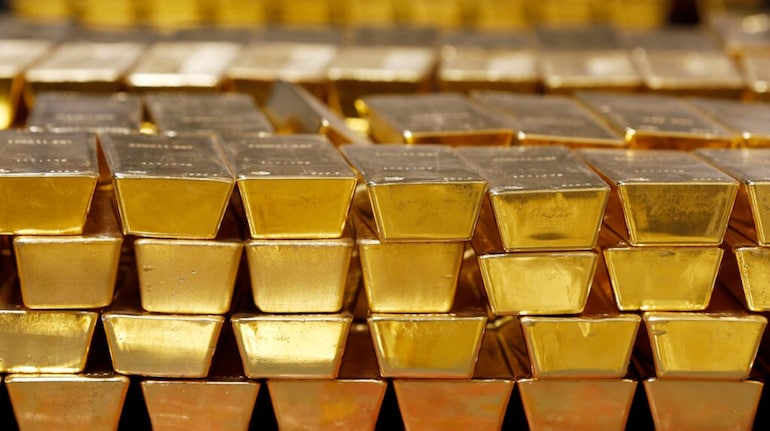
At today’s prices, one gramme of californium-252 can be valued at around $27 million, a figure that can exceed the value of roughly 200 kg of gold depending on where gold is trading. That headline comparison sounds like internet trivia, but the reason is straightforward: gold is mined at scale, while californium is manufactured in microscopic quantities inside nuclear reactors, for a handful of specialised uses that few other materials can match.
Gold is expensive because it is scarce, globally traded, and widely demanded. But it is still a natural commodity with a mature supply chain. Californium is different. There is no natural deposit you can mine. To obtain it, you have to make it.
The isotope most often discussed in price comparisons is californium-252 (CF-252). It is produced by irradiating heavier elements (typically starting from curium) in a high-flux nuclear reactor so they capture neutrons over time. This is not a one-step process. It can take months of reactor time, and then the material has to be chemically separated and purified from intensely radioactive mixtures. The yield is tiny, which is why global production is usually measured in milligrams, not grammes or kilogrammes.
That supply bottleneck is a major driver of cost, but it is not the only one. CF-252 also has a rare physical property: it is a compact, portable neutron source. It undergoes spontaneous fission and releases a strong neutron flux without needing a reactor to be running. That matters because neutrons are hard to generate conveniently. If you need them in a small device, in the field, or in an industrial setting, options are limited.
This is why californium is used in niche but high-value applications: neutron radiography for inspecting materials and components, oil and gas well logging to analyse underground formations, and certain industrial and research processes that require neutron activation or neutron-based measurement. Some medical and research uses exist as well, but they are tightly controlled and far less common than popular retellings suggest.
Put simply, gold’s price is driven by broad demand and large-scale extraction. Californium’s price is driven by extreme production difficulty, vanishingly small supply, strict handling requirements, and a specialised capability—portable neutron emission—that buyers cannot easily replace.
Discover the latest Business News, Sensex, and Nifty updates. Obtain Personal Finance insights, tax queries, and expert opinions on Moneycontrol or download the Moneycontrol App to stay updated!
Find the best of Al News in one place, specially curated for you every weekend.
Stay on top of the latest tech trends and biggest startup news.