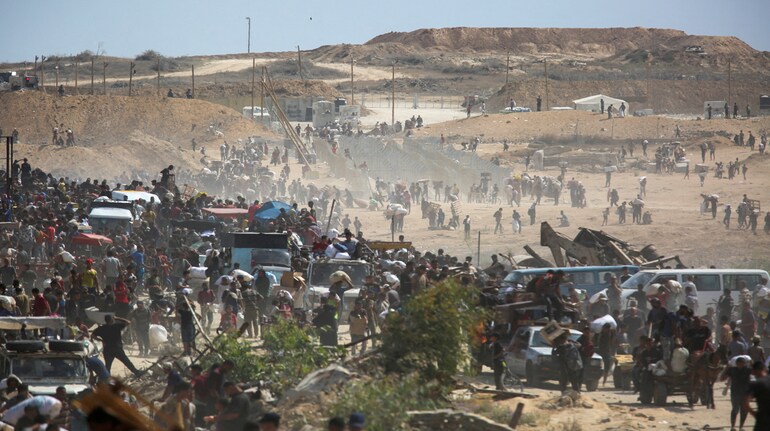
A US-backed idea to rebuild a “New Gaza” inside the Israeli-controlled portion of the enclave has triggered strong pushback from Arab states, who warn that the plan risks formalising a partition of Palestinian territory. The proposal gained traction after the US-brokered ceasefire took effect and Gaza was split along the Yellow Line, with Israel controlling one half while Hamas retains influence in the other, the Financial Times reported.
How the division emerged after the ceasefire
Since the ceasefire began last month, Israeli forces have remained on one side of the Yellow Line while most Palestinians remain on the other. Years of Israeli strikes have reduced much of Gaza to rubble, intensifying pressure on international partners to start reconstruction. But US and Israeli officials have rejected releasing funds to areas where Hamas continues to operate, prompting some to suggest rebuilding only the Israeli-controlled zone as a model for future governance.
Why rebuilding one half is politically fraught
Backers of the idea, including Jared Kushner, argue that creating a secure, demilitarised zone with jobs and housing would offer Gazans an alternative to Hamas rule. Some Israeli officials have described it as one of several options under discussion. But Arab, Muslim and European governments say the plan mirrors earlier attempts to create Hamas-free “bubbles” and warn that it could entrench a political and demographic split inside a territory already devastated by war.
Concerns about permanent fragmentation
Arab diplomats have told Washington that the optics of rebuilding only the Israeli-controlled half would be disastrous, making it appear as if donors were investing in Israeli control rather than Palestinian recovery. Jordan’s foreign minister has publicly rejected any move that implies a lasting division, insisting that Gaza must remain part of a unified Palestinian territory with a clear timeline for Israeli withdrawal.
The risk of reconstruction becoming relocation
A key worry, especially for Egypt, is the proposal to begin rebuilding near Rafah in southern Gaza. Concentrating displaced Palestinians there could, officials fear, make it easier for Israel to pressure or push civilians into Egyptian territory. Hardline members of the Netanyahu government have repeatedly floated ideas of relocating Gazans, echoing earlier plans for a “Gaza Riviera” or other districts outside the enclave.
Israeli doubts about feasibility
Even within Israel’s security establishment, there is skepticism about whether the plan could work. Former intelligence officials note that Hamas would almost certainly target reconstruction efforts and that dividing a densely populated strip would separate families already uprooted multiple times. The criticism reflects a broader view that economic incentives alone cannot contain Hamas or prevent future instability.
Why Arab states are withholding support
Arab governments have said collectively that they will not fund reconstruction that risks normalising Israeli control or creating a long-term limbo between conflict and peace. Gulf officials indicated they may provide humanitarian aid in the Israeli-held zone but would not back broader development tied to a divided Gaza. Their stance reflects fears that reconstruction must align with a political path, not replace it.
What the plan leaves unresolved
Under Trump’s 20-point ceasefire framework, Israel is supposed to withdraw from Gaza gradually as an international stabilisation force deploys. But the force’s mandate, size and contributors remain undefined. Without those details, diplomats warn that the “New Gaza” proposal could outlast its intended timeline and become a new status quo, complicating prospects for a unified Palestinian administration after the war.
The larger question of political legitimacy
Analysts argue that Palestinians who survived repeated displacement are unlikely to voluntarily move into an area effectively run by Israel. Former US officials say that while many hope Gazans will prefer an alternative to Hamas rule, it is difficult to imagine large-scale investment or population shifts under current conditions. Without a credible political vision, they warn, reconstruction risks becoming another short-lived experiment.
Where the discussion stands now
For now, Arab states remain focused on humanitarian assistance rather than development tied to the Israeli-controlled zone. Diplomats familiar with Gulf positions say that while aid flows may continue, broader reconstruction cannot be divorced from Palestinian political rights and Israel’s obligations under withdrawal agreements. The proposal, they argue, risks reviving the same miscalculations that contributed to instability before the war.
Discover the latest Business News, Sensex, and Nifty updates. Obtain Personal Finance insights, tax queries, and expert opinions on Moneycontrol or download the Moneycontrol App to stay updated!
Find the best of Al News in one place, specially curated for you every weekend.
Stay on top of the latest tech trends and biggest startup news.