






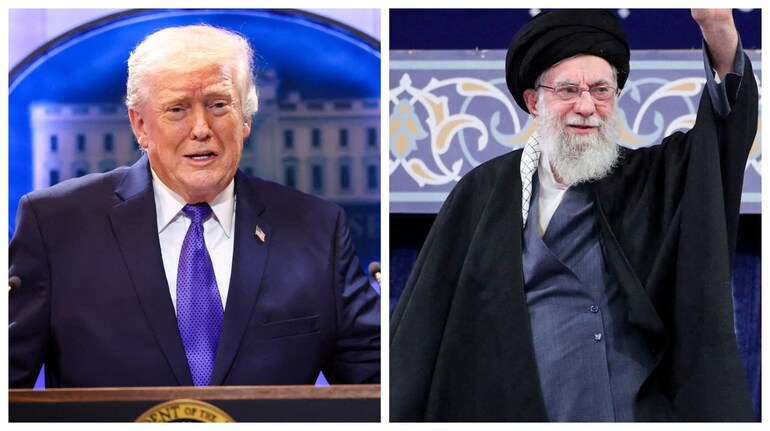

The joint US-Israeli assault on Iran over the weekend was not a limited warning shot. It was a decisive escalation that killed Ali Khamenei, dismantled parts of Iran’s senior military leadership and triggered immediate retaliation across the Middle East. The strikes followed weeks of explicit threats from Donald Trump and collapsed diplomacy over Iran’s nuclear programme, leaving little ambiguity about Washington’s intent to fundamentally weaken — if not unseat — Iran’s ruling system, the New York Times reported.
Below is what is known so far, and what it means.
Why the US and Israel struck now
The attack capped months of rising pressure. Since January, Trump has publicly framed Iran’s leadership as illegitimate, openly encouraging domestic unrest and signalling that military force was on the table if Tehran refused US demands on nuclear activity. A final round of mediated talks last week failed, removing the last diplomatic off-ramp.
For Israel, the decision aligned with a long-standing strategic aim. Benjamin Netanyahu has repeatedly argued that Iran’s leadership represents an existential threat and that only direct action could permanently alter that balance. The operation reflects a shared conclusion in Washington and Jerusalem that deterrence alone no longer served their objectives.
What was hit — and who was killed
The first wave of strikes on Saturday targeted multiple cities, including Tehran, Isfahan, Qom and Kermanshah. According to Iranian state media, Ayatollah Khamenei was killed inside his secure compound early that morning. Satellite imagery showed extensive damage at the site.
Iran also confirmed the deaths of Rear Admiral Ali Shamkhani, secretary of the Defence Council, and Major General Mohammad Pakpour, the commander-in-chief of the Islamic Revolutionary Guard Corps. Israeli officials said the opening salvo aimed to decapitate Iran’s command structure before broader strikes on missile systems and air defences.
US officials described dozens of coordinated attacks launched from regional bases and at least one aircraft carrier, with an initial focus on military and security targets.
Iran’s response so far
Tehran’s reaction was immediate and outward-looking. The Islamic Revolutionary Guard Corps announced missile and drone strikes on Israel and on US military facilities across the Gulf, including bases in Qatar, Kuwait, the United Arab Emirates and Bahrain.
US Central Command said most incoming projectiles were intercepted and that damage to American installations was limited. Still, debris from intercepted missiles killed at least one civilian in Abu Dhabi, underscoring how quickly the conflict has spilled into neighbouring states.
Iran’s leadership framed Khamenei’s death as martyrdom and appealed to the United Nations, accusing Washington and Israel of violating international law. Privately, Gulf governments moved to heighten air defences and shelter critical infrastructure.
Is the United States now at war with Iran?
Legally and politically, the answer is contested. Trump authorised the strikes without prior congressional approval, reigniting a long-running argument over presidential war powers. Lawmakers from both parties have said Congress must now vote under the War Powers Resolution, though such debates often follow — rather than constrain — military action.
Operationally, the scale and scope of the attacks, combined with Iran’s retaliation, place the US in an active armed conflict with a sovereign state, regardless of how the administration labels it.
The leadership vacuum inside Iran
Khamenei ruled for nearly four decades, anchoring Iran’s system through personal authority. His sudden removal leaves no designated successor and thrusts the Assembly of Experts into an emergency decision-making role — one it has rarely exercised and never under fire.
The uncertainty inside Tehran is now as consequential as the fighting itself. A fractured succession could invite further external pressure, internal unrest or a heavier hand from the security services.
What else is already being affected
Energy markets reacted first. Tanker traffic through the Strait of Hormuz has slowed sharply, with shipping companies unwilling to risk crews and cargo. Even short disruptions there threaten global oil prices, given the volume that passes through the narrow channel daily.
Regionally, US allies hosting American bases are on alert, knowing that Iran’s retaliation strategy traditionally targets them as leverage against Washington. Diplomatic channels across the Middle East are now focused less on de-escalation and more on damage control.
What began as a strike on Iran’s leadership has rapidly widened into a conflict with economic, political and military consequences that will not be contained by borders — or by a single weekend of bombing.
Discover the latest Business News, Sensex, and Nifty updates. Obtain Personal Finance insights, tax queries, and expert opinions on Moneycontrol or download the Moneycontrol App to stay updated!
Find the best of Al News in one place, specially curated for you every weekend.
Stay on top of the latest tech trends and biggest startup news.





