






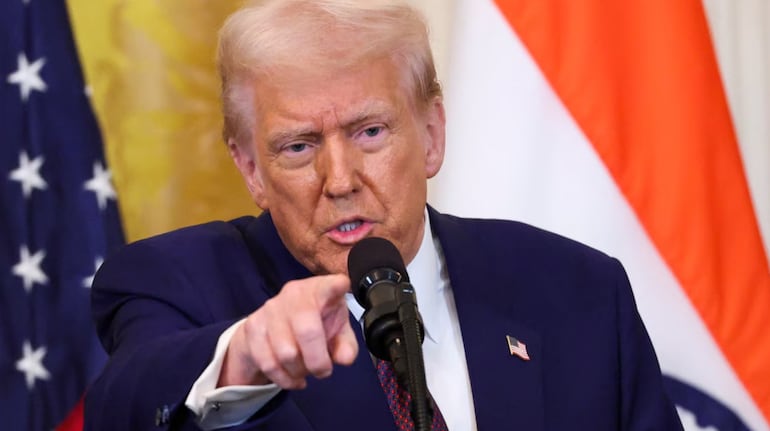

The US Supreme Court is scheduled to deliver its next set of rulings on January 20, 2026, at 10.00 am EST (8.30 pm IST). If the court strikes down President Donald Trump’s tariff measures, the White House is prepared to respond immediately.
US Trade Representative Jamieson Greer said the administration would move “the next day” to impose alternative duties if the ruling goes against the government. Speaking to The New York Times on January 15, Greer said officials had offered Trump “a lot of different options” to ensure tariffs remain a core element of US trade policy.
Greer added that the administration remains confident the Supreme Court will uphold the president’s authority, but has contingency plans in place to prevent any disruption to its trade strategy.
The Supreme Court is examining whether the president’s use of the International Emergency Economic Powers Act (IEEPA), a 1977 statute, lawfully allows the imposition of global tariffs. A ruling is expected in the coming weeks and could come as early as Tuesday.
Greer said he is confident the court will side with the administration, but acknowledged preparations for an adverse outcome. “The reality is the president is going to have tariffs as part of his trade policy going forward,” he said.
India is among the countries facing the highest duties, with tariffs totalling 50 per cent. This includes Trump’s reciprocal “Liberation Day” levies applied across trading partners, along with an additional 25 per cent linked to India’s purchase of Russian oil.
Over the past year, Trump has repeatedly declared international emergencies to justify tariff actions, citing objectives ranging from reducing trade deficits to curbing illegal drug flows and addressing broader security concerns.
The debate intensified after Trump warned of new tariffs on several European nations unless Denmark agrees to sell Greenland to the United States. The threat has drawn sharp criticism in Europe and raised legal questions over the scope of emergency powers.
Treasury Secretary Scott Bessent defended the strategy on NBC’s Meet the Press, saying, “The national emergency is avoiding a national emergency,” and arguing that the administration was using “the economic might of the U.S. to avoid a hot war.”
Even if the court curtails the president’s authority under IEEPA, Greer indicated Trump could rely on other statutes, including Section 301, which was used extensively against China during his first term and withstood multiple legal challenges.
Just days earlier, Trump had warned that “if the Supreme Court rules against the United States of America on this National Security bonanza, WE’RE SCREWED!”
The case is widely seen as a key test of presidential trade powers and the Supreme Court’s readiness to rein in executive authority.
Discover the latest Business News, Sensex, and Nifty updates. Obtain Personal Finance insights, tax queries, and expert opinions on Moneycontrol or download the Moneycontrol App to stay updated!
Find the best of Al News in one place, specially curated for you every weekend.
Stay on top of the latest tech trends and biggest startup news.





