






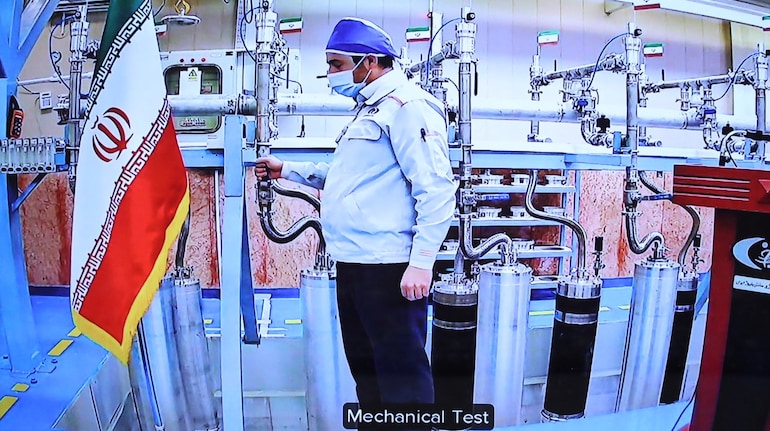

The recent attack on Iran’s nuclear facilities, including the Natanz enrichment complex, has heightened global fears about the possibility of a radiological incident in West Asia. While there has been no confirmed damage to Iran’s nuclear reactors or fuel facilities so far, international nuclear watchdogs warn that continued military strikes in a region hosting multiple nuclear installations could push the world closer to a dangerous threshold.
Speaking at a meeting of the International Atomic Energy Agency (IAEA) Board of Governors on Monday, Director General Rafael Mariano Grossi said the escalating conflict has created a highly concerning nuclear safety environment.
“The IAEA has extensive knowledge of the nature and location of nuclear and radiological material in the region, and we have clear guidance for actions necessary in case of an attack or an accident causing a radiological release as well as the ability for hands on help if it is required. Let me underline that the situation today is very concerning. We cannot rule out a possible radiological release with serious consequences, including the necessity to evacuate areas as large or larger than major cities,” Grossi said.
The warning comes after the United States and Israel launched a series of strikes under Operation Epic Fury, targeting Iranian military and nuclear-linked infrastructure. One of the sites widely reported to have been hit during the opening phase of the campaign was the Natanz nuclear facility, a central pillar of Iran’s uranium enrichment program.
Natanz houses centrifuge halls and supporting nuclear fuel infrastructure that process uranium for both civilian energy purposes and potentially weapons-grade material. Although Iranian officials have not confirmed extensive damage, any attack near such facilities raises concerns about radioactive contamination, especially if fuel storage areas or enrichment infrastructure are affected.
The IAEA chief stressed that the threat is not limited to Iran alone. Several countries across the Middle East host operational nuclear power plants or research reactors, many of which are located in areas that have already experienced missile or drone attacks during the ongoing conflict.
“Iran and many other countries in the region that have been subject to military attacks have operational nuclear power plants and nuclear research reactors, as well as associated fuel storage sites, increasing the threat to nuclear safety. The United Arab Emirates has four operating nuclear reactors. Jordan and Syria have operational nuclear research reactors. Bahrain, Iraq, Kuwait, Oman, Qatar, and Saudi Arabia have also been attacked. These countries all use nuclear applications of some sort or the other. We therefore urge utmost restraint in all military operations,” Grossi said.
Despite the rising tensions, the IAEA said there is currently no evidence that nuclear facilities in Iran have suffered direct damage that would trigger radiation leaks.
“Regarding the status of the nuclear installations in Iran up to now, we have no indication that any of the nuclear installations, including the Bushehr nuclear power plant, the Tehran research reactor, or other nuclear fuel cycle facilities have been damaged or hit,” Grossi said.
However, the agency acknowledged that the risk environment remains extremely fragile. According to the IAEA, the regional nuclear safety monitoring network has been placed on high alert. Radiation monitoring systems across neighboring countries are closely tracking any potential abnormal readings.
Grossi also revealed that the agency has been unable to establish direct communication with Iranian nuclear regulators since the escalation began.
“Efforts to contact the Iranian nuclear regulatory authorities through the IEC continue with no response so far,” he said, calling for the communication channel to be restored as soon as possible to ensure rapid coordination in case of any nuclear safety incident.
Nuclear experts warn that attacks near enrichment plants, research reactors or fuel storage facilities can produce localized contamination even if reactors themselves are not destroyed. The United Nations and the IAEA have repeatedly stressed that military strikes against nuclear infrastructure carry unpredictable environmental and humanitarian consequences.
Grossi urged world powers to return to diplomatic engagement despite the growing confrontation.
“Diplomacy is hard, but it is never impossible. Nuclear diplomacy is even more difficult, but it's never impossible,” he said.
With Iran responding to the strikes by launching missiles and drones across multiple West Asian countries, the region now finds itself in an escalating cycle of retaliation. As military operations expand around infrastructure tied to nuclear energy and research, global nuclear watchdogs warn that even a single accident could trigger consequences far beyond the battlefield.
Discover the latest Business News, Sensex, and Nifty updates. Obtain Personal Finance insights, tax queries, and expert opinions on Moneycontrol or download the Moneycontrol App to stay updated!
Find the best of Al News in one place, specially curated for you every weekend.
Stay on top of the latest tech trends and biggest startup news.





