






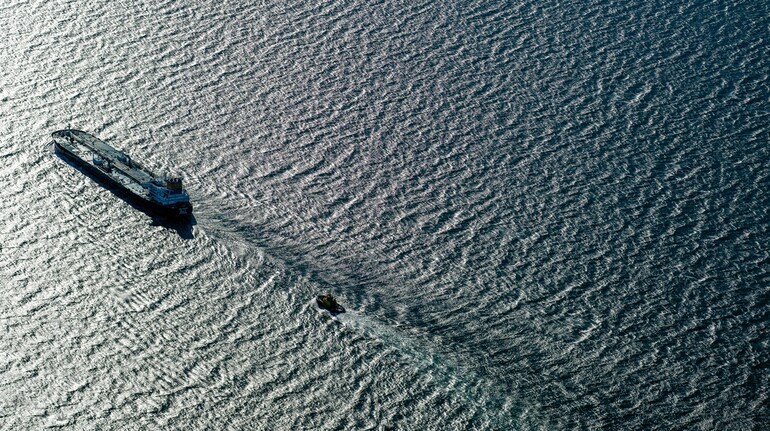

Russia has deployed a submarine and other naval assets to escort an oil tanker linked to Venezuela, escalating tensions with the United States amid a wider crackdown on sanctioned oil shipments, according to US officials. The vessel, formerly known as Bella 1, has become a flashpoint in Washington’s efforts to curb illicit global oil trade tied to Russia, Iran, and Venezuela.
The tanker had been attempting for over two weeks to evade a US blockade of sanctioned oil vessels near Venezuela but failed to dock and load crude. Despite being empty, the US Coast Guard continued tracking the ship into the Atlantic Ocean as part of a broader operation against what officials describe as a global “dark fleet” transporting black-market oil.
In December, the tanker’s crew resisted a US attempt to board the vessel and sailed into the Atlantic. During the pursuit, the crew painted a Russian flag on the hull, renamed the ship Marinera, and re-registered it under Russia, a move experts say was carried out without standard inspections or formalities.
Russia has reportedly asked the United States to stop pursuing the vessel. On Tuesday, the Russian Foreign Ministry said it was monitoring the situation “with concern.” Meanwhile, the U.S. military’s Southern Command stated it was prepared to “stand against sanctioned vessels and actors transiting through this region.”
The tanker is currently sailing about 300 miles south of Iceland toward the North Sea, according to AIS tracking data. Russia’s state-controlled outlet RT released footage allegedly showing a U.S. Coast Guard cutter trailing the vessel, claiming Washington was attempting to intercept a ship with “clear civilian status.”
The incident unfolds as Washington and Moscow remain locked in diplomatic negotiations over Ukraine. “I’m not thrilled with Putin. He’s killing too many people,” said Trump on Saturday, referring to Russian President Vladimir Putin.
US officials say the tanker had previously been sanctioned for allegedly transporting Iranian oil on behalf of U.S.-designated terrorist groups. At the time, it was considered stateless and subject to seizure. However, its new Russian registration complicates Washington’s legal authority to board it.
“Once it’s legitimately registered, it gets the protection of the flag,” said retired Rear Adm. Fred Kenney, former director of legal affairs at the International Maritime Organization. “It’s not retroactive.”
Experts warn that forcibly boarding the tanker could invite retaliation from Russia or allied nations like Iran. The standoff coincides with major developments in Venezuela’s oil sector. U.S. President Donald Trump announced that Venezuela’s interim authorities would transfer between 30 and 50 million barrels of oil to the United States.
“This Oil will be sold at its Market Price, and that money will be controlled by me, as President of the United States of America, to ensure it is used to benefit the people of Venezuela and the United States!” Trump said.
The agreement, valued at up to $2 billion, could reshape global crude flows, reduce shipments to China, and impact major importers like India. Analysts say the move underscores Washington’s growing influence over Venezuela’s energy future while heightening geopolitical friction across key oil corridors.
Discover the latest Business News, Sensex, and Nifty updates. Obtain Personal Finance insights, tax queries, and expert opinions on Moneycontrol or download the Moneycontrol App to stay updated!
Find the best of Al News in one place, specially curated for you every weekend.
Stay on top of the latest tech trends and biggest startup news.





