






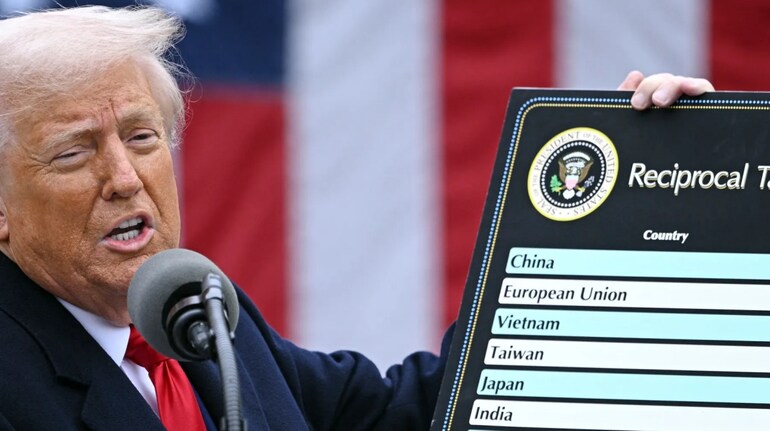

The United States will stop collecting a major tranche of import tariffs imposed by President Donald Trump after the US Supreme Court ruled that the duties were unlawful, triggering a rollback of a trade tool that had reshaped global supply chains and strained ties with key partners.
In a statement issued late Monday, US Customs and Border Protection said tariff collections imposed under the International Emergency Economic Powers Act will cease at 12.01 am US local time on Tuesday, which corresponds to 10.30 am IST. The agency said all related tariff codes would be deactivated in its cargo processing systems.
The suspension comes more than three days after the Supreme Court invalidated the emergency-based tariffs. CBP did not explain why collections continued in the interim period following the ruling and offered no clarity on whether importers would be eligible for refunds.
“CBP will provide additional guidance to the trade community through CSMS messages as appropriate," the agency said.
Scope of the suspension
The halt applies only to tariffs imposed under the 1977-era International Emergency Economic Powers Act. It does not affect other Trump-era duties that remain in force, including tariffs imposed under Section 232 on national security grounds and Section 301 measures targeting unfair trade practices.
The rollback affects a wide range of imports from major Asian export economies such as China, South Korea, Japan and Taiwan, all of which play central roles in global manufacturing and technology supply chains.
Revenue and refund uncertainty
Economists estimate that the Supreme Court ruling could put more than 175 billion dollars in US tariff revenue at risk of refunds. According to Reuters, the now-invalidated tariffs had been generating more than 500 million dollars a day for the US government.
The Supreme Court, however, did not provide guidance on how refunds should be handled, leaving the issue to lower courts and administrative agencies. This has created significant uncertainty for businesses that paid the duties.
Court ruling and Trump’s response
In a 6–3 ruling on February 20, the Supreme Court upheld earlier lower-court findings that Trump exceeded his authority by invoking IEEPA to impose broad import tariffs. The court held that the law did not grant the president the power to levy taxes of such scope.
Within hours of the ruling, Trump announced a new blanket tariff on imports from all countries. The measure was initially set at 10 percent before being raised to 15 percent a day later, a move that appeared to catch some administration officials by surprise.
The new tariff relies on Section 122 of US trade law, a little-used provision that allows temporary tariffs of up to 15 percent to address balance-of-payments concerns. The law requires congressional approval if the duties are extended beyond 150 days.
No US president has previously invoked Section 122, and legal challenges to the new tariff regime are widely expected.
Trade policy in flux
The end of IEEPA-based tariff collections marks a significant shift in US trade policy following the Supreme Court’s intervention. While Trump has moved quickly to replace the struck-down duties with a new legal mechanism, the decision has opened the door to prolonged legal disputes and potential refund claims running into hundreds of billions of dollars.
For global exporters and supply chains, the episode underscores a period of continued volatility as the United States navigates the legal limits of presidential trade authority while pursuing aggressive tariff strategies.
Discover the latest Business News, Sensex, and Nifty updates. Obtain Personal Finance insights, tax queries, and expert opinions on Moneycontrol or download the Moneycontrol App to stay updated!
Find the best of Al News in one place, specially curated for you every weekend.
Stay on top of the latest tech trends and biggest startup news.





