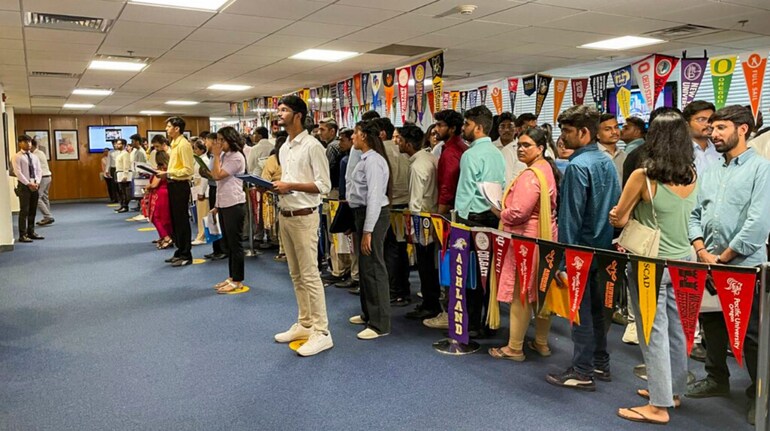
The United States has revoked more than 6,000 student visas in 2025 so far, marking one of the most aggressive immigration enforcement drives under President Donald Trump’s return to power. Officials insist the crackdown is aimed at national security and law enforcement, but the sweeping cancellations have unsettled universities, alarmed international students, and raised questions about the future of US higher education.
What the numbers show
According to the US State Department, roughly 6,000 student visas -- most of them F-1 visas -- have been revoked since January. A large share of those, about 4,000, were tied to students accused of committing crimes while in the United States, including cases of assault, DUI arrests, and burglary.
An additional 200–300 visas were rescinded under provisions of the Immigration and Nationality Act that deal with terrorism-related activities. Officials say these cases included students linked to raising money for Hamas, which the US designates as a terrorist organisation.
The numbers are part of a broader surge in visa cancellations across categories. So far in 2025, approximately 40,000 visas of all kinds have been revoked — more than double the 16,000 cancellations recorded during the same period under the Biden administration.
Trump’s tougher line on student visas
The Trump administration has consistently signalled a harder stance on foreign students since returning to power. In January, Trump signed executive orders directing federal agencies to strengthen vetting of foreign nationals. One directive instructed the State Department, DHS, the Attorney General, and the Director of National Intelligence to “vet and screen to the maximum degree possible all aliens who intend to be admitted, enter, or are already inside the United States, particularly those aliens coming from regions or nations with identified security risks.”
Another order directed authorities to use every legal tool against individuals engaged in antisemitic harassment or violence. Officials have framed this as part of a broader strategy to combat terrorism and protect American campuses from extremist ideologies.
Earlier this year, the State Department even halted student visa interviews. When processing resumed, applicants were required to make their social media accounts public, while consular officers were instructed to flag restricted online activity as potential evidence of concealment.
How the administration defends it
US Secretary of State Marco Rubio has emerged as the policy’s chief defender. Speaking to EWTN network, he said: “There is no constitutional right to a student visa. A student visa is something we decide to give you. Visas of every kind are denied every day all over the world. As I speak to you now, someone’s visa application to the US is being denied. So, if I would have denied you a visa had I known something about you, and I find out afterwards that I gave you a visa and I found this out about you, why wouldn’t I be able to revoke your visa?”
Rubio has also told lawmakers that the administration will continue revoking visas if students disrupt higher education institutions. Testifying before a Senate subcommittee in May, he said:
“I don’t know the latest count, but we probably have more to do. We’re going to continue to revoke the visas of people who are here as guests and are disrupting our higher education facilities.”
The State Department echoed this in a statement to Fox News: “Every single student visa revoked under the Trump Administration has happened because the individual has either broken the law or expressed support for terrorism while in the United States.”
Student impact and backlash
Some cases have become flashpoints. One involved Tufts University PhD student Rumeysa Ozturk, whose visa was abruptly revoked in March before she was detained by ICE agents -- some masked. She remained in custody until a judge ordered her release in May. Her case galvanized student groups and civil liberties advocates worried about arbitrary cancellations.
The policy has also coincided with heightened scrutiny of pro-Palestinian student demonstrations. Administration officials have accused some participants of antisemitism and support for terrorism -- a charge critics argue conflates legitimate protest with extremism.
Democratic lawmakers have sharply criticised the approach. Senator Jeff Merkley of Oregon said in May: “I do think it’s a fundamental attack on freedom, because due process is the guardian of the gate to keep a government from taking away people’s life or liberty, and liberty is what happens when you take away a visa without due process.”
Civil liberties groups warn the strategy risks silencing dissent on US campuses by policing political expression and online activity.
Economic and academic fallout
The clampdown is already reshaping international education. In FY 2024, the US issued about 400,000 F-1 visas, but 2025 approvals are expected to drop sharply amid the new rules and delays in interviews.
NAFSA: Association of International Educators and JB International project a 30–40% decline in new international enrolment this fall, potentially cutting overall enrolment by 15%. NAFSA estimates this could deprive the US economy of $7 billion in spending and cost more than 60,000 jobs, especially in college towns. Bloomberg has warned tuition losses could exceed $2.6 billion.
The Indian student angle
Indian students, the largest international student group in the US, concentrated in STEM fields, have been among the hardest hit. Their contribution to the US economy is valued at nearly $9 billion annually, including tuition, living expenses, and research work.
Visa appointment delays and sudden rejections have caused uncertainty in India. Last month, a bipartisan group of 14 US representatives, including three Indian-American lawmakers, urged Rubio to address backlogs, citing the critical role of Indian students in sustaining US research and innovation.
Experts caution that if the current trajectory continues, US universities could lose global competitiveness, while the strain on educational exchanges could ripple into US-India relations.
For now, the United States remains the top destination for foreign students. More than 1.1 million international students from over 210 countries were enrolled in US institutions in 2023–24, according to Open Doors data. But with Trump 2.0 pressing a harder line, the numbers may decline, and the US could risk losing one of its most enduring sources of soft power.
Discover the latest Business News, Sensex, and Nifty updates. Obtain Personal Finance insights, tax queries, and expert opinions on Moneycontrol or download the Moneycontrol App to stay updated!
Find the best of Al News in one place, specially curated for you every weekend.
Stay on top of the latest tech trends and biggest startup news.