






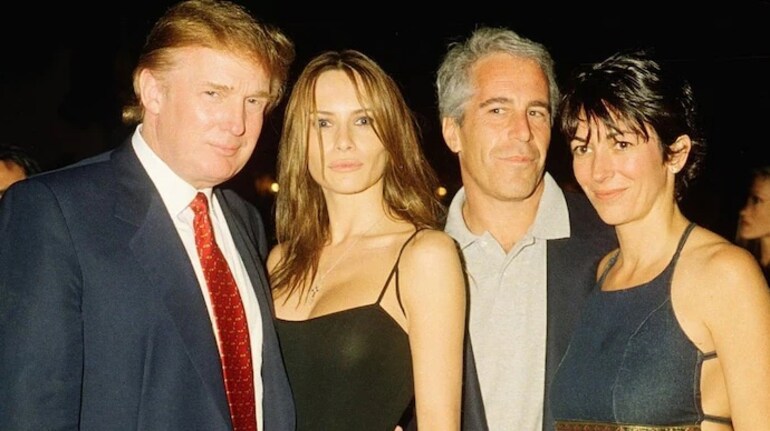

The US Department of Justice (DOJ) has cautioned the public against concluding newly released Jeffrey Epstein investigation records, warning that several claims circulating online are “untrue and sensationalist.” The warning followed the disclosure of nearly 30,000 pages of documents, the largest release so far under the Epstein Files Transparency Act.
In an unusual public clarification issued on December 23, the DOJ explicitly rejected allegations in the documents targeting President Donald Trump, calling them “unfounded and false.” The department said raw tips included in the files should not be mistaken for verified evidence.
The controversy centres on a 2020 FBI intake report that records a tip from a former limousine driver. The driver claimed he overheard a phone conversation in 1995 in which Trump allegedly spoke about “abusing some girl” while referencing “Jeffrey.” The same report also contains a second-hand allegation that a woman told the driver she had been raped by both Trump and Epstein.
The DOJ addressed the allegation directly, stating on X: “If these claims had a shred of credibility, they certainly would have been weaponized against President Trump already.” The department noted that the tip was submitted on October 27, 2020, just days before the US presidential election, raising concerns about timing and motive.
Officials said many similar claims were made to the FBI during election periods and emphasised that inclusion in investigative files does not amount to proof. An FBI note attached to the report itself questioned the reliability of the source.
The document release also sheds light on Trump’s past association with Epstein. Internal emails from federal prosecutors suggest Trump flew on Epstein’s private jet more frequently than previously known, at least eight times between 1993 and 1996.
Some flights reportedly included Ghislaine Maxwell and, on one occasion, an unnamed 20-year-old. The DOJ stressed that the records do not indicate any criminal investigation or suspicion against Trump.
Separately, the department confirmed that a handwritten letter signed “J. Epstein” and addressed to convicted sex offender Larry Nassar is fake. “This fake letter serves as a reminder that just because a document is released by the Department of Justice does not make the allegations or claims within it factual,” the DOJ said.
Forensic analysis found that the handwriting did not match Epstein’s, the envelope was postmarked from Virginia rather than New York, and the return address listed a jail where Epstein was never held. The letter was also processed three days after Epstein died by suicide in August 2019.
The release of the files is mandated by the Epstein Files Transparency Act, signed into law by Trump in November 2025. While the administration has framed the disclosures as a transparency measure, the DOJ said names of more than 1,000 victims and witnesses remain redacted to protect identities, resulting in a staggered release of records.
Democrats on the House Oversight Committee have accused the Justice Department of a “cover-up,” arguing the files raise questions about Trump’s relationship with Epstein. The DOJ has rejected those claims, reiterating that transparency does not validate unverified allegations.
As additional archives are expected to be released in the coming weeks, the department has reiterated its position that the presence of a name or accusation in the files “does not constitute evidence of criminal wrongdoing.”
Discover the latest Business News, Sensex, and Nifty updates. Obtain Personal Finance insights, tax queries, and expert opinions on Moneycontrol or download the Moneycontrol App to stay updated!
Find the best of Al News in one place, specially curated for you every weekend.
Stay on top of the latest tech trends and biggest startup news.





