Generation Z faces stagnant living standards, sky-high housing costs and a flatlining economy in Britain today, and yet they’re less gloomy about their life prospects than the rest of the population.
The most pessimistic generation, meanwhile, is the richest cohort: Baby Boomers who are now in their 60s and 70s.
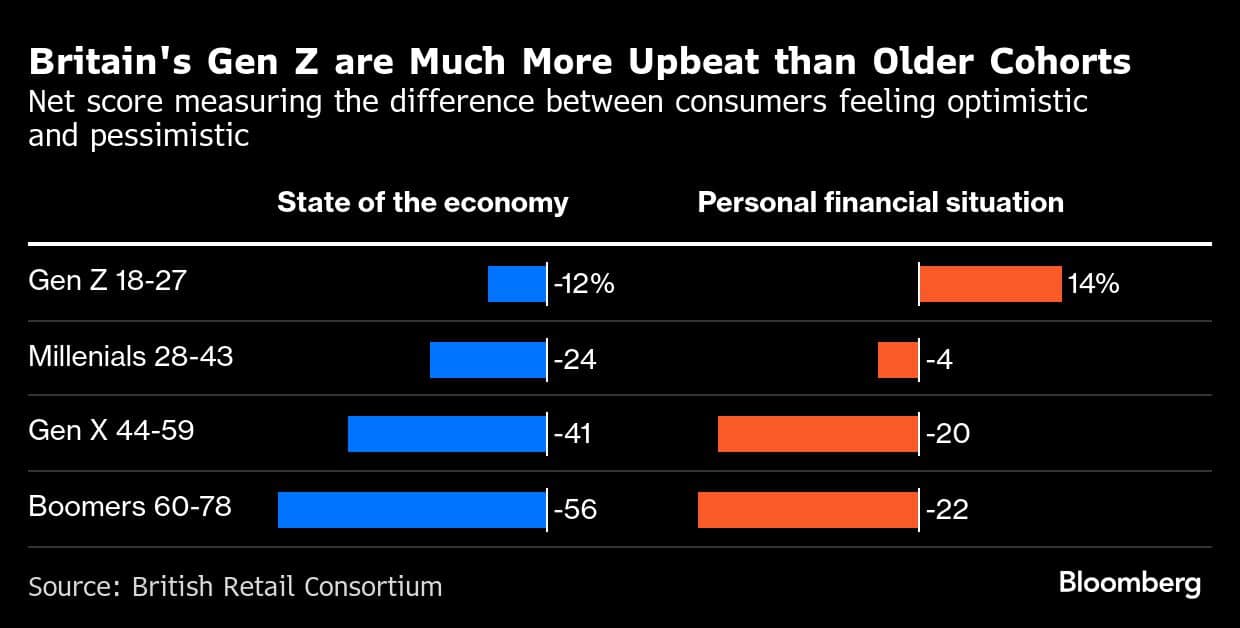
The contrast is stark. A British Retail Consortium survey found a 44 percentage-point difference between the generations on how they viewed the state of the economy in February, and a 36-point gap on their own personal finances. GfK’s closely watched consumer confidence index reveals a similar pattern, with 16 to 29 year-olds having the highest net score at plus 6. For the over 65s, the figure is minus 41.
The findings are a boost for Chancellor of the Exchequer Rachel Reeves at a time when consumption is key to keeping the tepid UK economy motoring. It comes despite official figures showing that 25 to 34-year-olds have less than a quarter of the wealth of those aged 65 to 74, who have benefited from decades of rising house prices and equity values. The question is why are the young so defiantly optimistic?
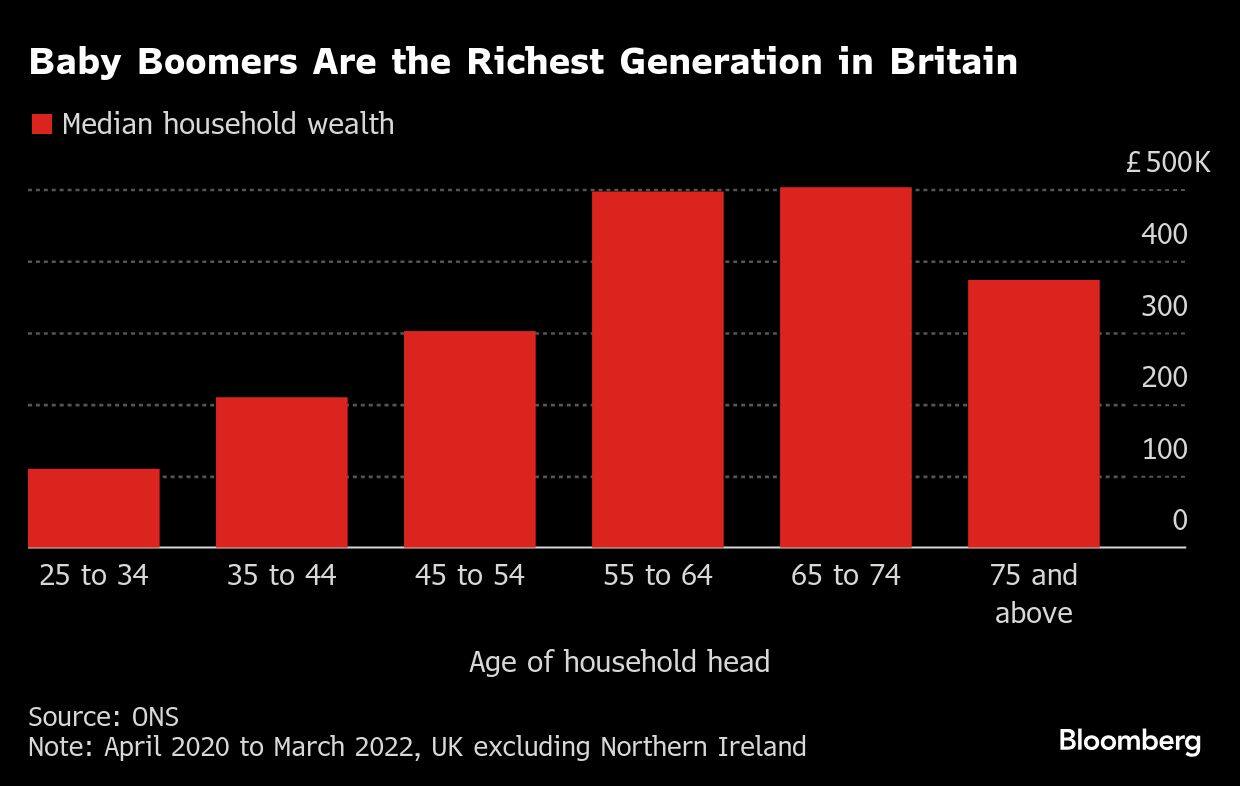 Baby Boomers Are the Richest Generation in Britain
Experts tracking consumer sentiment offer several reasons. With low levels of home ownership, young people are less directly exposed to the sharp rise in interest rates in recent years. They also have fewer financial commitments and family obligations, plus generations decades apart consume the news in different ways.
“The stakes are lower and then also there is a significant proportion of Gen Zs that still live at home,” said Richard Lim, chief executive of consultancy Retail Economics. “They’re just not exposed to the pressures that have been around home ownership and rising interest rates. It’s so much easier if your landlord puts up your rent by 10%, then perhaps you move out and find somewhere more affordable.”
Britons are hitting many life milestones later than in the past. The Office for National Statistics found that the average age of first-time mothers was 29 in 2020, up from 23 in in 1970. Thirty-six was when more than half of people owned their own home in 2022, up from 32 in 2004.
“Many younger people will have fewer financial commitments or families they need to support,” said Neil Bellamy, consumer insights director at NIQ GfK. “It’s not that they are necessarily wealthier, but they have less to worry about, whilst as people get older they have greater responsibilities and (negative) life experiences.”
Gen Z may also find it easier to top-up their incomes, such as from more working hours, than Baby Boomers given many older people are already retired. The BRC reckons they may also be less affected by the rife pessimism over the state of the economy, with many shunning traditional forms of press for social media.
“It seems their views on the economy are more influenced by their expectations for their personal financial situation – which is higher than perceptions of the economy for all age groups – than by the wider media narrative, which has recently been focused on the challenges facing the British economy,” said Kyle Rose, senior analyst at the BRC.
The BRC said on Thursday that consumer confidence edged up in March, having dropped in February to the lowest level since the Labour government was elected last summer.
Its gauge tracking household expectations for the state of the economy narrowly improved to a net minus 35%, up from minus 37%. It showed that Gen Z expects to spend more than the previous three months across every category, while Gen X — those aged between 44 and 59 — were planning the biggest cuts.
Discover the latest Business News, Sensex, and Nifty updates. Obtain Personal Finance insights, tax queries, and expert opinions on Moneycontrol or download the Moneycontrol App to stay updated!
Find the best of Al News in one place, specially curated for you every weekend.
Stay on top of the latest tech trends and biggest startup news.