






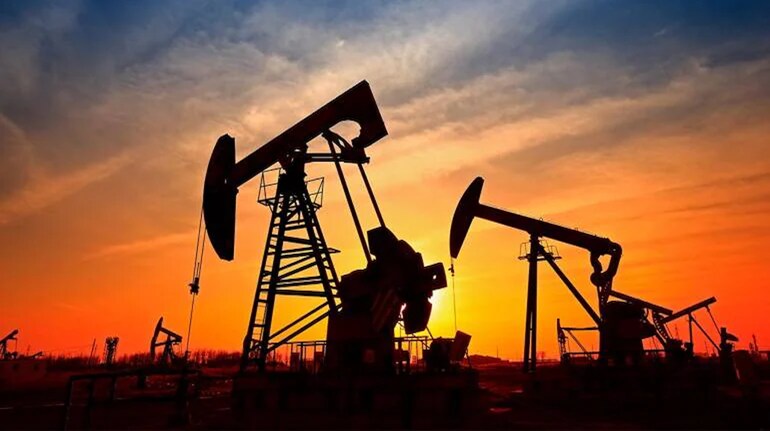

When Donald Trump talks about Venezuela’s oil, he is talking about the biggest prize in the global fossil fuel game. Beneath the country’s soil lies more than 300 billion barrels of crude — the largest proven reserves on Earth. After the capture of Venezuelan president Nicolás Maduro, Trump has made it clear he wants American companies to unlock that wealth.
But scientists and energy analysts say this is not just another oil story. Venezuela’s crude is among the dirtiest on the planet, and scaling up production would come with huge climate, environmental and economic costs, CNN reported.
“Venezuela’s oil is considered ‘dirty’ not because of ideology, but because of physics and infrastructure,” said Guy Prince, head of energy supply research at Carbon Tracker.
Why Venezuela’s oil is different
Most of Venezuela’s oil is concentrated in the Orinoco Belt, a vast region in the east of the country. What lies there is not light, free-flowing crude, but heavy sour oil — thick, sticky and closer in texture to molasses than gasoline.
This kind of oil is similar to Canada’s oil sands. It does not flow easily from the ground. Instead, it must be heated underground, often by pumping steam into the reservoir, before it can be extracted. That process consumes enormous amounts of energy, usually generated by burning natural gas.
“The oil does not flow from the well as a liquid,” said Lorne Stockman of Oil Change International. “It has to be heated.”
Once extracted, the problems continue. The oil’s high sulphur content makes it harder and more energy-intensive to refine into usable fuels like petrol and diesel. Every step of the process adds to its carbon footprint.
A methane and spill problem
Venezuela’s ageing and poorly maintained oil infrastructure makes matters worse. According to Carbon Tracker, the risk of methane leaks, flaring and spills is unusually high.
Methane is a particularly dangerous greenhouse gas, more than 80 times more powerful than carbon dioxide over short periods. The International Energy Agency estimates that Venezuela’s methane intensity is six times the global average, in part because of widespread flaring — the practice of burning off excess gas.
Overall, each barrel of Venezuelan oil produces more than double the global average level of climate pollution, according to Rystad Energy.
Spills are another chronic problem. The national oil company stopped publishing spill data in 2016, but a 2022 report by the Venezuelan Observatory of Environmental Human Rights recorded 199 spills between 2016 and 2021 — and warned the real number was likely much higher.
Could US companies clean it up?
Some analysts say US oil majors might be able to reduce emissions intensity by upgrading infrastructure and improving practices. But there are limits.
“There are limits to how much you can reduce,” said Patrick King of Rystad Energy. The oil will always require large amounts of energy to extract, and serious flare-reduction programmes are extremely expensive.
In short, even under best-case management, Venezuelan oil would remain high-cost and high-emissions.
The economics may not work either
Venezuela’s oil industry is a shadow of what it once was. Production has fallen from about 2 million barrels a day in 2016 to less than 1 million today, hit by sanctions, mismanagement and lack of investment.
According to Rystad, it would take more than $53 billion over the next 15 years just to maintain current production. Restoring output to its former peak of more than 3 million barrels a day would require an extraordinary $183 billion.
That investment would be made in a world already awash with oil, where prices are under pressure and where global demand growth may be nearing its peak.
“It would be a very expensive way to produce high-cost, high-emissions oil just as global demand growth is slowing,” said Prince. “It’s just not a credible scenario.”
The bigger climate risk
Even if Venezuela’s oil does not flood global markets, analysts warn the bigger danger may be political rather than purely mathematical.
“The most significant climate impact wouldn’t be releasing vast new carbon,” said Prince. “It would be indirect: distracting from the clean energy transition, reinforcing a 20th century resource-conflict mindset, and creating instability that slows coordinated climate action.”
In other words, Venezuela’s oil is not just a dirty fuel problem. It is a test of whether the world is serious about leaving that kind of fuel in the ground.
Discover the latest Business News, Sensex, and Nifty updates. Obtain Personal Finance insights, tax queries, and expert opinions on Moneycontrol or download the Moneycontrol App to stay updated!
Find the best of Al News in one place, specially curated for you every weekend.
Stay on top of the latest tech trends and biggest startup news.





