






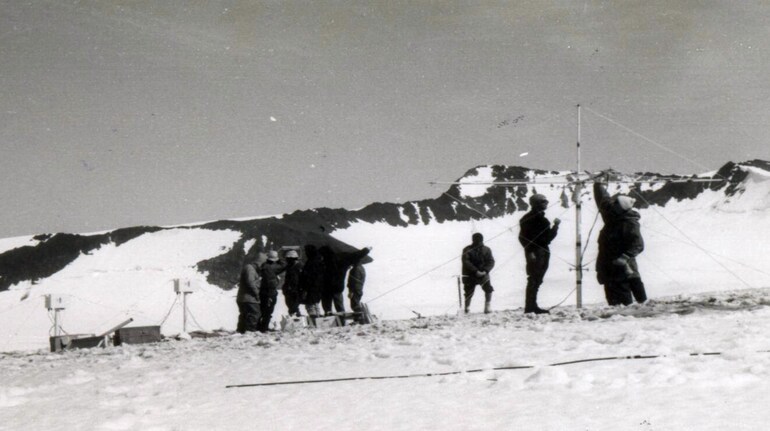
A recently detailed New York Times investigation has revived one of the most secretive and controversial Cold War operations involving the United States, India, and China, the disappearance of a nuclear-powered surveillance device on Nanda Devi, one of India’s highest Himalayan peaks, in 1965.
The covert CIA-led mission, carried out under the cover of a scientific expedition, aimed to spy on China’s nuclear and missile activity. Six decades later, the device has never been recovered, fuelling lingering fears over environmental safety, radiation risks, and geopolitical accountability.
A secret mission sparked by China’s nuclear test
In 1964, China detonated its first atomic bomb in Xinjiang, alarming both Washington and New Delhi. With limited intelligence access inside China, the CIA devised an unconventional plan: place a surveillance station high in the Himalayas to intercept missile telemetry.
The chosen location was Nanda Devi, a 25,645-foot peak just inside India’s border with China. The equipment included a SNAP-19C portable nuclear generator powered by plutonium, containing nearly a third of the plutonium used in the Nagasaki bomb, designed to run unattended for years.
American climbers and Indian intelligence-backed mountaineers were recruited under the guise of a scientific research mission.
‘If not impossible, extremely difficult’
Even before the expedition began, Indian military captain and mountaineer M.S. Kohli expressed grave concerns.
“I told them it would be, if not impossible, extremely difficult,” Kohli recalled in interviews cited by the Times. Despite warnings, the mission proceeded in September 1965, racing against time as winter storms approached.
Blizzard near the summit forces abandonment
On October 16, 1965, as the team attempted to push toward the summit via the southwestern ridge, they were caught in a brutal blizzard.
“We were 99 percent dead,” recalled Sonam Wangyal, one of the Indian intelligence officers on the mountain. “We had empty stomachs, no water, no food, and we were totally exhausted.”
Visibility dropped to near zero. From base camp, Kohli ordered the climbers to retreat and abandon the equipment to save lives.
“Secure the equipment. Don’t bring it down,” Kohli said he ordered.
The climbers tied the generator to an ice ledge and descended. The nuclear device was never seen again.
The device vanishes
When a recovery expedition returned in 1966, the entire ice shelf where the generator had been secured was gone, likely swept away by an avalanche. Multiple follow-up searches using radiation detectors, infrared sensors, and metal scanners failed to locate it.
American climber Jim McCarthy later suggested the heat emitted by the plutonium-powered device may have melted the surrounding ice, causing it to sink deeper into the glacier.
“That damn thing was very warm,” he said.
Fears of radiation, health risks, and a ‘dirty bomb’
The missing device continues to raise alarms in India. While scientists say contamination of the Ganges River, fed by glaciers from Nanda Devi, would likely be diluted by water volume, concerns remain for people living near the mountain streams.
Plutonium is highly toxic if inhaled or ingested and is known to cause cancer. McCarthy, who later developed testicular cancer, attributed his illness to radiation exposure during the mission. “There’s no history of cancer in my family,” he said.
Another fear is the possibility of the plutonium falling into the wrong hands and being used to make a “dirty bomb,” a weapon designed to spread radioactive material rather than cause a massive explosion.
Landslides, climate change and unanswered questions
Following a deadly landslide near Nanda Devi in 2021 that killed more than 200 people, speculation resurfaced about whether heat from the missing generator could have played a role. While scientists point to climate change as a likely cause, doubts persist among locals and former officials.
“Once and for all, this device must be excavated, and the fears put to rest,” said Uttarakhand tourism minister Satpal Maharaj.
Indian MP Nishikant Dubey placed responsibility squarely on Washington: “Who owns that device should take out that device.”
Governments remain silent
Both the US and Indian governments continue to refuse comment on the 1965 operation, citing policy on intelligence matters. Diplomatic efforts between US President Jimmy Carter and Indian Prime Minister Morarji Desai in the late 1970s sought to quietly defuse the issue, but the device was never recovered.
The CIA has never publicly acknowledged the mission.
A Cold War chapter still unfinished
Buried somewhere beneath Himalayan ice and rock lies a relic of Cold War espionage, one that continues to trouble scientists, politicians, villagers, and the climbers who once carried it.
As development, dam construction, and tourism expand in the region, the long-forgotten nuclear device on Nanda Devi remains an unresolved and unsettling legacy of global power politics played out on the roof of the world.
Discover the latest Business News, Sensex, and Nifty updates. Obtain Personal Finance insights, tax queries, and expert opinions on Moneycontrol or download the Moneycontrol App to stay updated!
Find the best of Al News in one place, specially curated for you every weekend.
Stay on top of the latest tech trends and biggest startup news.




