






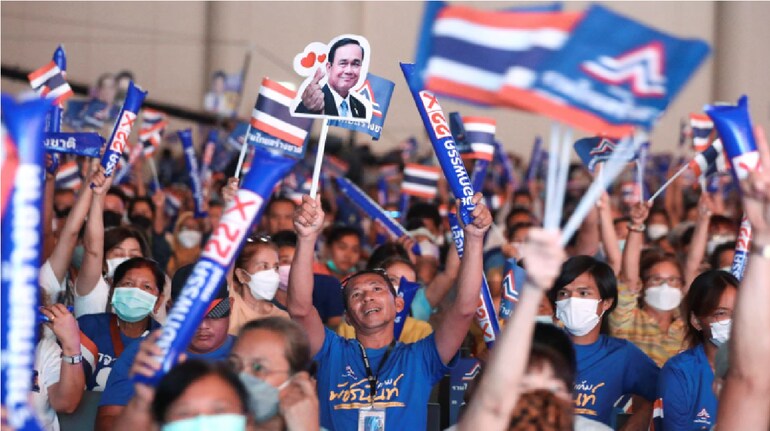

Thailand heads into another election with a familiar question hanging over it: if voters choose change, will the system allow it?
Opinion polls ahead of Sunday’s vote show the progressive People’s Party in the lead. Its leaders are promising to push long-stalled reforms, tackle corruption and modernise state institutions. But many analysts believe that even if the party tops the ballot, it may struggle to form a government, the Financial Times reported.
Thailand has spent nearly two decades in a cycle of elections, court rulings and military interventions that have repeatedly sidelined parties with strong public mandates. The country’s conservative establishment, anchored by the monarchy and the military, has often acted as a gatekeeper when reformist movements gained ground.
A pattern of blocked mandates
The People’s Party is the successor to the Move Forward Party, which won the most seats in the 2023 election. Despite its victory, it was prevented from forming a government after proposing changes to Thailand’s strict royal defamation law. The constitutional court later dissolved the party and banned several of its leaders from politics.
That episode reinforced a long-standing perception among many voters that electoral success does not automatically translate into executive power. Earlier governments led by Thaksin Shinawatra and his sister Yingluck were removed by coups or judicial rulings. Since 2023 alone, Thailand has had three prime ministers.
Political analysts argue that the rules of the game extend beyond parliament. Informal networks within the bureaucracy, courts and security forces continue to wield significant influence over coalition-building and leadership outcomes.
Anutin’s advantage
Prime Minister Anutin Charnvirakul, leader of the conservative Bhumjaithai Party, is seen as likely to retain power through coalition negotiations even if his party does not win the most seats. Bhumjaithai has positioned itself as a defender of national stability and the monarchy, particularly after border tensions with Cambodia stirred nationalist sentiment last year.
In the previous election, conservative parties joined with the Shinawatras’ Pheu Thai Party to block Move Forward. A similar alliance remains possible.
Unlike in 2023, the military-appointed senate will not participate in selecting the prime minister this time. Voters will also weigh in on whether to begin amending the 2017 constitution, drafted under military rule. Still, observers say reformists would need a decisive parliamentary majority to overcome institutional resistance.
Economic stakes
The political stalemate has weighed on Thailand’s economy, which has grown more slowly than many of its south-east Asian peers. Business leaders and economists argue that prolonged uncertainty has discouraged investment and delayed structural reforms.
For many voters, the election is not only about ideology but about restoring credibility to democratic institutions and stabilising the economy. Whether this vote breaks the pattern or reinforces it will shape Thailand’s political trajectory for years to come.
Discover the latest Business News, Sensex, and Nifty updates. Obtain Personal Finance insights, tax queries, and expert opinions on Moneycontrol or download the Moneycontrol App to stay updated!
Find the best of Al News in one place, specially curated for you every weekend.
Stay on top of the latest tech trends and biggest startup news.





