






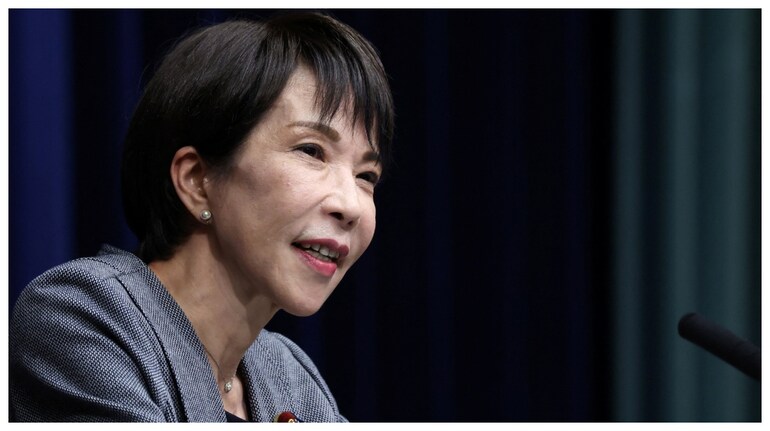

The surge in Japanese stocks, triggered by Prime Minister Sanae Takaichi’s snap election plans, may fade if she gets what she wants, as overspending drives up inflation and government borrowing costs.
Japan’s Topix index rose more than 4% this week in its strongest rally since July after reigniting the “Takaichi trade” in which investors buy stocks on expectations of more government spending. Takaichi is gambling her party will win more seats so to consolidate her power, giving her a freer hand to pursue pro-stimulus policies.
Investors think that Takaichi may emulate her mentor, Shinzo Abe — Japan’s longest-serving leader from 2012 to 2020 — whose stimulus-heavy Abenomics fueled asset prices. She has flagged areas such as artificial intelligence, semiconductors, defense, space and content industries as investment priorities.
While Japan’s equity benchmarks are repeating a familiar pattern of rallying ahead of Lower House elections, further gains may depend on details of Takaichi’s spending plans. Bond investors are demanding higher premiums to hold Japanese government debt, even as global yields fall.
“Clearly, going by rising break-even inflation rates, the market is expecting slightly looser, more inflationary policies in the aftermath of the elections and higher-for-longer inflation above the Bank of Japan’s target,” said Aninda Mitra, head of Asia macro and investment strategy at BNY Investments.
Economists expect Japan’s consumer inflation to slow this year to below 2.0% — the BOJ’s target — for the first time in five years, partly due to cuts in gasoline taxes and other administered prices.
The yen’s slide to an over-a-year low of 159.45 per dollar on Wednesday — and its fall to the weakest level since 1992 on a trade-weighted basis — has intensified inflation concerns, undermining the weaker currency’s support for exporter shares. The yen has come under pressure as Takaichi’s preference for a dovish monetary stance is seen as limiting the BOJ’s scope to raise rates quickly.
“I think the biggest risk for Takaichi is the yen,” said Chisa Kobayashi, Japan equity strategist at UBS SuMi TRUST Wealth Management. “If it weakens further, that could fuel inflation, undermine consumer spending and ultimately hurt voter support.”
A Takaichi victory at the polls will likely lead to another 5% climb in the Nikkei 225 Stock Average, said Neil Newman, head of strategy at Astris Advisory Japan. “With the government planning to invest strategically in key industries, we’re likely to see a capex boom,” he said.
While Takaichi’s strong approval ratings have led many investors to assume an easy victory, some analysts are becoming less certain after Komeito — formerly a junior coalition partner of the Liberal Democratic Party — moved to align with the main opposition party.
That makes the election outcome difficult to predict, said Shinichi Ichikawa, a senior fellow at Pictet Asset Management Japan.
“The only certainty is that both sides will have little choice but to campaign on aggressive spending to win over voters,” he said.
Discover the latest Business News, Sensex, and Nifty updates. Obtain Personal Finance insights, tax queries, and expert opinions on Moneycontrol or download the Moneycontrol App to stay updated!
Find the best of Al News in one place, specially curated for you every weekend.
Stay on top of the latest tech trends and biggest startup news.





