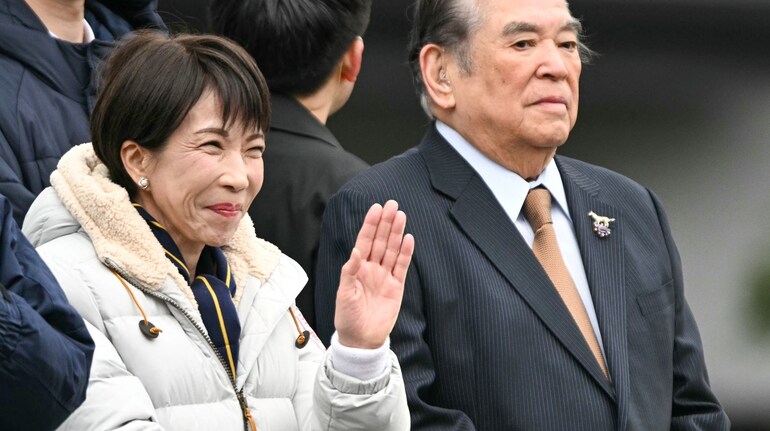

Sanae Takaichi’s landslide victory in Japan’s general election has sent a strong political signal to Beijing. Her ruling Liberal Democratic Party secured a rare two-thirds supermajority in the House of Representatives, giving her government unprecedented legislative power in postwar Japan. According to Kyodo News, this margin allows the LDP to pass laws even if blocked by the upper house and opens the door to constitutional revision.
For China, Takaichi’s decisive mandate raises concerns because she is widely viewed as one of Japan’s most outspoken critics of Beijing.
Why China is watching closely
Takaichi is often described by analysts and media outlets as a “China hawk.”
She has repeatedly argued that Japan must take a tougher stance against China’s growing military power and political influence in the region. She has criticised Beijing’s economic practices, including alleged intellectual property theft, and has pushed for reducing Japan’s economic dependence on China.
Chinese state-linked media have expressed unease over her leadership, warning that Japan’s policies under Takaichi could lead to heightened regional tensions and diplomatic friction, particularly if Tokyo strengthens security cooperation with the United States and its allies.
Taiwan at the centre of tensions
One of Beijing’s biggest concerns is Takaichi’s position on Taiwan.
She has echoed the view that a Taiwan crisis would be a “Japan emergency,” a statement that has drawn sharp reactions from China. Her remarks align with a broader shift in Japan’s security thinking that links Taiwan’s stability directly to Japan’s national security.
Following her election, Chinese commentators have warned that such rhetoric risks crossing Beijing’s red lines and could worsen China-Japan relations already strained by territorial disputes and military activity in the East China Sea.
Stronger Japanese security posture
Takaichi supports a more assertive defense policy for Japan.
Her positions include increased defense spending, stronger intelligence and counter-espionage systems, and closer military coordination with allies. Reports cited by China Global South note that Beijing is particularly concerned about Japan’s push to strengthen its security framework in East Asia under her leadership.
China views these moves as part of a broader effort to contain its influence in the Indo-Pacific.
Economic decoupling concerns
Another source of anxiety for Beijing is Takaichi’s economic outlook.
She has advocated reducing Japan’s reliance on Chinese supply chains and diversifying trade and technology partnerships. This includes encouraging domestic manufacturing and deeper cooperation with other democratic economies.
Chinese analysts fear that if Japan accelerates this shift, it could weaken China’s economic leverage in the region and encourage similar moves by other countries.
Coalition building against China
Takaichi’s victory strengthens Japan’s role in coalition-building among democratic nations.
She is expected to deepen engagement with frameworks such as the Quad, which includes India, the United States, and Australia. Beijing has long criticised the Quad, viewing it as a strategic grouping aimed at countering China.
Her government’s approach aligns with Japan’s vision of working closely with like-minded partners to manage regional security risks, a strategy that China sees as exclusionary.
Chinese reaction so far
Chinese officials and media have responded cautiously but critically.
According to reports cited in Firstpost, Chinese commentary has warned that Japan under Takaichi risks abandoning postwar restraint and moving toward a more confrontational regional posture. There is particular concern that Japan could play a more active role in U.S.-led security initiatives involving Taiwan.
Beijing has also indicated that Takaichi’s comments on Taiwan and security have already strained diplomatic ties since the election.
What this means going forward
Takaichi’s supermajority gives her political space to pursue policies that China strongly opposes.
For Beijing, her victory suggests that Japan’s tougher line on China has domestic backing and is unlikely to soften anytime soon. This raises the prospect of prolonged tension in China-Japan relations, especially over Taiwan, regional security, and economic policy.
While direct confrontation remains unlikely, analysts expect sharper rhetoric, deeper strategic competition, and more cautious diplomacy between Tokyo and Beijing under Takaichi’s leadership.
Discover the latest Business News, Sensex, and Nifty updates. Obtain Personal Finance insights, tax queries, and expert opinions on Moneycontrol or download the Moneycontrol App to stay updated!
Find the best of Al News in one place, specially curated for you every weekend.
Stay on top of the latest tech trends and biggest startup news.