






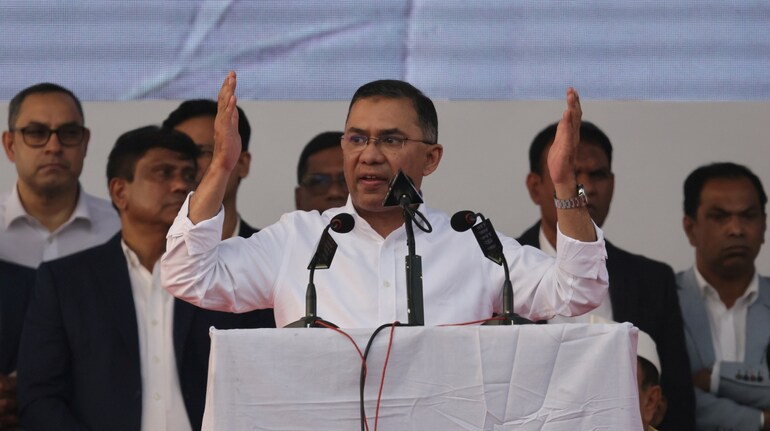
An internal intelligence note detailing the strategic nuances behind the landmark speech delivered by Tarique Rahman upon his return to Dhaka on Thursday has been exclusively accessed by CNN-News18.
According to the assessment, the acting chairman of the Bangladesh Nationalist Party (BNP) adopted a “deliberately low-temperature” tone, marking a calculated departure from the party’s traditional image as an agitation-driven force. By eschewing direct confrontation, street mobilisation, and Islamist rhetoric, Rahman is reportedly attempting to rebrand the BNP as a responsible, governance-oriented national alternative ahead of the February general elections.
Tarique Rahman claimed that Bangladesh has changed significantly since he left. He praised the development and infrastructure, acknowledging the progress made under Sheikh Hasina’s leadership.
This admission is significant, as it comes from a leader who has often criticised the current government.
The note highlights that Rahman’s repeated emphasis on peace, the rule of law, and the protection of minorities was a carefully calibrated message designed for two audiences. While it sought to reassure the domestic populace, it was equally aimed at international stakeholders who have historically viewed the BNP with caution. Analysts suggest that this “soft-rebranding” is intended to distance the party from its more turbulent past and project a vision of stability that aligns with democratic norms.
Central to the intelligence findings is Rahman’s subtle but clear outreach to India. Although there was no direct mention of New Delhi in his address, the note interprets his focus on non-violence and minority rights as a “reassurance signal” to the neighbouring capital. Intelligence agencies suggest that Rahman is seeking to convey that a future BNP government would not revert to the “2001–06 template”, which was characterised by anti-India permissiveness, including the presence of insurgent sanctuaries and radical networks.
The assessment concludes that the BNP is currently testing an “India-neutral” rather than an “India-friendly” posture. By stressing national sovereignty and a “people’s mandate”, Rahman is purportedly aiming to alleviate New Delhi’s historical security fears without offering a direct strategic role or appearing subservient. This nuanced diplomatic positioning appears to be the cornerstone of his strategy to secure both domestic legitimacy and regional acceptance as he prepares for a direct role in Bangladesh’s evolving political landscape.
Discover the latest Business News, Sensex, and Nifty updates. Obtain Personal Finance insights, tax queries, and expert opinions on Moneycontrol or download the Moneycontrol App to stay updated!
Find the best of Al News in one place, specially curated for you every weekend.
Stay on top of the latest tech trends and biggest startup news.




