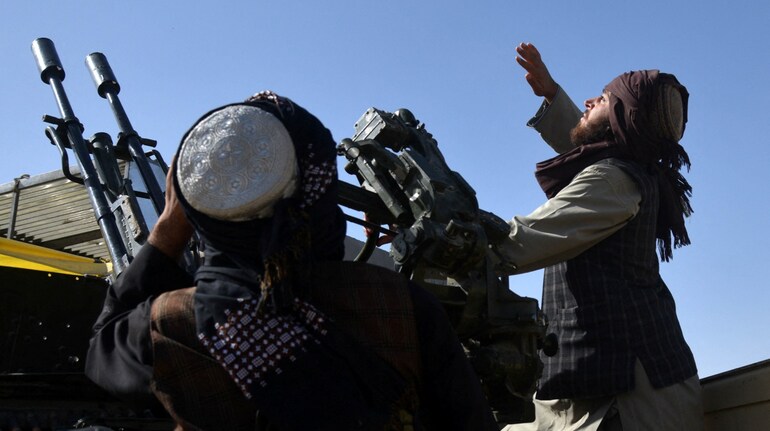
In yet another diplomatic fiasco, Pakistan has reportedly admitted to having a secret arrangement with a foreign country under which drone strikes are carried out inside Afghanistan, and claimed it cannot prevent future attacks because it is “bound” by the agreement. The revelation has enraged Kabul and pushed already-tense ties to the brink of open conflict.
According to a report by Afghanistan’s TOLO News, Islamabad told Afghan negotiators that it had “an agreement with a foreign country allowing drone strikes” and that it “cannot prevent them as breaking the agreement is not possible.” The source quoted by TOLO News added that Pakistan even asked Afghanistan to “recognise Pakistan’s right to strike Afghan territory in response to TTP attacks.”
The statement marks the first public admission by Pakistan that its soil is being used for foreign drone operations, confirming suspicions long voiced by Kabul. However, Islamabad did not name the country involved.
Talks collapse amid chaos and accusations
The latest round of peace talks between Pakistan and Afghanistan, held in Istanbul, collapsed without any breakthrough despite weeks of mediation by Saudi Arabia and the United States. Reuters reported that the discussions ended in a deadlock even as a fragile ceasefire continues along the border following deadly clashes in September and October.
Sources told TOLO News that Pakistan’s delegation appeared “disorganised” and “seemed intent on distancing itself from Afghanistan.” The Afghan side accused Islamabad of deliberately sabotaging the negotiations.
One Afghan official described Pakistan’s attitude as “provocative,” saying Islamabad was “shifting blame for its own internal terror crisis onto Afghanistan.” The Taliban delegation reportedly expressed frustration over Pakistan’s lack of seriousness and its attempt to justify foreign military activity on Afghan soil.
Kabul issues blunt warning: Islamabad will be targeted
Following the breakdown of talks, the Taliban issued a direct warning to Pakistan. “From now on, any attack by Pakistan will be met with a reciprocal response, and if Afghanistan’s territory is bombed, ‘Islamabad will be targeted’,” TOLO News quoted security sources as saying.
The warning reflects growing anger in Kabul, which accuses Pakistan of undermining its sovereignty under the guise of counterterrorism operations. Afghan officials claim Islamabad is using drone strikes to mask its own military failures against the Pakistani Taliban (TTP).
Border violence escalates despite ceasefire
The collapse of the Istanbul talks comes after one of the bloodiest border flare-ups in recent memory. Fighting erupted in early September after a surge in TTP attacks on Pakistani forces. In retaliation, Islamabad launched airstrikes inside Afghanistan, claiming to target militant hideouts in Kabul and Kandahar.
The bombings killed over 200 people on both sides, including Afghan civilians, women, and children. Pakistan insisted its strikes targeted only TTP commanders, but Afghan authorities called them “acts of aggression.”
In response, Taliban forces shelled Pakistani border outposts along the Durand Line, killing at least 23 soldiers and injuring hundreds. Fierce clashes followed in border regions like Spin Boldak and Kurram before a Saudi- and US-brokered ceasefire took effect on October 15.
The ceasefire remains fragile, with both sides accusing each other of repeated violations.
Pakistan’s shifting alliances and growing isolation
The diplomatic rupture with Afghanistan coincides with Islamabad’s renewed courting of Washington and Riyadh. In September, Pakistan signed a Strategic Mutual Defence Agreement with Saudi Arabia, pledging joint military cooperation and deeper economic ties.
Around the same time, Prime Minister Shehbaz Sharif and Army Chief Asim Munir met US President Donald Trump in the Oval Office. Sharif praised Trump’s “leadership,” even nominating him for a Nobel Peace Prize, while Trump demanded that the Taliban hand back the Bagram Airbase to US control, warning of “bad consequences” if it was not returned.
Observers say Pakistan’s renewed alignment with Washington and Riyadh may explain the unnamed “foreign country” operating drones from its territory -- a likely reference to the United States.
A self-inflicted crisis
Analysts in Kabul argue that Pakistan’s double game has finally caught up with it. After decades of using militant proxies and cross-border strikes to project influence, Islamabad now faces hostility on both sides of the Durand Line.
The Taliban, once Pakistan’s strategic asset, has turned openly defiant. Its warning that “Islamabad will be targeted” marks a new phase in an already collapsing relationship.
Pakistan’s attempt to justify drone operations under a secret “foreign agreement” only reinforces its image as a client state serving the interests of outside powers while eroding the trust of its neighbors.
The Istanbul talks may have ended, but the fallout from Pakistan’s admission will continue to haunt it -- diplomatically, militarily, and politically. Kabul has made its position clear: any further violation of Afghan sovereignty will not go unanswered.
Discover the latest Business News, Sensex, and Nifty updates. Obtain Personal Finance insights, tax queries, and expert opinions on Moneycontrol or download the Moneycontrol App to stay updated!
Find the best of Al News in one place, specially curated for you every weekend.
Stay on top of the latest tech trends and biggest startup news.