






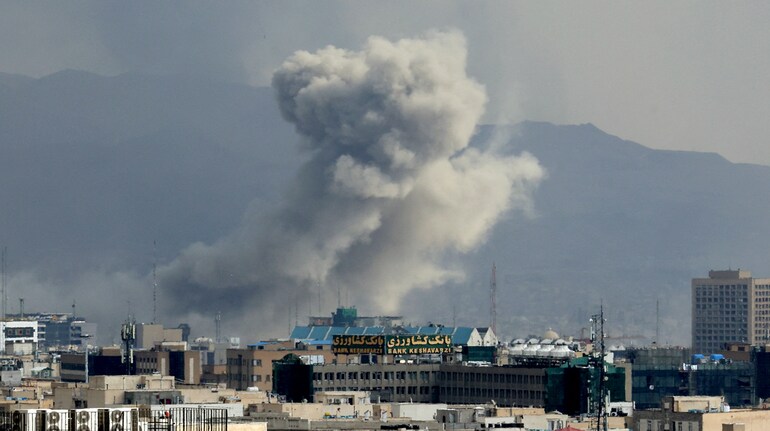

Iran’s President Masoud Pezeshkian said Tehran had tried to avoid war through diplomacy but was ultimately compelled to respond after what he described as a joint American-Israeli military assault.
Addressing leaders of neighboring Gulf states on Wednesday, Pezeshkian stressed that Iran still values regional sovereignty and believes stability in West Asia should be safeguarded collectively by countries in the region.
“Dear esteemed leaders of our friendly and neighboring countries, we have strived, with your assistance and through diplomacy, to avoid war,” he said. “However, the American-Zionist military attack has left us with no choice but to defend ourselves.”
The Iranian president added that Tehran remains committed to regional cooperation despite the escalating conflict. “We respect your sovereignty and still believe that the region's peace must be ensured by the countries of the region,” Pezeshkian said.
In a message directed at Gulf monarchs and heads of neighboring states, he posted on X that Iran had pursued diplomatic channels before the outbreak of hostilities.
“We have strived alongside you and through diplomacy to avoid war, but the American-Zionist military aggression has left us no choice but to defend ourselves,” he said. “We respect your sovereignty, and we believe that the security and stability of the region must be achieved through the collective efforts of its states.”
The comments came as fighting across the Middle East intensified. Iran’s Revolutionary Guards announced that they had launched a fresh missile barrage targeting American and Israeli positions.
“Several hours ago, the 17th wave of Operation Honest Promise 4 was carried out with the launch of 40 missiles by the Islamic Revolutionary Guard Corps’ aerospace forces toward American and Zionist targets,” the Guards said in a statement broadcast on state television.
Meanwhile, Washington signaled plans to deepen its military campaign. US Defense Secretary Pete Hegseth said American and Israeli forces were close to dominating Iranian skies.
According to Hegseth, the allies were on the verge of taking “complete control of Iran’s airspace” as Iran’s defenses continued to be dismantled.
The US military also detailed the scale of its operations. Admiral Brad Cooper, head of US Central Command, said the United States had already carried out extensive strikes inside Iran.
“We've already struck nearly 2,000 targets with more than 2,000 munitions. We have severely degraded Iran's air defenses and destroyed hundreds of Iran's ballistic missiles, launchers and drones,” Cooper said in a video statement.
He added that the scale of the opening phase of the campaign had been extraordinary. “The first 24 hours of this operation were nearly double the scale” of the initial “shock-and-awe” assault on Iraq in 2003, Cooper said, noting that strikes on Iranian targets were continuing around the clock.
Amid the escalating conflict, political developments inside Iran also gathered pace following the reported death of Supreme Leader Ayatollah Ali Khamenei. A senior cleric said the process of choosing a successor was nearing completion.
“The Supreme Leader will be identified in the closest opportunity, we are close to a conclusion; however, the situation in the country is a war situation,” Ayatollah Ahmad Khatami told state television.
Authorities also announced public mourning ceremonies in Tehran. Iranians were expected to begin paying respects to Khamenei from 22:00 on Wednesday at the Imam Khomeini Musallah prayer complex, where citizens will be able to bid farewell as further memorial events unfold in the coming days.
Discover the latest Business News, Sensex, and Nifty updates. Obtain Personal Finance insights, tax queries, and expert opinions on Moneycontrol or download the Moneycontrol App to stay updated!
Find the best of Al News in one place, specially curated for you every weekend.
Stay on top of the latest tech trends and biggest startup news.





