






China on Friday acknowledged what it called “positive action” from India after New Delhi accelerated business visa approvals for Chinese professionals, signalling a cautious thaw in ties after years of deep freeze.
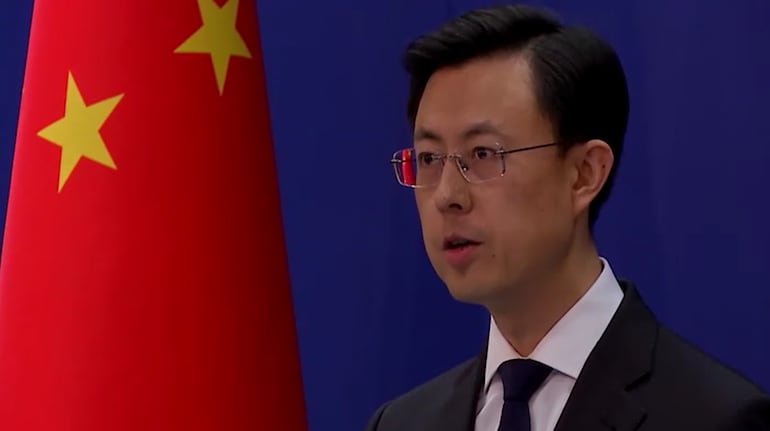
Foreign ministry spokesperson Guo Jiakun, responding to questions at a regular Beijing briefing on 12 December, said China had “noticed” India’s latest steps and was “willing to maintain communication and consultation … to continuously improve the level of facilitation for exchanges between the two countries”. Beijing’s public endorsement comes as Indian Prime Minister Narendra Modi quietly rebalances diplomacy amid shifting global trade pressures.
“We have taken note of this positive action, which promotes the facilitation of people-to-people exchanges and is in line with the common interests of all parties. China is willing to maintain communication and consultation with India, and to continuously improve the level of facilitation for exchanges between the two countries,” he said.
People familiar with the matter told Reuters that Modi’s government has moved to shorten processing times for Chinese business visas to under a month, reversing extensive scrutiny imposed after the two nuclear-armed neighbours clashed along their Himalayan frontier in 2020. India had effectively blocked most Chinese travel in the years since, expanding vetting procedures well beyond the usual security ministries.
Officials say the recalibration is driven by both economic urgency and geopolitical realignment. The United States under President Donald Trump has levied steep tariffs on Indian exports — including a 50 per cent blanket tariff and additional penalties linked to India’s purchase of discounted Russian oil — forcing New Delhi to rethink its strategic and commercial posture. As part of that reassessment, Modi has reopened channels with Beijing while deepening energy and defence ties with Moscow and continuing trade discussions with Washington.
The easing of visa curbs marks one of the most consequential policy shifts in this reset. Industry groups say the previous vetting regime had left electronics manufacturers grappling with shortages of Chinese technicians needed to install or maintain specialist machinery. Analysts estimate those delays cost Indian producers billions of dollars in lost output over four years, hampering ambitions to scale up domestic manufacturing of mobile phones, solar equipment and electronic components.
The renewed facilitation follows Modi’s visit to China earlier this year — his first in seven years — during which he met President Xi Jinping and signalled willingness to explore incremental normalisation. Direct flights between the two countries, suspended since 2020, have also resumed in recent months.
Behind the scenes, the changes were shaped by a high-level committee led by former cabinet secretary Rajiv Gauba, now a senior figure in India’s main policy think-tank. The panel has been examining ways to streamline investment rules and repair sentiment among foreign investors deterred by curbs on Chinese firms.
Industry response has been broadly positive. Pankaj Mohindroo, chairman of the Indian Cellular and Electronics Association, said the accelerated approvals reflect “a collaborative approach” at a moment when India is attempting to expand its manufacturing base across goods, components and sub-assemblies.
Officials involved in the shift insist the policy remains calibrated. One senior official said India is “cautiously easing” rules in a manner that strengthens the broader business environment while maintaining necessary safeguards.
Discover the latest Business News, Sensex, and Nifty updates. Obtain Personal Finance insights, tax queries, and expert opinions on Moneycontrol or download the Moneycontrol App to stay updated!
Find the best of Al News in one place, specially curated for you every weekend.
Stay on top of the latest tech trends and biggest startup news.




