






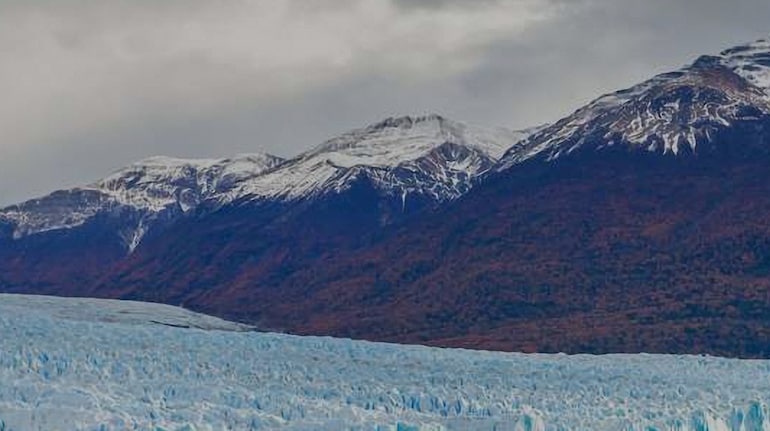

In a landmark research effort, scientists from the British Antarctic Survey and the Korea Polar Research Institute successfully lowered a camera deep into Thwaites Glacier, the vast Antarctic ice mass nicknamed the “Doomsday Glacier” because of its potential to significantly raise global sea levels if it collapses.
To reach the depths of the glacier, the researchers used a hot-water drill to cut a narrow shaft nearly a kilometre down through solid ice. When the camera was lowered into the opening, it revealed striking scenes: tightly packed layers of ice interrupted by hollow, cave-like spaces far below the surface, areas that had never been seen or recorded before. These features are invisible from above and provide scientists with rare direct evidence of the glacier’s internal structure.
Researchers say this visual material is vital because it reveals how the glacier is shaped from the inside and how warm seawater interacts with the ice. Thwaites sits in West Antarctica where ocean currents have been warming, pushing salty water under the glacier’s base and accelerating melt from below, a process that is difficult to monitor from satellites or surface surveys alone.
The mission was not without setbacks. The work on the ice was repeatedly disrupted by brutal weather and unstable conditions. Shifting ice and boreholes freezing over much faster than expected eventually forced the team to stop earlier than planned, and some instruments were lost during the process. Even so, researchers say the footage and measurements gathered before the shutdown remain extremely valuable and will continue to inform future studies.
Thwaites Glacier has attracted worldwide attention because it holds back a large section of the West Antarctic Ice Sheet. Scientists have found that warmer ocean water is creeping underneath the glacier, eating away at its base and causing it to retreat more quickly than earlier forecasts suggested. Evidence from recent studies indicates that this seawater is pushing farther inland beneath the ice, raising concerns that melting could accelerate even further.
Pinpointing where and how this melting is taking place is crucial. If Thwaites continues to weaken and retreat, it could make a substantial contribution to rising sea levels in the years ahead. The images captured from deep inside the glacier offer fresh insight into processes that affect coastlines thousands of kilometres away.
The expedition also underlines how urgent polar research has become. Antarctica’s conditions are growing more unpredictable, with thinning ice and worsening weather making fieldwork increasingly risky and time-limited. Scientists say every successful mission now helps fill critical gaps in understanding how fast glaciers like Thwaites are changing and what those changes could mean for communities around the world.
Discover the latest Business News, Sensex, and Nifty updates. Obtain Personal Finance insights, tax queries, and expert opinions on Moneycontrol or download the Moneycontrol App to stay updated!
Find the best of Al News in one place, specially curated for you every weekend.
Stay on top of the latest tech trends and biggest startup news.





