






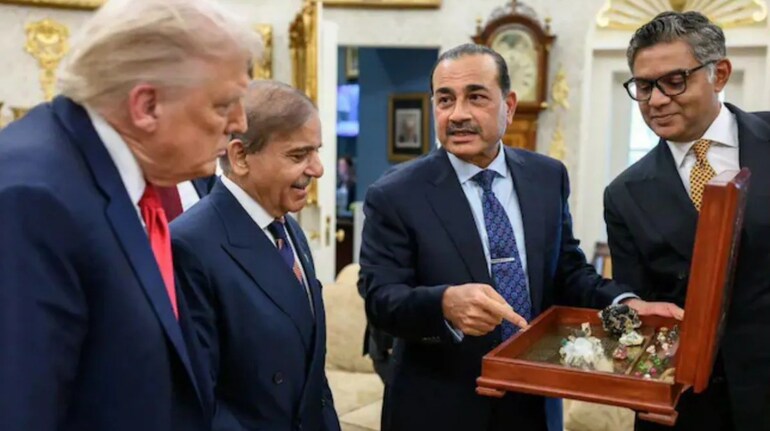

Newly disclosed US government filings have shed light on an intense lobbying campaign mounted by Pakistan in Washington during India’s Operation Sindoor in May 2025, aimed at curbing New Delhi’s military response following the Pahalgam terror attack in Jammu and Kashmir.
According to an NDTV report, filings under the US Foreign Agents Registration Act (FARA) reveal that Pakistani diplomats and defence officials pursued over 60 interactions with senior US administration figures, lawmakers, Pentagon and State Department officials, along with prominent American journalists.
The outreach spanned emails, phone calls, and in-person meetings from late April through the ceasefire that followed the four-day military escalation.
The filings indicate that Pakistan’s stated objective was to press Washington to intervene and “somehow stop” India’s military campaign. Discussions during these interactions focused on Kashmir, regional security concerns, rare earth minerals, and broader Pakistan-US relations, alongside requests for media interviews and background briefings.
Several entries describe the effort as “an ongoing representation of Pakistan”, underscoring the persistence and scale of the diplomatic push at a time when Islamabad faced mounting military pressure.
The lobbying drive coincided with Pakistan significantly expanding its footprint in Washington. In November 2025, The New York Times reported that Islamabad had signed contracts with six lobbying firms worth around $5 million annually to secure quicker access to the Trump administration and influence trade and diplomatic outcomes. Pakistan’s spending during April and May reportedly exceeded India’s by a wide margin.
Weeks after Islamabad finalised a deal with Seiden Law LLP, working through Javelin Advisors, then-US President Donald Trump hosted Pakistan Army Chief Field Marshal Asim Munir at the White House, a meeting seen by analysts as reflecting Pakistan’s renewed access to top US leadership.
Diplomatic sources say the 2025 FARA disclosures confirm a broader pattern of aggressive outreach across Capitol Hill and the US media ecosystem. While lobbying activity appeared to taper later in the year, the filings collectively point to a state under acute diplomatic strain, urgently turning to Washington to offset India’s battlefield momentum during Operation Sindoor.
India launched Operation Sindoor in response to the terror attack in Jammu and Kashmir’s Pahalgam that killed 26 people. The operation targeted multiple terror launch pads, training camps, and logistics hubs linked to Pakistan-based groups, along with precision strikes on select airbases assessed to be supporting or shielding such networks.
In the days that followed, Pakistan attempted to play down the scale of damage, asserting that Indian claims were exaggerated. However, high-resolution satellite imagery released by independent analysts and commercial providers showed visible destruction at several identified sites, including damaged runways, hangars, and support infrastructure at key airbases, as well as flattened structures at known militant facilities.
These images, compared with pre-strike visuals, contradicted official Pakistani statements and reinforced India’s position that the operation achieved its stated objectives, exposing gaps between Islamabad’s public narrative and on-ground realities.
Discover the latest Business News, Sensex, and Nifty updates. Obtain Personal Finance insights, tax queries, and expert opinions on Moneycontrol or download the Moneycontrol App to stay updated!
Find the best of Al News in one place, specially curated for you every weekend.
Stay on top of the latest tech trends and biggest startup news.





