






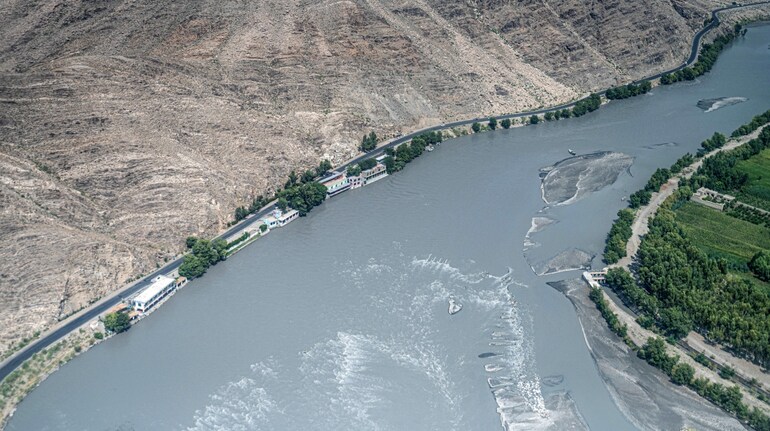
Pakistan’s mounting water crisis is set to deepen, with the Afghan Taliban moving ahead with plans to build dams and divert water from the River Kunar, a development that could sharply reduce downstream flows into Khyber Pakhtunkhwa. The move comes close on the heels of India’s suspension of the Indus Waters Treaty and threatens to open a fresh front in already strained Afghanistan-Pakistan ties. CNN-News18 has learnt from sources that the Taliban leadership has cleared the project despite Islamabad’s concerns.
Taliban officials have described the proposed diversion as a domestic development initiative, insisting it is meant to improve food security and not to harm Pakistan. “The Afghan Taliban regime has approved the plan to divert Kunar water. The project will channel water through the Gambiri Desert to the Duranti Dam reservoir in Nangarhar province. The strategic de-watering will threaten irrigation, drinking water, hydropower in Chitral and downstream areas,” sources told CNN-News18.
The Kunar River, about 480-kilometre long, originates in Pakistan’s Chitral region before flowing through Afghanistan’s Kunar and Nangarhar provinces and reentering Pakistan to join the Indus River system. Along with the Kabul river, it forms a crucial source of water for large parts of northwestern Pakistan, supporting agriculture, drinking water needs, and hydropower generation.
According to sources cited by CNN-News18, Afghanistan’s status as the upper riparian country gives it significant leverage. “This is to help irrigate dry farmlands and increase crop production in southern areas. But as the upper riparian country, Afghanistan’s diversion of Kunar water will directly reduce flow into Pakistan’s Khyber Pakhtunkhwa region,” they said, underlining the scale of the potential impact on Pakistan.
Taliban representatives have dismissed Pakistan’s objections, framing the project as a sovereign right. “As an upper state, we have the sovereign right to utilise its water resources for national reconstruction. The diversion is not intended to harm downstream flows. Pakistan is making unnecessary noise on this,” Taliban sources told CNN-News18.
The timing of the project is particularly damaging for Islamabad. India’s decision to suspend the Indus Waters Treaty following the Pahalgam terror attack has already placed Pakistan under pressure. On May 12, after India’s Operation Sindoor retaliation, Prime Minister Narendra Modi had declared that “blood and water cannot flow together”.
Reiterating the message in his Independence Day address, Modi linked India’s suspension of the treaty to its hardened stance on cross-border terrorism. He said that while India had paused military action, it would not return to business as usual with Pakistan, stressing that terrorism and cooperative water sharing could not coexist.
Meanwhile, Afghanistan-Pakistan relations continue to deteriorate. Tensions escalated after Pakistan reportedly carried out cross-border airstrikes in Kabul on October 9, targeting camps of the Tehreek-e-Taliban Pakistan. Islamabad has repeatedly accused the Afghan Taliban of sheltering TTP militants blamed for the deaths of hundreds of Pakistani soldiers since 2021.
The strikes were followed by a fierce Taliban response. Afghan fighters launched a counteroffensive across the border, killing 58 Pakistani soldiers and destroying 20 security outposts, according to sources cited by CNN-News18.
With India suspending a key water treaty and Afghanistan asserting control over upstream rivers, Pakistan now finds itself increasingly isolated and vulnerable on the water front. The planned diversion of the Kunar River adds yet another strategic setback, amplifying Islamabad’s regional troubles and exposing the limits of its influence over neighbours it once considered pliant.
Discover the latest Business News, Sensex, and Nifty updates. Obtain Personal Finance insights, tax queries, and expert opinions on Moneycontrol or download the Moneycontrol App to stay updated!
Find the best of Al News in one place, specially curated for you every weekend.
Stay on top of the latest tech trends and biggest startup news.




