






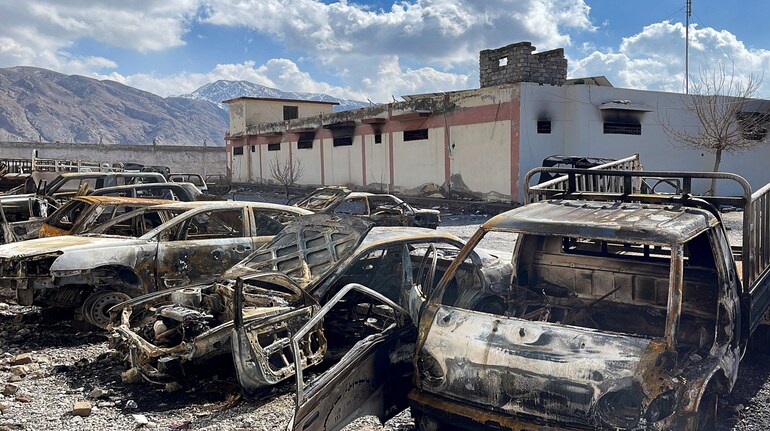
Pakistan’s security forces killed 145 militants over a 40-hour period following coordinated attacks across Balochistan, the southwestern province’s chief minister said on Sunday, as authorities confront one of the deadliest flare-ups in recent years.
The attacks highlight the ongoing presence of insurgents in the resource-rich region bordering Iran and Afghanistan, where separatist militant groups have increasingly targeted security forces, civilians, and infrastructure.
“The death toll includes militants killed in raids on Friday and Saturday, as well as additional militants killed during ongoing clearance operations,” Balochistan Chief Minister Sarfaraz Bugti said at a press conference in Quetta.
The military had earlier reported that 92 militants were killed on Saturday.
Bugti added that the latest total represents the highest number of militants killed in such a short period since the insurgency escalated, without providing comparative figures.
He also said 17 law enforcement personnel and 31 civilians were killed in the attacks.
Balochistan, Pakistan’s largest and poorest province, has faced a decades-long insurgency led by ethnic Baloch separatists seeking greater autonomy and a larger share of its natural resources.
The banned separatist group Baloch Liberation Army claimed responsibility for the attacks, saying it had launched a coordinated operation dubbed Herof, or "black storm", targeting security forces across the province.
Pakistan's military said on Saturday the attacks were carried out by "Indian-sponsored militants". India, Pakistan's neighbouring arch rival, denied that assertion on Sunday, accusing Islamabad of deflecting attention from its own internal problems.
"We categorically reject the baseless allegations made by Pakistan," Indian Foreign Ministry spokesperson Randhir Jaiswal said in a statement, adding that Islamabad should instead address "long-standing demands of its people in the region".
The violence erupted across several districts simultaneously, including Quetta, Gwadar, Mastung and Noshki, prompting large-scale operations by the army, police and counterterrorism units. Hospitals were placed on emergency footing in some areas.
The military said security forces had repelled attempts by militants to seize control of any city or strategic installation.
Pakistan has faced periodic attacks by Islamist militants elsewhere in the country, including factions linked to the Pakistani Taliban.
(With Reuters inputs)
Discover the latest Business News, Sensex, and Nifty updates. Obtain Personal Finance insights, tax queries, and expert opinions on Moneycontrol or download the Moneycontrol App to stay updated!
Find the best of Al News in one place, specially curated for you every weekend.
Stay on top of the latest tech trends and biggest startup news.




