






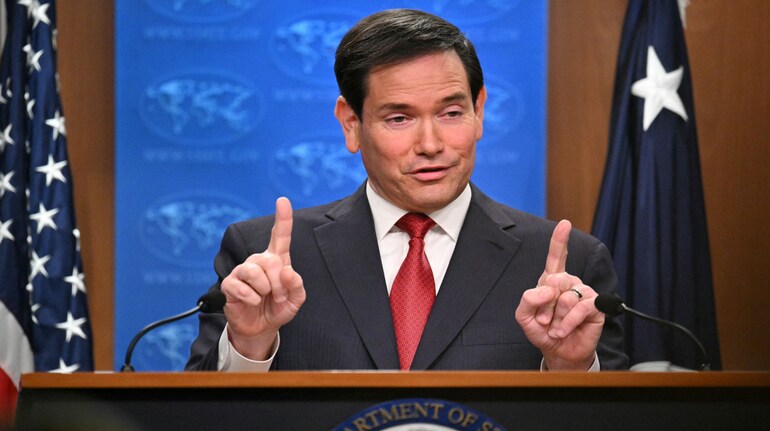
US Secretary of State Marco Rubio has reiterated that entry visas to the United States are a privilege rather than an entitlement, warning that foreign visitors risk losing their visas if they engage in activities deemed contrary to American national security.
Speaking amid a broader tightening of US immigration policy, Rubio stressed that visa permissions are conditional and can be withdrawn. “I’ve said this repeatedly. I don’t know why it’s so hard for some to comprehend it. No one is entitled to a visa. Visas are not a right. There is no constitutional right to a visa. A visa is permission to enter our country as a visitor,” he said.
Rubio made clear that the warning applies across the board, regardless of the category under which a visitor enters the country. “Being a tourist, student or journalist, if you undertake activities against the national security and national interest of the United States, we will take away your visa,” he said. He added that had US authorities been aware of such activities in advance, the visa would likely not have been granted at all.
Broader visa clampdown
The remarks come as Washington sharpens its approach to immigration and visa enforcement. Last month, the US State Department temporarily suspended immigrant visa approvals for nationals of 75 countries, citing concerns that migrants from those nations “take welfare from the American people at unacceptable rates”. The affected countries include Somalia, Haiti, Iran, Cuba and Eritrea.
In parallel, new restrictions have been placed on non-immigrant visa applications. Applicants are now generally required to schedule interviews in their country of nationality or legal residence, a move that effectively ends the practice of “visa shopping” in third countries.
The US has also introduced a $250 Visa Integrity Fee for citizens of countries not covered by the visa waiver programme, a measure that came into force in October 2025. Eligibility for in-person interview waivers has been tightened, while most student and exchange applicants are now required to disclose certain social media accounts as part of the vetting process.
Visitors with medically necessary devices must also present original letters from medical professionals when attending consular appointments, further adding to the documentation burden.
Taken together, the measures signal a more assertive posture by Washington on who is allowed to enter the country — and under what conditions — with Rubio’s comments underscoring that visas, once issued, can still be withdrawn if US authorities believe national interests are at stake.
Discover the latest Business News, Sensex, and Nifty updates. Obtain Personal Finance insights, tax queries, and expert opinions on Moneycontrol or download the Moneycontrol App to stay updated!
Find the best of Al News in one place, specially curated for you every weekend.
Stay on top of the latest tech trends and biggest startup news.




