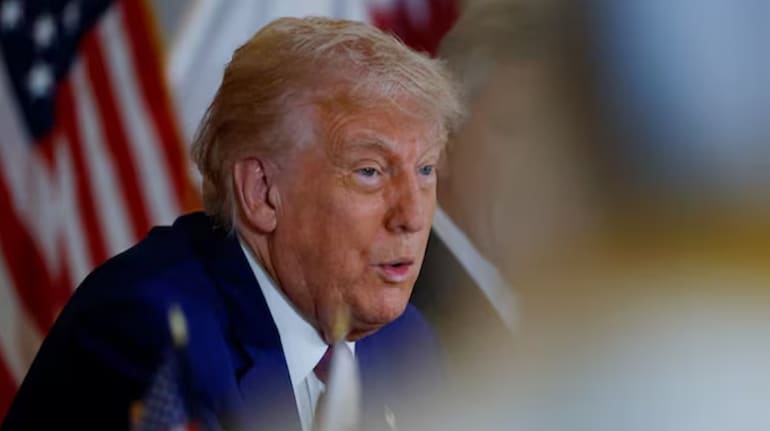
A fatal shooting just blocks from the White House -- carried out by a 29-year-old Afghan evacuee -- quickly became the catalyst for a major escalation in US President Donald Trump’s immigration drive.
Two young soldiers were on patrol near the executive mansion when Rahmanullah Lakanwal allegedly opened fire, killing one and leaving the other critically injured. Lakanwal, who once worked with a CIA-backed “Zero Unit” and arrived through Operation Allies Welcome after Kabul fell in 2021, did not fit Trump’s usual description of a border crosser.
Trump labelled the attack an “act of terror,” blamed what he called “lax” Biden-era vetting, and demanded additional National Guard deployments in Washington, despite existing court concerns over using troops for routine policing.
Federal agencies moved almost immediately. US Citizenship and Immigration Services announced it would halt all Afghan-related immigration processing “indefinitely,” citing the attack and longstanding vetting issues within the Allies Welcome programme.
USCIS chief Joe Edlow then ordered a full review of every green-card file from 19 previously identified “countries of concern,” including Afghanistan, Iran, Somalia, Haiti, Myanmar, Libya, Yemen, Cuba, Venezuela and several African states.
Meanwhile, the Department of Homeland Security began re-checking asylum approvals issued since 2021 and preparing to re-interview refugees admitted between 2021 and 2025.
Trump followed these steps with sweeping declarations. He claimed that US progress had been eroded by migration and vowed to "permanently pause migration from all Third World Countries” so the system could “fully recover.” He pledged to “Terminate all of the millions of Biden illegal admissions, including those signed by Sleepy Joe Biden’s Autopen,” and said he would end federal benefits for non-citizens and “Denaturalise migrants who undermine domestic tranquillity.”
Anyone deemed a “public charge, security risk, or incompatible with Western Civilisation” would be expelled. “Only REVERSE MIGRATION can fully cure this situation… You won’t be here for long!” he warned.
Although Trump never defined “Third World,” the phrase typically maps to poorer regions across Africa, Asia and Latin America. The most directly affected groups for now remain Afghan evacuees, Biden-era asylum recipients and green-card holders from the 19 countries placed back under review.
Travel bans on 12 countries in second term
Trump’s more formal travel-ban architecture sits alongside this new rhetoric. Earlier in 2025 as he assumed second term of presidency, he revived the broad restrictions from his first term by signing an order that blocked entry from 12 nations and placed additional limits on travellers from seven others.
The ban took effect from June 9, leaving only a narrow grace period for agencies and travellers to adjust.
According to that proclamation, the full-ban countries are Afghanistan, Myanmar, Chad, Congo-Brazzaville, Equatorial Guinea, Eritrea, Haiti, Iran, Libya, Somalia, Sudan and Yemen. Nationals from Burundi, Cuba, Laos, Sierra Leone, Togo, Turkmenistan and Venezuela were reported to face targeted visa limitations.
The administration justified the selection using three broad criteria: weak passport and screening systems, high visa-overstay rates, and links to terrorism or state-sponsored extremism.
Exemptions applied to permanent residents, dual US citizens, people entering through immediate family routes, previously recognised refugees, Afghan partners of the US military effort, and certain Iranians fleeing religious persecution.
Athletes and coaches participating in global sporting events such as the 2026 World Cup and 2028 Olympics are also excluded.
2017 ban on Muslim nations
This second order differs from its 2017 predecessor -- during Trump's first term as president -- in that it was not instantaneous and included more explicit carve-outs.
But the logic traces back to early 2017, when Trump issued his first ban covering seven Muslim-majority countries.
That rollout -- affecting travellers from Iran, Iraq, Libya, Somalia, Sudan, Syria and Yemen -- caused turmoil at airports, rapid legal challenges and repeated rewrites.
Later iterations added and removed countries, culminating in a Supreme Court decision upholding the third version in June 2018 by a 5-4 vote. A fourth set of restrictions followed in 2020, all of which President Biden revoked upon taking office in 2021.
Together, the new DC shooting fallout, the revived entry bans and Trump’s pledge of a “permanent pause” outline a second-term migration blueprint built on reversals, re-verification and a stated intent to roll back non-Western migration at a scale not attempted in recent decades.

Discover the latest Business News, Sensex, and Nifty updates. Obtain Personal Finance insights, tax queries, and expert opinions on Moneycontrol or download the Moneycontrol App to stay updated!





Find the best of Al News in one place, specially curated for you every weekend.
Stay on top of the latest tech trends and biggest startup news.