US President Donald Trump approved South Korea’s plan to develop nuclear-powered submarines during his visit to the country in October, a move that provoked strong condemnation from nuclear-armed North Korea.
Key aspects of the project, including where the submarines would be constructed, remain unclear. Only a small number of nations operate nuclear-powered submarines, and the United States treats the technology as one of its most closely guarded military secrets.
In its first public reaction to the US–South Korea agreement last month, a KCNA commentary described the initiative as a “dangerous attempt at confrontation” and warned it could trigger a “nuclear domino phenomenon”.
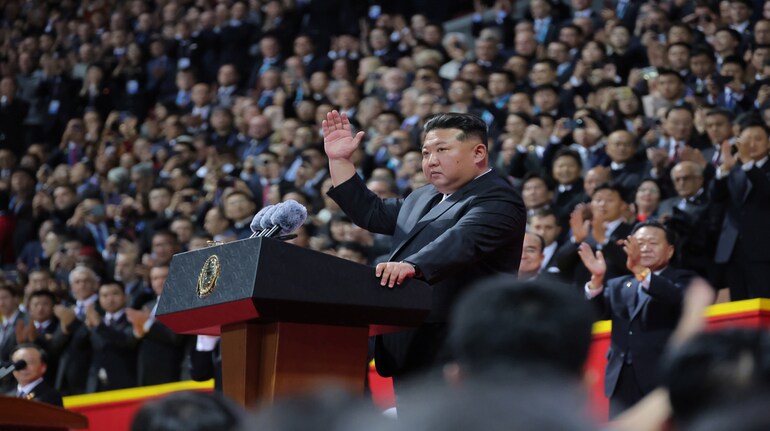
KCNA reported that Kim Jong Un said on Wednesday the current “negative security situation” made it an “urgent task and indispensable option” to accelerate the “nuclear weaponization of the naval force”.
During the visit, Kim was briefed on research into “new underwater secret weapons” and “clarified a strategic plan for reorganizing the naval forces and establishing new units”, according to KCNA, without providing further details.
Separately, KCNA said Kim also supervised the test of “new-type high-altitude long-range anti-air missiles” over the East Sea, also known as the Sea of Japan.
“The launched missiles accurately hit the mock targets at an altitude of 200 km,” KCNA said, a height that, if accurate, would place the test in space.
“The respected Comrade Kim Jong Un extended congratulations on the successful test-fire,” KCNA added.
Discover the latest Business News, Sensex, and Nifty updates. Obtain Personal Finance insights, tax queries, and expert opinions on Moneycontrol or download the Moneycontrol App to stay updated!
Find the best of Al News in one place, specially curated for you every weekend.
Stay on top of the latest tech trends and biggest startup news.