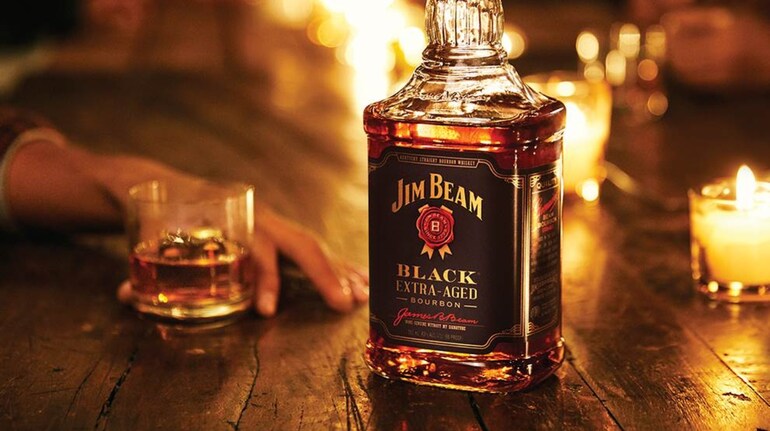
Jim Beam, the largest producer of bourbon in the United States, has announced a full-year pause in production at its flagship distillery in Clermont, Kentucky, a dramatic signal of how sharply the American whiskey market has cooled after more than two decades of expansion. The shutdown will run through all of 2026, beginning January 1, and affects a facility that typically produces close to nine million gallons of bourbon annually.
The move, confirmed by the company in December, underscores the depth of the slowdown facing the broader wine, beer and spirits industry, which has seen sales fall by roughly five percent over the past year, the New York Times reported.
A flagship distillery goes quiet
The Clermont plant accounts for about a third of Jim Beam’s total annual output of around 26.5 million gallons. While distillation will stop at the site, the company said its bottling facility and visitor centre will remain open. Production will also continue at Jim Beam’s two other Kentucky distilleries, as well as at the Maker’s Mark facility in Loretto, which the company also owns.
Jim Beam is owned by Suntory Holdings, which did not clarify whether workers at the Clermont distillery would be furloughed, reassigned, or kept on during the pause.
The Clermont and nearby Boston, Kentucky facilities produce many of the company’s well-known labels, including Knob Creek, Booker’s and Basil Hayden. A smaller distillery in Clermont, focused on experimental and limited-edition releases, will also continue operating.
An industry-wide pullback
Jim Beam’s decision follows a string of cutbacks across the American whiskey sector. Earlier this year, Diageo paused distillation at its Cascade Hollow facility in Tennessee, which produces George Dickel whiskey. In January, Brown-Forman, the maker of Jack Daniel’s, announced layoffs affecting about 12 percent of its workforce.
Several large distillers have also entered receivership in recent months, including Garrard County Distilling Co. in Kentucky and Uncle Nearest in Tennessee. Contract distillers have not been spared either. MGP Ingredients, which produces whiskey for other brands, reported a 19 percent drop in third-quarter sales.
From boom to glut
The slowdown marks a sharp reversal from the long bourbon boom that began in the early 2000s. According to the Distilled Spirits Council of the United States, American whiskey sales rose from about $1.4 billion in 2004 to roughly $5.2 billion in 2024, with annual growth rates often touching five percent.
The pandemic accelerated that trend. Lockdowns and stimulus-fuelled spending triggered a surge in collecting, speculative buying and online resales. Distillers responded by ramping up production, laying down millions of barrels for aging and announcing major expansions.
Today, that supply has become a burden. Kentucky alone is estimated to have more than 16 million barrels of whiskey aging in warehouses, far more than the market can absorb at current demand levels.
Tariffs, exports and changing tastes
External pressures have added to the strain. Industry analysts point to tariffs introduced during President Donald Trump’s administration, which triggered a backlash in Canada, once one of the largest export markets for American whiskey. Several Canadian provinces, which control alcohol sales, effectively stopped buying US products.
Exports of American whiskey are now down about nine percent from 2024 levels, according to the Distilled Spirits Council. At the same time, trade uncertainty has complicated efforts to expand into newer growth markets such as South Asia, Southeast Asia and sub-Saharan Africa.
Consumer behaviour is also shifting. Younger drinkers are consuming less alcohol overall and favouring higher-proof, premium bottles over mass-market brands. That trend poses a particular challenge for Jim Beam, whose sales rely heavily on its lower-priced, lower-proof White Label bourbon.
Industry experts say premium-focused producers have been better insulated. Companies like Sazerac, which owns high-end labels such as Pappy Van Winkle and George T. Stagg, continue to invest heavily, recently announcing a billion-dollar expansion at Buffalo Trace in Kentucky.
A familiar cycle for bourbon country
Veterans of the industry see echoes of an earlier downturn. In the mid-1960s, bourbon production hit record highs before demand collapsed as consumers shifted to vodka, rum or away from alcohol altogether. The result was decades of oversupply and widespread distillery closures.
The pause at Jim Beam suggests the current correction may be deeper and longer than many expected. For an industry built on long aging cycles and long memories, the Clermont shutdown is both a warning and a reminder: bourbon’s booms, like its busts, tend to last years rather than months.
Discover the latest Business News, Sensex, and Nifty updates. Obtain Personal Finance insights, tax queries, and expert opinions on Moneycontrol or download the Moneycontrol App to stay updated!
Find the best of Al News in one place, specially curated for you every weekend.
Stay on top of the latest tech trends and biggest startup news.