






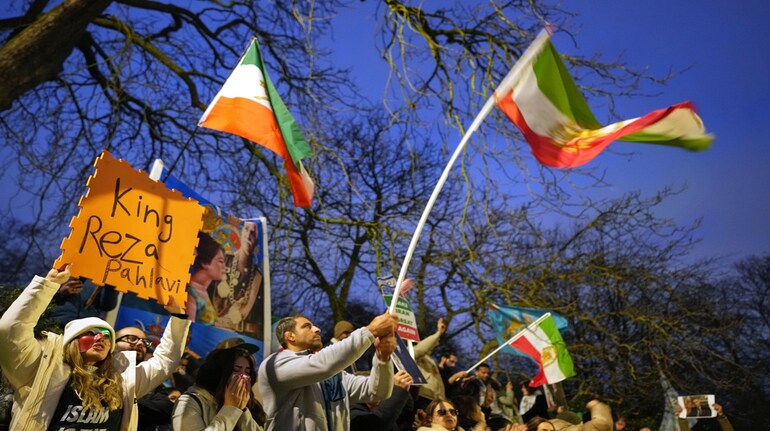
Iranian authorities said they are considering "gradually" restoring internet access following an unprecedented communications shutdown 10 days ago, which rights groups claim concealed a violent crackdown on protests that killed thousands.
The demonstrations, which erupted in late December over economic hardship, quickly escalated into what many view as the most significant challenge to the Iranian leadership in years.
Iranian officials maintained that the protests were initially peaceful before turning into "riots" and accused foreign actors, specifically the United States and Israel, of influencing the unrest.
The rallies subsided after a security crackdown, which rights groups described as a "massacre," carried out under the cover of the communications blackout that began on January 8 as protests intensified.
Government officials said calm has now been restored, with schools reopening on Sunday—Iran’s weekend falls on Thursday and Friday—after a week-long closure.
Late Saturday, the Tasnim news agency reported "the relevant authorities announced that internet access would also be gradually restored", but gave no further details.
Citing an unnamed "informed source", the agency said local messaging applications "will soon be activated" on Iran's domestic intranet.
On Sunday morning, AFP was able to connect to the internet from its Tehran office, though the vast majority of internet providers and mobile internet remain cut.
Outgoing international calls have been possible since Tuesday, and text messaging was restored Saturday morning.
For days, text messages and international phone calls -- and at times even local calls -- were cut off.
Iran has since been relying on its intranet, which has supported local media websites, ride-hailing apps, delivery service and banking platforms.
'Overwhelmed'
Despite the restrictions, information had still filtered out, with reports of atrocities emerging, according to rights groups.
Amnesty International said it had verified dozens of videos and accounts in recent days.
They showed "that security forces have been relentlessly firing at protesters from the streets and from elevated positions" and that hospitals had been "overwhelmed with the injured" in a "massacre of protesters", said Amnesty's Iran researcher Raha Bahreini in a video posted online.
Norway-based rights group Iran Human Rights (IHR) says it has verified the deaths of 3,428 protesters killed by security forces, confirming cases through sources within the Islamic republic's health and medical system, eyewitnesses and multiple independent sources.
However, the NGO warns the true toll is likely far higher. Media cannot independently confirm the figure and Iranian officials have not given an exact death toll for the protests.
Other estimates place the death toll at more than 5,000 -- and possibly as high as 20,000 -- though the internet blackout has severely hampered independent verification, IHR says.
The opposition Iran International channel based outside the country has said at least 12,000 people were killed during the protests, citing senior government and security sources.
Iran's judiciary has rejected that figure.
On Saturday, supreme leader Ayatollah Ali Khamenei said "a few thousand" people had been killed by what he called "agents" of the United States and Israel, and Iranian local media has reported multiple deaths among security forces.
Khamenei said authorities "must break the back of the seditionists", as local media has reported thousands of arrests and rights groups have estimated up to 20,000 people have been detained.
'Not be spared'
On Sunday, Iran's judiciary spokesman Asghar Jahangir reiterated that swift trials would be held, warning that some acts were tantamount to the capital offence of "moharebeh", or "waging war against God".
"All those who played a decisive role in these calls for violence, which led to bloodshed and significant damage to public finances, will not be spared," he said.
Alarm has grown over the threat of capital punishment against arrested protesters, even as Donald Trump said Iran had called off hundreds of executions.
The US president, who backed and joined Israel's 12-day war against Iran in June, had repeatedly threatened new military action against Tehran if protesters were killed.
Analyst Arif Keskin cast doubt on Trump's claim, saying "the Iranian leadership sees executions... as an effective tool to end protests, prevent them, and suppress them".
"For the regime, executions will carry short-term international costs but are seen as a long-term investment in domestic security," the Ankara-based Iranian researcher and Middle East specialist told AFP.
"The risk therefore remains very real."
(With AFP inputs)
Discover the latest Business News, Sensex, and Nifty updates. Obtain Personal Finance insights, tax queries, and expert opinions on Moneycontrol or download the Moneycontrol App to stay updated!
Find the best of Al News in one place, specially curated for you every weekend.
Stay on top of the latest tech trends and biggest startup news.




