






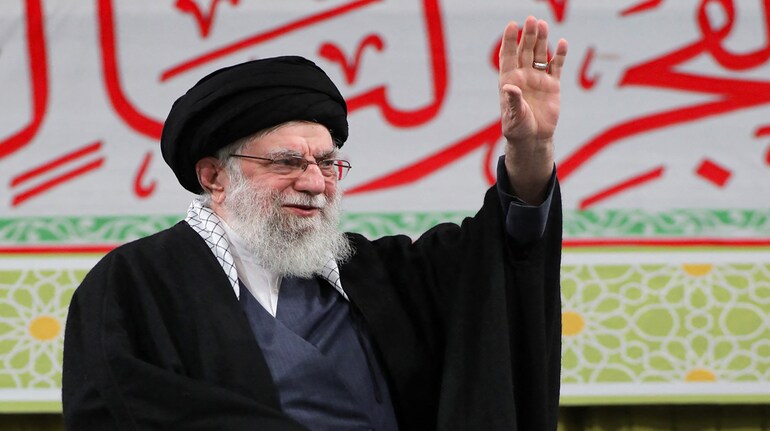
The joint Israeli–American strikes that killed Iran’s Supreme Leader, Ayatollah Ali Khamenei, have reignited a longstanding legal debate in Washington: how can the United States take part in killing a world leader when assassination is explicitly banned under US policy?
At the heart of the question lies an Executive Order signed more than four decades ago.
The Reagan order that outlawed assassination
In December 1981, President Ronald Reagan signed Executive Order 12333, titled United States Intelligence Activities. The directive laid down the framework governing America’s intelligence agencies — including the CIA, NSA and Defence Intelligence — and clearly set out their limits.
The prohibition appears in Section 2.11, which states: “No person employed by or acting on behalf of the United States Government shall engage in, or conspire to engage in, assassination.”
Section 2.12 reinforces that restriction, barring intelligence agencies from asking or allowing third parties to carry out activities forbidden under the order.
In simple terms, US officials — whether directly or indirectly — are barred from planning or carrying out assassinations. Notably, the wording does not confine the ban to “political” killings; it refers broadly to assassination.
Why Washington imposed the restriction
The order emerged from political fallout in the 1970s. The Church Committee investigations of 1975 uncovered covert CIA operations aimed at eliminating foreign leaders, including Fidel Castro in Cuba and Patrice Lumumba in the Congo.
The revelations caused public outrage and sharp criticism in Congress. Presidents Gerald Ford and Jimmy Carter first imposed restrictions, and Reagan’s Executive Order cemented and expanded them.
The aim was both political and moral — to signal that assassination would not be used as an instrument of US foreign policy.
The ambiguity at the heart of the law
The complication is that Executive Order 12333 never defines the word “assassination”. That omission has allowed successive administrations to draw a legal distinction between assassination and lawful military targeting.
In US legal interpretation, assassination is typically viewed as a premeditated killing for political purposes, especially in peacetime or outside armed conflict. By contrast, the killing of combatants or military leaders during war — or in self-defence — is treated as lawful targeting.
Under that reasoning, striking an enemy leader during an armed conflict may fall outside the scope of the assassination ban. Secretly eliminating a foreign leader for political ends in peacetime would not.
Previous controversies
The debate surfaced prominently in 2020 after a US drone strike killed Iranian General Qassem Soleimani. Critics questioned whether the strike breached Executive Order 12333, while the Trump administration defended it as an act of self-defence.
The same legal framing is now being applied to the killing of Ayatollah Ali Khamenei. President Donald Trump and US officials have characterised the operation as part of a broader military campaign against Iran’s nuclear and missile infrastructure, rather than a political assassination.
Speaking to TIME, an expert said by framing the operation as a military campaign—not a targeted killing outside armed conflict—the US effectively places it in the same category as other wartime strikes against enemy command and control.
The international law dimension
Under Article 51 of the United Nations Charter, states have the right to self-defence if facing an imminent attack. However, legal scholars stress that imminence must be clearly demonstrated, and any response must meet the standards of necessity and proportionality.
So far, Washington has not publicly released detailed evidence showing that Khamenei himself posed an imminent threat. That gap has led critics — including other governments — to question the legal basis of the strike.
For US policymakers, however, the precedent is clear. The killing of enemy leaders during armed conflict is classified as a lawful military act rather than an assassination. The same rationale was used in operations against extremist leaders, including ISIS chief Abu Bakr al-Baghdadi.
By situating the strike within an ongoing armed confrontation, American officials argue that Executive Order 12333 does not prohibit targeting enemy leadership — even when that leadership includes a head of state.
(With inputs from agencies)
Discover the latest Business News, Sensex, and Nifty updates. Obtain Personal Finance insights, tax queries, and expert opinions on Moneycontrol or download the Moneycontrol App to stay updated!
Find the best of Al News in one place, specially curated for you every weekend.
Stay on top of the latest tech trends and biggest startup news.




