Tehran says it saw the US strikes coming and acted in time. Ahead of the overnight bombardment on three nuclear sites, Iran had already moved its uranium enriched up to 60% to a secret location, a senior Iranian source told Reuters.
The stockpile of near weapons-grade, highly enriched uranium may be hidden in a location unknown to Israel, the U.S., and U.N. nuclear inspectors, according to Reuters.
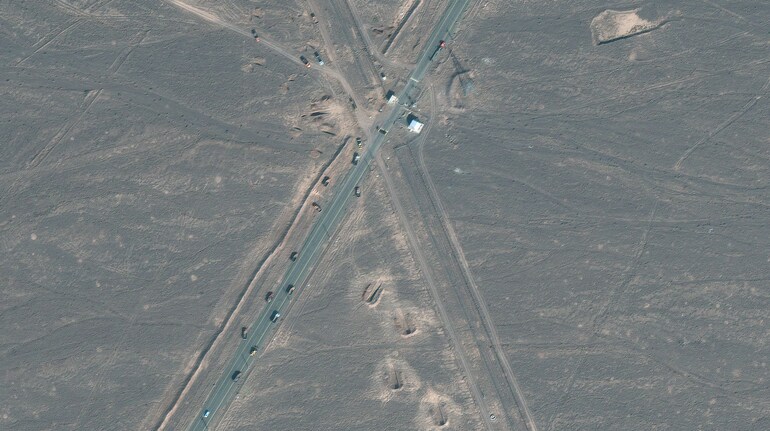
Experts noted satellite imagery from Maxar Technologies showing "unusual activity" at Fordow on Thursday and Friday, with a long line of vehicles waiting outside an entrance of the facility.
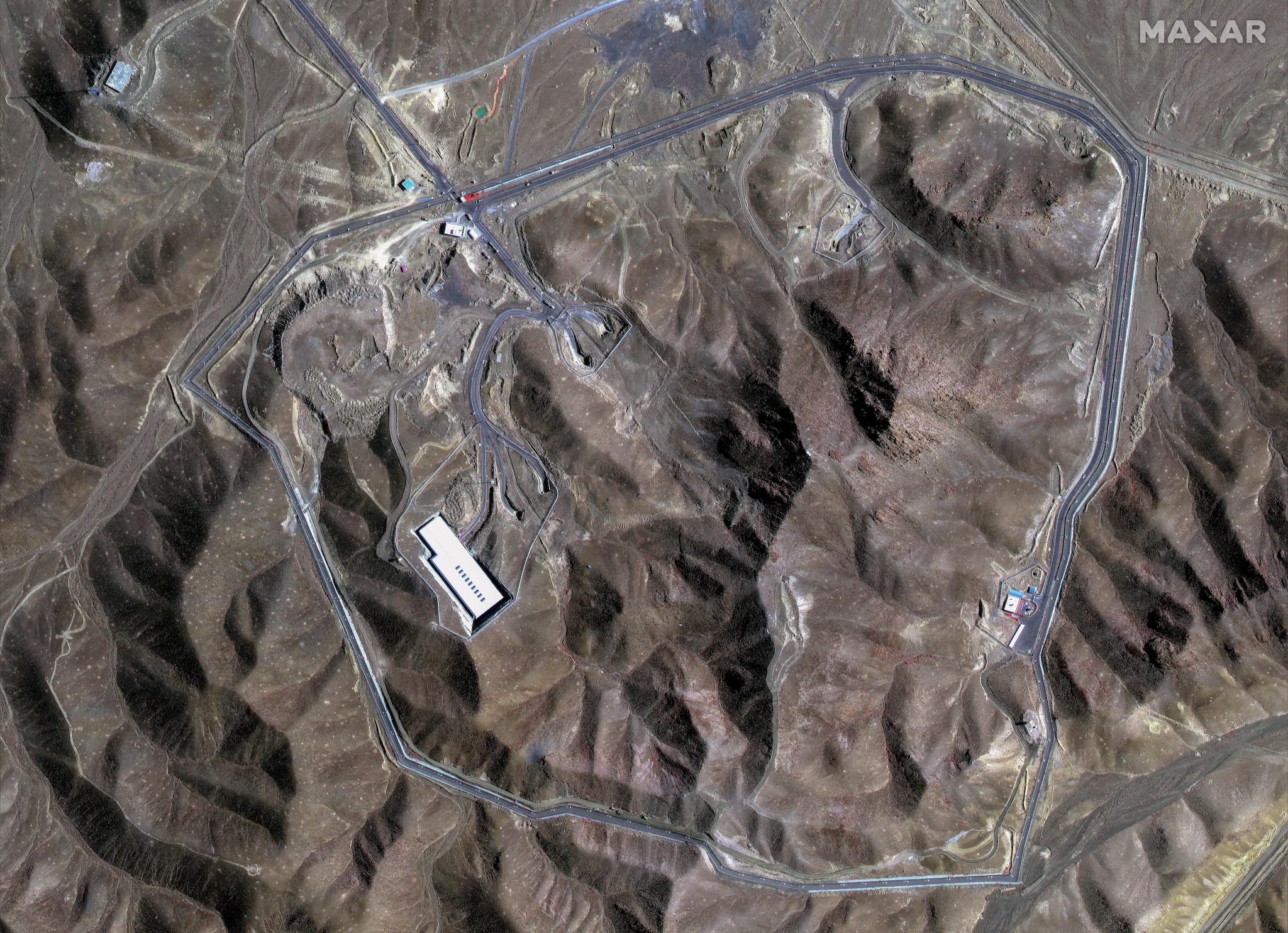 Satellite picture provided by Maxar Technologies and taken on June 19, 2025, shows Iran's Fordow Fuel Enrichment Plant (FFEP) (Image: AFP)
My big fear right now is that they take this entire program underground, not physically underground, but under the radar," Arizona Sen. Mark Kelly, a Democrat and member of the Senate intelligence committee who said he had been reviewing intelligence every day, said.
"Where we tried to stop it, there is a possibility that this could accelerate it."
In the days leading up to the US strikes on Fordow, satellite images from Maxar reportedly showed heightened logistical activity at the site, with around 16 cargo trucks and heavy equipment positioned near the facility’s main entrance on June 19 and 20, according to Iran International English.
Most of the highly enriched uranium at Fordow, the site producing the bulk of Iran's uranium enriched to up to 60%, had been moved to an undisclosed location before the overnight US strikes on the site, Reuters reported, citing a senior unnamed Iranian source.Prior to the US… pic.twitter.com/Pq6LTvyh8u — Iran International English (@IranIntl_En) June 22, 2025
While commercial satellite imagery commercial satellite imagery indicated the deeply-buried site and the uranium-enriching centrifuges the nuclear plant housed were severely damaged, possibly destroyed. However, there was no official confirmation on the same.

Trump said heavily fortified sites were "totally obliterated" late Saturday, but independent analysis has yet to verify that claim.
About Iran's Fordow nuclear facilityFordow, located about 30 kilometers (18.5 miles) northeast of Qom in northwestern Iran, was originally built as a military facility for the Islamic Revolutionary Guard Corps.
It is buried deep within a mountain reportedly up to 300 feet underground that makes it the one of the most heavily fortified and controversial sites in Iran’s nuclear infrastructure.
Iran disclosed the facility’s conversion to a nuclear site in a letter to the International Atomic Energy Agency (IAEA) on September 21, 2009, after learning that Western intelligence services were already aware of its existence.
Just days later, the United States, United Kingdom, and France publicly confirmed they had knowledge of the secret fuel enrichment plant. Intelligence gathered earlier that year indicated Iran planned to install 3,000 centrifuges at the site, and by September 2009, the conversion was nearing completion.
Operated by Iran’s Atomic Energy Organization, Fordow plays a central role in uranium enrichment.
It is the only Iranian facility where IAEA inspectors have detected particles of uranium enriched to near weapons-grade levels, discovered during an unannounced inspection in 2023. The site is designed to house up to 2,976 centrifuges significantly fewer than the approximately 50,000 centrifuges at Natanz, Iran’s main nuclear facility, which was also targeted during the recent Israeli airstrikes.
Why Fordow matter for Iran?Fordow’s significance lies in both its uranium enrichment capabilities and its heavily fortified location. The facility has been used to enrich uranium up to 60% purity just short of the 90% required for nuclear weapons.
In 2023, the International Atomic Energy Agency (IAEA) detected particles enriched to 83.7% purity at the site, marking the highest level ever publicly recorded in Iran.
This discovery intensified international scrutiny, particularly from Israel, which views any Iranian progress toward weapons-grade material as an existential threat. Fordow’s deep underground placement makes it nearly impervious to Israeli munitions. Only the United States possesses the 30,000-pound GBU-57 Massive Ordnance Penetrator, a “bunker buster” capable of reaching the facility’s underground centrifuge halls.
Following the public disclosure of the Fordow site in 2009, the US and Iran engaged in their first direct talks in 30 years.
“The goal for these negotiations is to reach a mutually agreed long-term comprehensive solution that would ensure Iran’s nuclear programme will be exclusively peaceful,” the IAEA said.
Discover the latest Business News, Sensex, and Nifty updates. Obtain Personal Finance insights, tax queries, and expert opinions on Moneycontrol or download the Moneycontrol App to stay updated!
Find the best of Al News in one place, specially curated for you every weekend.
Stay on top of the latest tech trends and biggest startup news.