






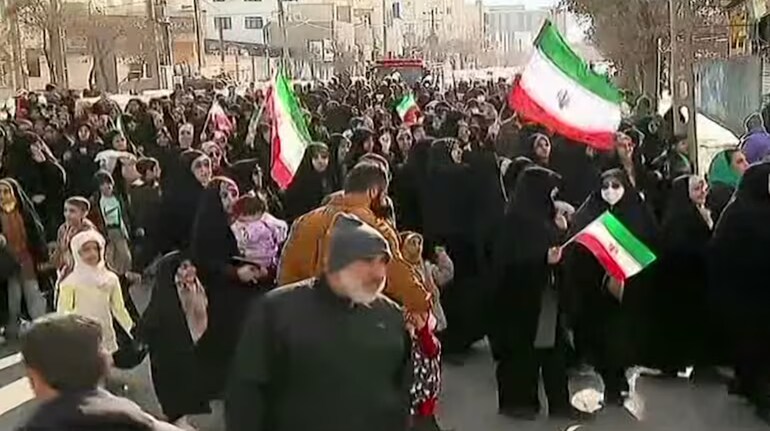
At least 5,000 people have died in protests across Iran, including roughly 500 members of the security forces, an Iranian official in the region said on Sunday. The official cited verified figures and accused “terrorists and armed rioters” of killing “innocent Iranians.”
The nationwide unrest, which began on December 28 over economic hardships, quickly escalated into widespread demonstrations demanding an end to clerical rule, resulting in the deadliest unrest in Iran since the 1979 Islamic Revolution.
U.S. President Donald Trump has repeatedly warned of intervention if protesters continued to be killed or executed. In a social media post on Friday, he thanked Tehran’s leaders for calling off scheduled mass executions.
On Saturday, Supreme Leader Ayatollah Ali Khamenei stated, “We will not drag the country into war, but we will not let domestic or international criminals go unpunished,” according to state media. The judiciary signaled on Sunday that some executions may still proceed.
“A series of actions have been identified as Mohareb, which is among the most severe Islamic punishments,” Iranian judiciary spokesperson Asghar Jahangir said at a press conference. Mohareb, an Islamic legal term meaning to wage war against God, carries the death penalty under Iranian law.
In an interview with Politico on Saturday, Trump said, “It’s time to look for new leadership in Iran.”
Khamenei, Iran’s top authority, accused longtime enemies the U.S. and Israel of orchestrating the violence, acknowledging “several thousand deaths.”
Rights groups report lower figures. The U.S.-based HRANA said on Saturday that 3,308 deaths had been documented, with another 4,382 under review, and confirmed over 24,000 arrests.
The Iranian official said the verified death toll was unlikely to rise significantly. “The final toll is not expected to increase sharply,” the official said, adding that “Israel and armed groups abroad” had supported and supplied those participating in the protests.
Iran’s clerical establishment frequently blames unrest on foreign adversaries, including the U.S. and Israel, which carried out military strikes on Iran in June.
Highest death toll in Kurdish areas
The official, speaking on condition of anonymity, said some of the deadliest clashes occurred in Iran’s Kurdish regions in the northwest, where Kurdish separatists have historically sparked violent flare-ups.
Three sources told Reuters on January 14 that armed Kurdish separatist groups attempted to cross from Iraq into Iran, suggesting foreign entities may have sought to exploit the unrest following the crackdown.
The Norway-based Iranian Kurdish rights group Hengaw reported that some of the heaviest clashes during the late-December protests were in these Kurdish-majority areas.
Residents and state media indicate the violent crackdown has largely quelled the protests. Reporting has been complicated by internet blackouts, briefly lifted early on Saturday but reportedly reimposed later, according to internet monitoring group NetBlocks.
(With inputs from Reuters)
Discover the latest Business News, Sensex, and Nifty updates. Obtain Personal Finance insights, tax queries, and expert opinions on Moneycontrol or download the Moneycontrol App to stay updated!
Find the best of Al News in one place, specially curated for you every weekend.
Stay on top of the latest tech trends and biggest startup news.




