






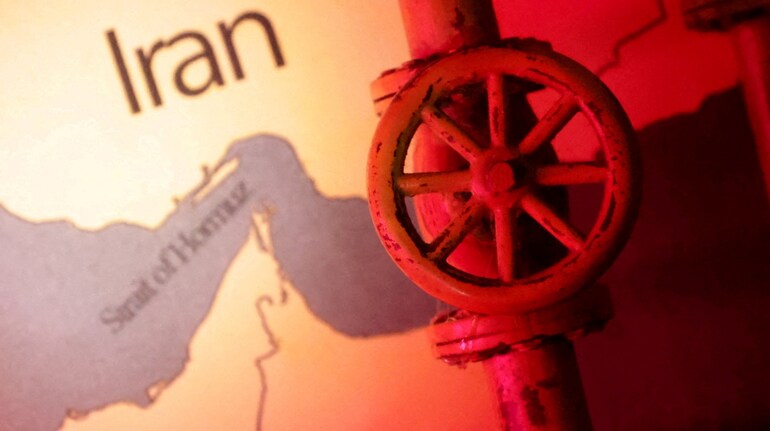

Iran’s temporary closure of parts of the Strait of Hormuz on Tuesday has once again drawn global attention to the world’s most critical maritime chokepoint. The shutdown, implemented during Iranian live-fire drills and coinciding with renewed indirect nuclear talks with the United States in Geneva, lasted only a few hours, according to Tehran. Yet even this brief disruption underlined how vulnerable global energy supply chains remain during periods of geopolitical tension.
The move came amid heightened US military deployments in West Asia, open threats of force from Washington, and domestic unrest inside Iran following a violent crackdown on protests. While Iran has previously harassed vessels transiting the strait, it has not imposed even a temporary closure of this nature since the late 1980s, making the episode particularly significant for energy markets and major importers such as India.
Why the Strait of Hormuz is so critical
The Strait of Hormuz connects the Persian Gulf with the Gulf of Oman and the wider Indian Ocean. At its narrowest point, the passage is only about 33 kilometres wide. Iran and Oman control the surrounding territorial waters, though international shipping lanes allow global traffic to pass.
In the modern era, the strait has become indispensable to global energy flows. Crude oil and liquefied natural gas from Saudi Arabia, Iraq, Kuwait, the United Arab Emirates, Qatar, Bahrain, and Iran all rely heavily on this route. According to market intelligence firm Kpler, roughly 13 million barrels of crude oil per day moved through the Strait of Hormuz in 2025, accounting for around 31 percent of global seaborne crude shipments.
The US Energy Information Administration has warned that “most volumes that transit the strait have no alternative means of exiting the region,” highlighting the lack of viable bypass routes despite limited pipeline infrastructure in Saudi Arabia and the UAE.
What happened during Iran’s drills
Iranian media said the closure was imposed for safety reasons during live-fire exercises. The semiofficial Tasnim news agency reported that missiles launched from Iranian territory and coastal positions struck designated targets in the strait as part of a drill named “Smart Control of the Strait of Hormuz.”
Mariners were alerted in advance through radio advisories warning of “live surface firing.” The exercises followed several recent maritime encounters between Iran and the United States, including an incident earlier this year in which a US Navy fighter jet destroyed an Iranian drone near the aircraft carrier USS Abraham Lincoln.
The US military’s Central Command, which oversees the Bahrain-based Fifth Fleet, has repeatedly cautioned Iran that unsafe manoeuvres near commercial or military vessels increase the risk of unintended escalation.
How Iran-US nuclear talks fit into the picture
The military activity coincided with indirect nuclear talks in Geneva mediated by Oman. Iran’s Foreign Minister Abbas Araqchi met with US Special Envoy Steve Witkoff and Jared Kushner, the son-in-law of US President Donald Trump.
Following the talks, Araqchi said, “Different ideas have been presented, these ideas have been seriously discussed, ultimately we’ve been able to reach a general agreement on some guiding principles.”
A US official described the discussions as constructive but incomplete. “Progress was made, but there are still a lot of details to discuss,” the official said.
Oman’s Foreign Minister Badr al-Busaidi added that “much work is yet to be done,” though both sides left with “clear next steps.”
Oil prices eased slightly after Araqchi’s remarks, reflecting market hopes that diplomacy could prevent escalation.
Impact on global oil markets
Even short-lived disruptions in the Strait of Hormuz tend to rattle markets. Traders and insurers closely track any sign of instability because the concentration of oil flows leaves little margin for error.
Past crises, including recent Israel-Iran confrontations, have triggered price spikes without any actual closure of the strait. A prolonged disruption would likely raise oil prices sharply, inflate shipping insurance premiums, and disrupt freight rates, with ripple effects across global inflation and economic growth.
Iran has repeatedly warned that it could obstruct shipping if attacked. The latest move reinforced its ability to do so, even as Tehran insists it seeks to avoid a broader conflict.
What it means for India
For India, the Strait of Hormuz remains a critical vulnerability despite efforts to diversify energy supplies. India imports around 90 percent of its crude oil, and an estimated 35 to 50 percent of those volumes passed through the Strait of Hormuz in 2024 and 2025.
Key suppliers such as Iraq, Saudi Arabia, the UAE, and Kuwait rely on the strait for shipments to Indian refineries. A full closure could disrupt more than 2 million barrels per day of India-bound crude, raising costs and pressuring domestic fuel prices.
That said, India’s exposure has reduced in recent years. Russia now supplies roughly 35 to 40 percent of India’s crude imports via routes that bypass Hormuz, including the Suez Canal and the Cape of Good Hope. Additional imports from the United States, Brazil, and West Africa also avoid the strait. India’s strategic petroleum reserves further cushion short-term shocks, while Qatar’s LNG supplies to India do not transit Hormuz.
A fragile balance
Despite the recent temporary shutdown, Iran stopped short of fully closing the strait even during last year’s 12-day conflict with Israel, when missiles were exchanged on both sides. This makes the latest move a warning rather than a rupture.
Iran’s Supreme Leader Ayatollah Ali Khamenei underscored Tehran’s posture with pointed remarks directed at Washington. “The strongest army in the world might sometimes receive such a slap that it cannot get back on its feet.”
“Of course a warship is a dangerous apparatus, but more dangerous than the warship is the weapon that can sink the warship into the depths of the sea,” he said, according to Iranian state television.
For global markets and major importers like India, the episode serves as a reminder that even brief disruptions in the Strait of Hormuz carry outsized risks in an already volatile geopolitical landscape.
Discover the latest Business News, Sensex, and Nifty updates. Obtain Personal Finance insights, tax queries, and expert opinions on Moneycontrol or download the Moneycontrol App to stay updated!
Find the best of Al News in one place, specially curated for you every weekend.
Stay on top of the latest tech trends and biggest startup news.





