






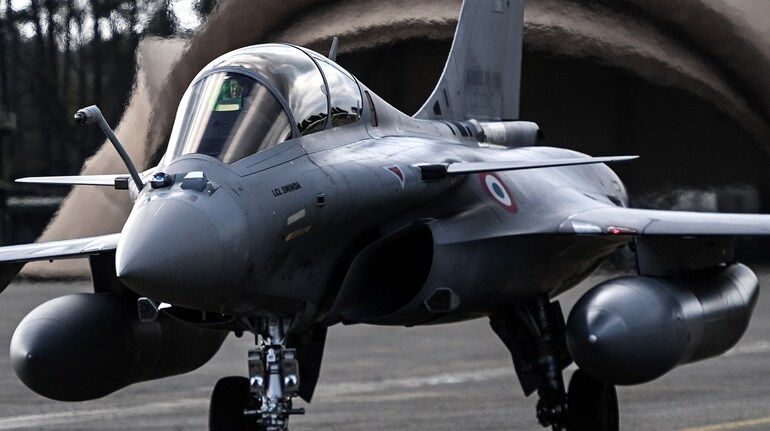

India is on the brink of approving the most expensive and strategically consequential fighter aircraft acquisition in its history, a move that could decisively shape the Indian Air Force’s combat capability well into the middle of the century.
Under the long-pending Multi-Role Fighter Aircraft programme, New Delhi is preparing to clear the purchase of 114 Rafale F4 multirole fighters from France through a government-to-government arrangement estimated at around Rs 3.25 lakh crore. The proposal is expected to receive approval from the Defence Acquisition Council in the coming days, paving the way for contract finalisation during French President Emmanuel Macron’s visit to India later this month.
If executed as planned, the deal will not only address the Indian Air Force’s urgent need for new fighters but also anchor India as a major global production, maintenance and upgrade hub for one of the world’s most capable combat aircraft.
What India is buying under the MRFA programme
At the core of the agreement is the induction of 114 Rafale F4 fighters for the Indian Air Force. The planned fleet includes 88 single-seat aircraft and 26 twin-seat trainer variants, all configured exclusively for land-based air operations.
This acquisition is separate from the Indian Navy’s requirement, which is being met through a different contract for Rafale-Marine jets intended for aircraft carrier operations. The MRFA deal is focused solely on strengthening the Air Force’s fighter squadrons.
The overall cost reflects more than just the aircraft. It includes advanced weapons packages, simulators, spares, training systems, upgrades, industrial infrastructure and long-term maintenance and support, making it a comprehensive capability-building programme rather than a simple procurement.
Once deliveries are complete, India’s Rafale fleet is expected to rise to nearly 150 aircraft in Air Force service. Combined with the Navy’s 26 Rafale-M jets, India will operate around 176 Rafales, making it the largest Rafale operator globally, ahead of France itself.
Immediate capability, long-term self-reliance
A key feature of the deal is its phased delivery structure, which balances urgent operational needs with long-term indigenisation.
The first 18 aircraft will be delivered in fly-away condition, fully built in France and ready for immediate induction. These are expected to begin arriving around 2030, allowing the Air Force to arrest the decline in squadron strength without waiting for domestic production lines to be set up.
The remaining 96 aircraft will be manufactured in India through licensed production. Final assembly will take place at the Dassault Reliance Aerospace Limited facility in Nagpur, which has now become a subsidiary of Dassault Aviation.
Over time, this facility is expected to play a wider role in Dassault’s global Rafale supply chain, positioning India as a key manufacturing and sustainment node for the platform.
How Indian industry fits in
Indian companies will play a central role in the programme. Firms such as Tata, Mahindra, Dynamatic Technologies and more than three dozen other domestic suppliers are expected to be part of the Rafale ecosystem.
Reports indicate that Tata has already secured contracts to manufacture Rafale fuselages for export orders, underlining the programme’s industrial significance beyond India’s own requirements.
Indigenous content is expected to start at around 30 percent and rise to nearly 60 percent over time, following a phased indigenisation roadmap similar to other recent defence programmes. Officials involved in the project have pointed out that when engines, maintenance, spares and upgrades are factored in, the real domestic value generated by the programme will be significantly higher.
Dassault Aviation has also committed to establishing a comprehensive Maintenance, Repair and Overhaul ecosystem in India, while Safran is expected to set up facilities linked to the Rafale’s M88 engine. This is aimed at reducing lifecycle costs, improving availability and ensuring long-term self-reliance.
Rafale variants and what India gets
The Rafale platform exists in multiple variants tailored for different roles.
The Rafale C is a single-seat, land-based fighter optimised for air superiority and strike missions. The Rafale B is a twin-seat land-based variant that adds a second crew member, enhancing effectiveness in complex missions such as deep strikes and nuclear deterrence.
The Rafale M is the naval version designed for aircraft carrier operations, featuring a reinforced airframe and specialised landing gear. India’s MRFA deal covers only land-based variants, while the Navy’s needs are being met separately.
From F3-R to F4 and beyond
India’s current Rafale fleet operates in the F3-R configuration, which already includes advanced radar, long-range air-to-air missiles and modern targeting systems.
Under the MRFA agreement, all Indian Rafales will be upgraded to the F4 standard. This upgrade focuses heavily on network-centric warfare, adding enhanced satellite communications, improved data sharing between aircraft, upgraded mission computers and software-defined radios.
The contract also includes provisions for upgrading Indian Rafales to the F5 standard when it becomes available around 2030. The F5 configuration is being designed to operate alongside unmanned systems, including loyal wingman drones, extending the Rafale’s relevance into the next generation of air combat.
Why Rafale matters for India’s security
The Rafale is currently the most advanced combat aircraft in Indian Air Force service and is widely regarded as its primary force multiplier.
Its omnirole capability allows it to perform multiple mission types in a single sortie, ranging from air superiority and ground attack to reconnaissance and nuclear delivery. Advanced sensors, long-range missiles and stand-off weapons give it a decisive edge in modern combat scenarios.
India’s Rafales also incorporate India-specific enhancements tailored for high-altitude operations, extreme weather and regional threat profiles. These include cold-start systems for operations in places like Leh, specialised electronic warfare suites, advanced helmet-mounted displays and towed decoys to counter incoming missiles.
Addressing a growing squadron gap
The urgency behind the MRFA programme is driven by the Indian Air Force’s declining squadron strength. While authorised to operate 42 fighter squadrons, the Air Force currently has around 29, a shortfall that has widened as legacy aircraft retire faster than replacements arrive.
At the same time, India faces a complex regional security environment marked by growing military coordination between China and Pakistan. In this context, the Rafale offers a proven, high-capability platform with relatively low integration risk and predictable induction timelines.
If approved and implemented on schedule, the Rafale F4 programme is expected to form the backbone of the Indian Air Force through the 2030s, buying crucial time for indigenous platforms such as the Tejas Mk-2 and the Advanced Medium Combat Aircraft to mature.
Discover the latest Business News, Sensex, and Nifty updates. Obtain Personal Finance insights, tax queries, and expert opinions on Moneycontrol or download the Moneycontrol App to stay updated!
Find the best of Al News in one place, specially curated for you every weekend.
Stay on top of the latest tech trends and biggest startup news.





