






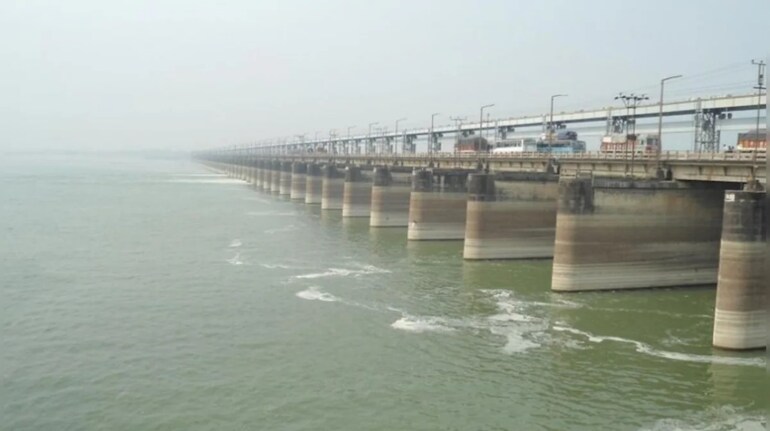

India and Bangladesh have begun the formal process of renewing the Ganga Water Sharing Treaty, an agreement signed in 1996 that will expire in December this year. As part of the preparatory exercise, teams from both sides have started joint measurements of water flow in the Ganga in India and the Padma in Bangladesh. These measurements will be taken every ten days until May 31, covering the critical dry season when water availability becomes a politically sensitive issue.
Officials from India’s Central Water Commission are currently in Bangladesh, while a Bangladeshi technical team is in India. Water levels are being recorded near the Farakka Barrage and upstream of the Hardinge Bridge, the two reference points used under the treaty. Bangladeshi officials have said “special attention” is being given to the security of Indian officials, citing growing anti India sentiment in the country.
The treaty was signed on December 12, 1996, by then Indian Prime Minister H D Deve Gowda and his Bangladeshi counterpart Sheikh Hasina. It was meant to end decades of friction over the Ganga’s dry season flows after India built the Farakka Barrage in 1975 to divert water to the Hooghly river and protect Kolkata port. Bangladesh has since repeatedly criticised the agreement, arguing that it favours India and leaves it short of water during lean months.
Under the treaty, water sharing is calculated using historical flow data from 1949 to 1988. If flows at Farakka fall below 70,000 cusecs, the two sides split the water equally. Above that, India receives a fixed amount before the surplus goes to Bangladesh. Crucially, there is no minimum guarantee clause. If flows drop below 50,000 cusecs, the treaty merely calls for consultations, leaving Bangladesh dependent on diplomatic goodwill rather than enforceable rights.
Dhaka has long complained that India does not adhere to even these provisions. Bangladeshi experts claim that during several dry seasons, especially between March 11 and May 10 when demand peaks, the country received less water than stipulated. India, they argue, offsets shortfalls by releasing excess water in other periods and still declares compliance. These allegations have fuelled domestic criticism in Bangladesh and hardened its negotiating posture.
From India’s perspective, the treaty has functioned through established mechanisms like the Joint Rivers Commission, which met for the 86th time in Kolkata in March 2025. New Delhi also has to factor in the concerns of Indian states, particularly West Bengal, whose approval is essential for any renewal. The state’s past opposition to the Teesta agreement serves as a reminder of how internal politics can derail bilateral deals.
As talks move forward, Bangladesh is pushing to reopen the treaty on climate change grounds, flooding, droughts and ecological risks to the Sundarbans. India, however, sees many of these claims as politically driven attempts to extract more water without acknowledging upstream realities. With mistrust high and anti-India rhetoric growing in Dhaka, renewing the Ganga Water Treaty is shaping up to be less about cooperation and more about managing Bangladesh’s persistent grievances.
Discover the latest Business News, Sensex, and Nifty updates. Obtain Personal Finance insights, tax queries, and expert opinions on Moneycontrol or download the Moneycontrol App to stay updated!
Find the best of Al News in one place, specially curated for you every weekend.
Stay on top of the latest tech trends and biggest startup news.





