






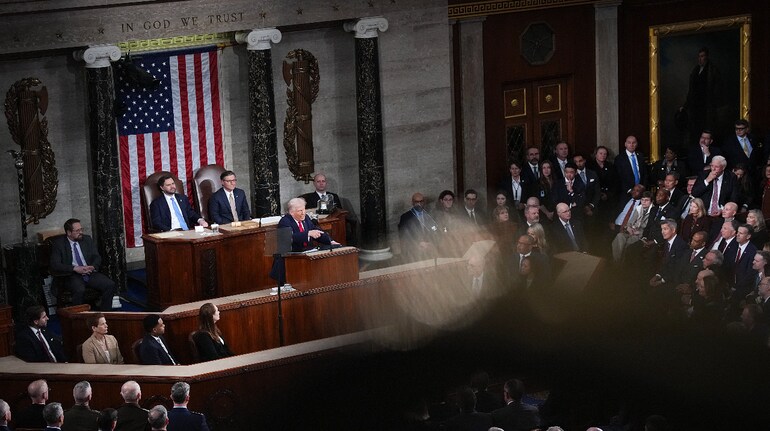

The United States and Israel launched coordinated strikes on Iran, killing its Supreme Leader and hitting military targets across the country. Iran retaliated with missile and drone attacks across the Gulf region.
Within hours, the Pentagon surged naval and air assets, activated regional air defense systems, and raised force protection levels across bases in Qatar, Bahrain, Kuwait, Iraq and Syria.
War is expensive the moment the first missile leaves its launcher.
Multiple media estimates, from NYT, Al Jazeera, and TOI, drawing from Pentagon briefings, defense analysts and historical benchmarks, suggest the US may have spent over $700 million in the first 24 hours alone, according to NYT & Al Jazeera.
The first 24 hours: How $700 million adds up quickly
Let’s break down what drives that cost.
If dozens, or hundreds, of precision-guided munitions were used, and defensive interceptors were fired in response to Iranian retaliation, the math escalates quickly.
Add to that:
• Carrier strike group deployment
• Bomber sorties from long range
• Aerial refueling operations
• ISR (intelligence and surveillance) missions
• Emergency logistics and troop mobilization
Modern US strike operations in Syria in 2017 and 2018 crossed similar nine-figure thresholds in their opening phases.
So a $500-800 million day-one estimate aligns with precedent.
What the US has deployed, and why that matters financially
Reporting by Military.com and Al Jazeera suggests the US has surged:
Naval assets
Air assets
Regional defenses
A carrier strike group alone can cost roughly $6-8 million per day to operate when fully deployed.
Multiply that by sustained sortie tempo and interceptor use, and the burn rate rises sharply.
What happens if this lasts longer?
Here’s how projected costs scale:
For context (as per Brown University’s Watson Institute):
The Iraq War ultimately cost around $2 trillion in direct spending.
Afghanistan cost roughly $2.3 trillion.
Combined post-9/11 wars are estimated near $8 trillion when long-term obligations are included.
Can the US afford it?
On paper, yes, at least in the short term.
The FY2026 defense budget is roughly $900 billion. A few billion dollars in emergency strike costs is manageable within that framework.
But the broader fiscal context complicates the picture:
A short, contained air campaign is financially sustainable.
A 6-12 month high-intensity conflict becomes painful but manageable.
A prolonged war resembling Iraq, especially involving ground operations, could push costs toward the trillion-dollar range over time.
The hidden risk: Oil, not bombs
The biggest financial threat may not be missile launches, it’s the Strait of Hormuz.
Roughly 20 percent of global oil flows through that narrow passage.
If disruption pushes oil above $120–150 per barrel:
• US inflation could rise 1–2 percentage points
• Recession risks increase
• Pentagon fuel costs surge
• Global markets absorb a shock that could exceed $100 billion
History offers warnings, from the 1973 oil embargo to the 1990 Gulf War. Energy shocks often outlast military campaigns.
Short term: America can afford this, but...
A few billion dollars is absorbable within a $900 billion defense framework.
Medium term: A sustained air war strains budgets but remains financially manageable.
Long term: If escalation leads to broader conflict, oil disruption, or ground involvement, total costs could rise into the hundreds of billions, or eventually trillions, especially when debt servicing and veteran care are included.
Discover the latest Business News, Sensex, and Nifty updates. Obtain Personal Finance insights, tax queries, and expert opinions on Moneycontrol or download the Moneycontrol App to stay updated!
Find the best of Al News in one place, specially curated for you every weekend.
Stay on top of the latest tech trends and biggest startup news.





