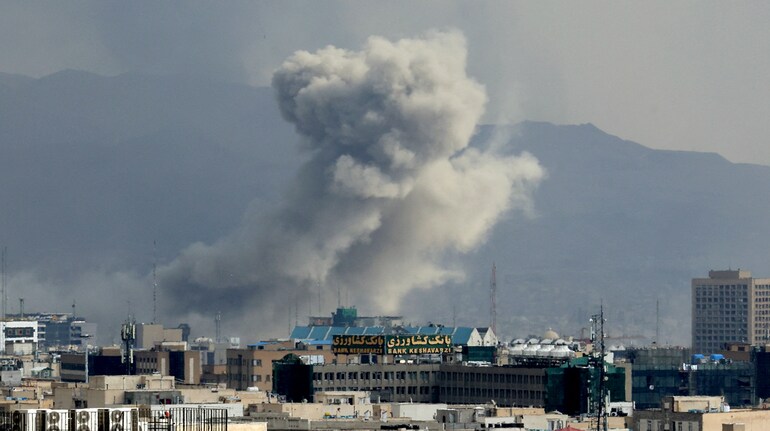
Iran is no longer trying to win attention with a single, massive missile barrage. After last year’s brief but intense war with Israel, Tehran appears to have learned that dramatic salvos are easy to intercept and easier to anticipate. This time, it has shifted to a slower, steadier rhythm of attacks, the Financial Times reported.
Western and Israeli officials say Iran has launched more than 25 waves of missiles and drones in recent days. The strikes are smaller but more frequent. Israeli officials describe it as a “drizzle” rather than a flood. The aim is not a knockout blow but exhaustion.
By forcing air defence systems to stay active for long periods, Iran is betting that even the most advanced interceptors will eventually run thin.
Why Gulf cities are being targeted
At the same time, Iran has widened the battlefield. Instead of focusing only on Israel, it is hitting US allies across the Gulf. Bahrain, Qatar, the United Arab Emirates, Kuwait and Iraq have all reported impacts or interceptions.
Some of these attacks have struck civilian infrastructure such as ports and hotels, alongside American military facilities. That is a clear shift from last year, when Iran largely limited itself to carefully signalled strikes on a single US base.
The calculation appears political as much as military. By disrupting civilian life and commercial hubs, Iran may be trying to pressure Gulf governments to restrain Washington and Tel Aviv before the conflict deepens further.
Cheap weapons, expensive defences
A key part of the strategy is economic. Iran is using older ballistic missiles and mass-produced drones first. Many of these are relatively unsophisticated, including liquid-fuel missiles and Shahed-type kamikaze drones.
Intercepting them is costly. Systems such as THAAD, Arrow and David’s Sling rely on missiles that can cost hundreds of thousands or even millions of dollars each. Iran’s logic is simple. Burn through your opponent’s most expensive defences using your least valuable weapons.
Experts say Iran is likely saving newer, solid-fuel missiles with better guidance systems for later phases of the conflict, assuming its launchers survive long enough.
Hitting before launchers are destroyed
There is also urgency on Iran’s side. Israeli officials claim they have already disabled around half of Iran’s ballistic missile launchers. If that is even partly true, Tehran faces a use-it-or-lose-it dilemma.
That may explain the constant pace of attacks. Command authority appears to have been decentralised, allowing lower-level commanders to fire at pre-approved targets without waiting for central approval.
In practical terms, that means more missiles in the air, more often.
Psychological warfare in real time
Beyond physical damage, the strategy is designed to wear people down. Constant alerts, repeated interceptions and sporadic impacts create a sense that normal life cannot resume. Israeli analysts say the pressure to stay near shelters is itself part of the plan.
The same applies in Gulf cities that rarely experience conflict. Even limited damage has an outsized psychological impact in places built on stability and predictability.
What comes next
Iran’s approach suggests it is preparing for a long conflict rather than a short exchange. It may also be holding back some of its retaliation for later, when US forces rotate or scale down their presence.
For now, the message is clear. Tehran does not expect to avoid being hit. Instead, it is trying to make sure that everyone else feels the cost of staying in the fight.
Discover the latest Business News, Sensex, and Nifty updates. Obtain Personal Finance insights, tax queries, and expert opinions on Moneycontrol or download the Moneycontrol App to stay updated!
Find the best of Al News in one place, specially curated for you every weekend.
Stay on top of the latest tech trends and biggest startup news.