






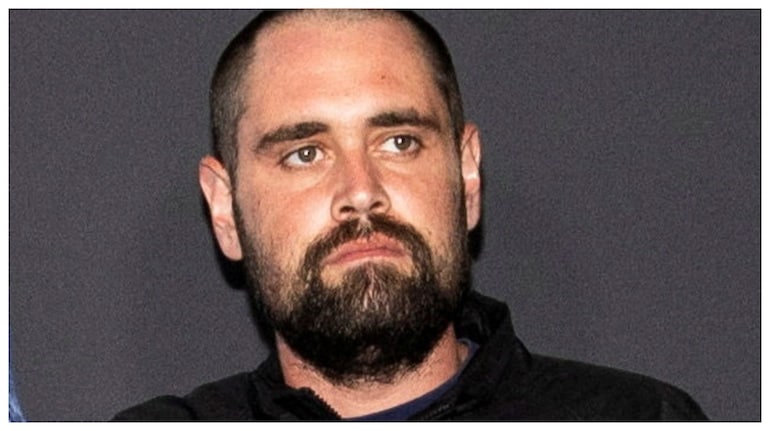
When Being Charlie was released in 2016, it carried an intimacy that was difficult to ignore. Co-written by Nick Reiner and directed by his father, the filmmaker Rob Reiner, the film mirrored the family’s own battle with addiction at a moment when it was still unfolding. Nick Reiner was 22 when the film premiered. He had already spent years moving in and out of rehabilitation, having first entered treatment at 15, and wrote the screenplay during a period of sobriety with Matt Elisofon, whom he met while in rehab.
The film has returned to public attention after Nick Reiner was arrested on suspicion of murdering his parents, Rob Reiner and Michele Singer Reiner. He is being held without bail. In that context, what once seemed uncomfortably personal has taken on a darker weight, as the New York Times reported.
At the centre of Being Charlie is Charlie Mills, a Los Angeles teenager whose intelligence and humour coexist with a severe drug addiction. Played by Nick Robinson, Charlie is portrayed as a comedy obsessive who drops references to vintage stand-up performers like Moms Mabley and Lord Buckley, tries open mics, and can freestyle rap with ease. Yet at 18, his defining reality is heroin dependence.
The story opens with Charlie fleeing a Christian-oriented recovery ranch, hurling a rock through a stained-glass window. The escape sets the tone for a cycle that repeats through the film: relapse, forced treatment, brief stability and collapse. Soon after, Charlie steals OxyContin pills and is sent to another facility while his father pursues a political campaign.
That father, played by Cary Elwes, is a successful actor reinventing himself as a candidate for governor of California. The father-son relationship is tense and combative, shaped by mistrust and conflicting motives. Charlie resents what he sees as control and image management, while his father insists that professional treatment is the only responsible choice.
The dynamic reflected the Reiners’ own experience. Rob Reiner later acknowledged that the family had relied heavily on expert advice, sometimes at the cost of listening to their son. “We were desperate,” he told The Los Angeles Times. “And because the people had diplomas on their wall, we listened to them when we should have been listening to our son.”
One of the film’s most notable choices is its critical depiction of the father figure. Elwes’s character is shown as emotionally distant and politically calculating, capable of lying to both his son and the press to preserve his public image. Rob Reiner pushed for that portrayal deliberately. Elwes told The Los Angeles Times in 2015 that Reiner felt he had mishandled parts of his son’s struggle and wanted the film to reflect that failure.
By contrast, Charlie’s mother is portrayed as more empathetic and present. She supports her son’s gradual independence, visits him in halfway houses, and resists rigid treatment plans when they appear to deepen his despair.
Several plot points closely track Nick Reiner’s own accounts of his life. In the film, Charlie relapses, smashes windows in his parents’ home, steals their car after a confrontation, sleeps in homeless shelters and scores drugs on the street. Nick Reiner had publicly described similar episodes in interviews.
The film, which runs just over 90 minutes and includes a small role for Nick’s brother Jake Reiner, ends on a cautious note of hope. After a friend’s overdose, Charlie tells his mother, “I don’t want to die.” A reconciliation follows between father and son, a scene Rob Reiner said was rewritten many times as the two gained a deeper understanding of their relationship.
“All I ever wanted was a way to kill the noise,” Charlie says in the closing moments. “But the more I used, the louder it got.” His father replies, quietly, “I was part of the noise, wasn’t I?”
Being Charlie was poorly received by critics and earned little at the box office. Rob Reiner nevertheless described the film as its own reward, a form of therapy that allowed father and son to reconnect, however imperfectly. That year, Nick Reiner credited both parents with supporting him through sobriety, telling People, “I don’t have a sober coach, but I have very loving and supportive parents. That’s a huge part of it.”
In retrospect, the film stands less as a redemption story than as a record of a family trying, publicly and painfully, to understand addiction while still living inside it.
Discover the latest Business News, Sensex, and Nifty updates. Obtain Personal Finance insights, tax queries, and expert opinions on Moneycontrol or download the Moneycontrol App to stay updated!
Find the best of Al News in one place, specially curated for you every weekend.
Stay on top of the latest tech trends and biggest startup news.




