






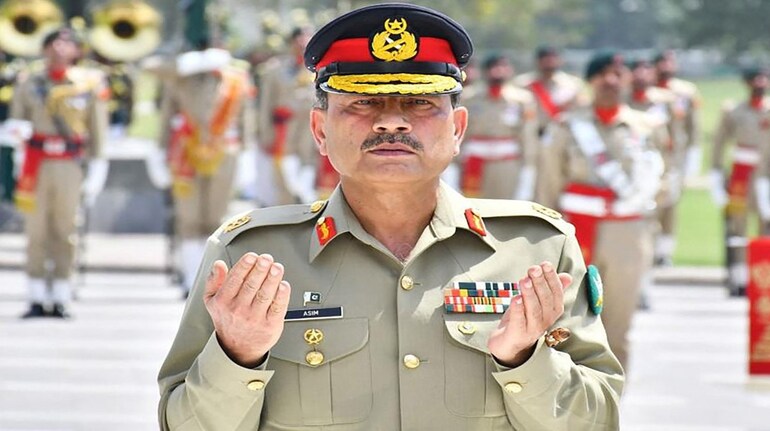

Internal unease is surfacing within Pakistan's political and religious circles after a senior cleric of the Jamiat Ulema-e-Islam-Fazl (JUI-F) publicly challenged the lifetime legal immunity granted to Field Marshal Syed Asim Munir under the 27th Constitutional Amendment.
Information accessed by CNN-News18 indicates that Mufti Taqi Usmani has questioned the religious and ethical justification of extending blanket immunity to Pakistan's top military leadership. He has described such protection as haram (forbidden), asserting that Islamic principles do not allow any individual-whether a ruler, general, or caliph-to be placed beyond accountability.
The controversy follows Munir, who will formally assume office on December 27 as Pakistan's first Chief of Defence Forces (CDF), a position created through the disputed constitutional amendment. The 27th Amendment explicitly shields him from criminal prosecution or civil litigation for actions taken while in office, unless Parliament first revokes that protection.
However, CNN-News18 has learned that this sweeping immunity has triggered discomfort even within the ruling Pakistan Democratic Movement (PDM). Usmani has reportedly stressed that both the Quran and Sunnah reject legal exceptionalism for those in power, calling the amendment incompatible with Islamic teachings.
The PDM-formed in 2020 to oppose former prime minister Imran Khan-was led by Shehbaz Sharif's Pakistan Muslim League-Nawaz (PML-N) and included the Pakistan Peoples Party (PPP) and the JUI-F. The JUI-F later withdrew from the alliance and launched protests in 2024, alleging electoral manipulation.
Sources cited by CNN-News18 say the JUI-F believes it was mobilised primarily for street influence and religious endorsement, while being sidelined from real decision-making. The party has accused the Shehbaz Sharif government of breaching Quranic principles by granting lifelong legal cover to Munir.
JUI-F chief Maulana Fazal-ur-Rehman reportedly views the current civilian setup as largely symbolic, with actual authority concentrated in the hands of the military leadership. This perception has fuelled claims that electoral seat adjustments and post-poll arrangements favoured the PML-N and the PPP.
At the grassroots level, Deobandi clerics are pressuring the JUI-F leadership to distance itself from what they regard as an un-Islamic political arrangement. Intelligence sources cited by CNN-News18 suggest that open dissent from figures like Taqi Usmani points to a deeper crisis of legitimacy confronting Pakistan's hybrid civil-military system.
The widening gap between the JUI-F and the Shehbaz Sharif government has also raised concerns about coalition fragility, potentially increasing dependence on the military. By framing objections in religious terms, critics make overt suppression by Rawalpindi more difficult, further complicating Pakistan's political equation.
Discover the latest Business News, Sensex, and Nifty updates. Obtain Personal Finance insights, tax queries, and expert opinions on Moneycontrol or download the Moneycontrol App to stay updated!
Find the best of Al News in one place, specially curated for you every weekend.
Stay on top of the latest tech trends and biggest startup news.





