






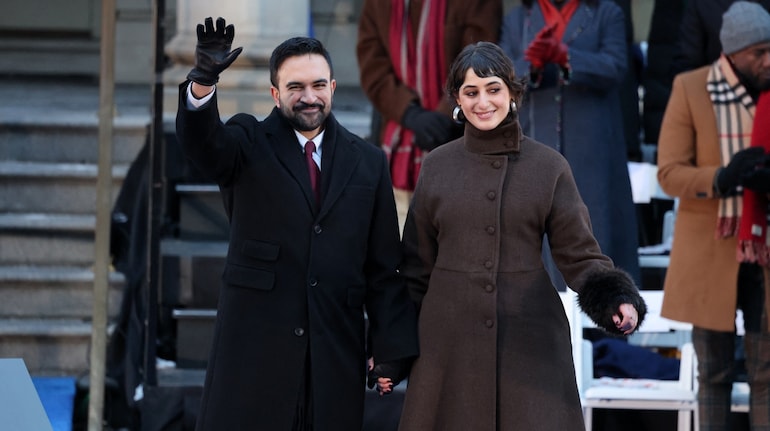

The morning after jubilant crowds packed Manhattan for his historic swearing-in, Zohran Mamdani began his tenure much like countless other New Yorkers: by heading to the subway from his modest home.
Wrapped up against the cold and appearing under the weather, Mamdani left the one-bedroom Queens apartment he shares with his wife early Friday. The routine commute, however, quickly turned into a public spectacle, trailed by cameras and punctuated by neighbors stopping to offer encouragement.
At 34, the democratic socialist — whose election has been widely framed as a turning point for progressive politics — now faces the practical demands of leading the country’s largest city. That includes issuing executive orders, naming key officials, answering reporters’ questions and defending decisions made within hours of taking office. But first came a carefully watched commute rich in symbolism.
Escorted by security and a handful of aides aboard a Manhattan-bound train, Mamdani paused for selfies with curious passengers before settling into a corner seat to pore over briefing papers. When two puzzled French tourists asked what was happening, he introduced himself as New York’s new mayor. Skeptical, they were convinced only after he pointed to that morning’s Daily News front page, which featured his photograph.
Mamdani joins a long line of city leaders who have used public transit to signal accessibility. Former mayor Eric Adams did the same on his first day, and Bill de Blasio and Michael Bloomberg frequently rode the subway when making political statements. It took only minutes after Mamdani arrived at City Hall for images of his commute to circulate widely online.
While the ride made for compelling visuals, it also echoed a promise from his inaugural address: that his administration would resemble — and live like — the city it serves.
That theme carried through his early moves. Having built much of his campaign around housing affordability, Mamdani went directly from Thursday’s inauguration to a Brooklyn apartment building, where he was met by chanting tenants. There, he pledged to intensify the city’s legal action against a landlord accused of neglect.
Another early decision highlighted the heightened scrutiny surrounding his leadership, particularly over his past criticism of Israel and support for Palestinian rights. Seeking what he described as a reset, Mamdani rescinded several late-term executive orders issued by his predecessor, including two related to Israel — one adopting a contested definition of antisemitism, and another prohibiting city employees from participating in boycotts or divestment efforts.
The reversals prompted sharp reactions from some Jewish organizations, and criticism from Israel’s government, which accused Mamdani on social media of inflaming antisemitism.
Responding to questions on Friday, Mamdani stuck to prepared remarks, vowing that his administration would aggressively confront hatred and polarization. He also pointed out that the Mayor’s Office to Combat Antisemitism would remain intact.
He further announced plans for a new “mass engagement” office, intended to build on the grassroots organizing that powered his campaign and draw more residents into civic participation.
Standing amid dense crowds of supporters and onlookers — many filming on their phones — Mamdani reflected on the expectations surrounding his victory.
“New Yorkers are giving themselves permission to believe in city government again,” he said. “But that belief won’t last unless it’s matched by action.”
Still ahead on his agenda: relocating to the mayor’s official residence on Manhattan’s Upper East Side, once the lease on his Queens apartment expires later this month.
With inputs from APDiscover the latest Business News, Sensex, and Nifty updates. Obtain Personal Finance insights, tax queries, and expert opinions on Moneycontrol or download the Moneycontrol App to stay updated!
Find the best of Al News in one place, specially curated for you every weekend.
Stay on top of the latest tech trends and biggest startup news.





