






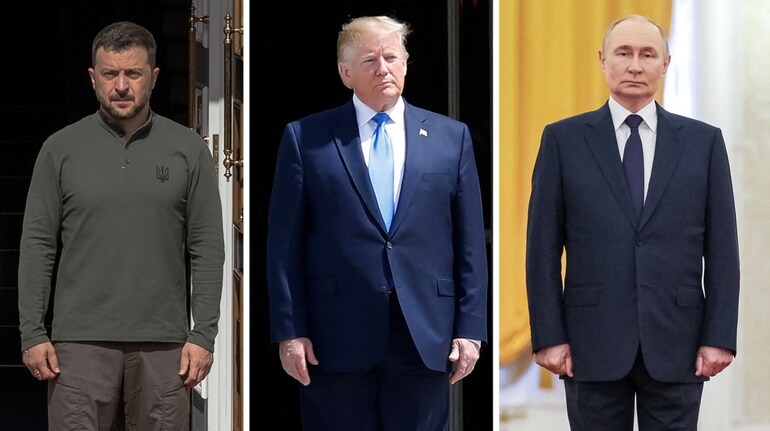

A rare diplomatic opening is set to unfold in the United Arab Emirates as Ukraine, Russia, and the United States prepare for their first-ever trilateral meeting at the technical level on January 23 and 24. The talks were confirmed by Ukrainian President Volodymyr Zelensky during the World Economic Forum in Davos and come after an hour-long meeting between Zelensky and US President Donald Trump, a conversation both sides described as positive.
While expectations remain cautious, the very fact that officials from all three countries are engaging through a coordinated process marks a shift after nearly three years of war.
“Tomorrow and the day after tomorrow we will have a trilateral meeting, it’s better than not having any dialogue,” Zelensky said during a panel discussion in Davos.
How talks are expected to work
Zelensky indicated that the talks will follow a staggered format rather than direct three-way negotiations at the same table. Ukrainian officials are meeting US representatives first, after which the American team will travel to Russia for discussions with Moscow.
“Our guys are meeting with the Americans today, then the Americans are meeting with the Russians tomorrow,” Zelensky said, adding with a note of uncertainty, “when, I don’t know, maybe Putin is sleeping, you said no one knows what’s in his head.”
This format suggests Washington will act as the primary intermediary, carrying positions, red lines, and possible compromises between Kyiv and Moscow.
What Ukraine wants from the talks
For Ukraine, the immediate goal is to test whether Russia is genuinely prepared for compromises. Zelensky made it clear that Kyiv does not see itself as the only side expected to make concessions.
“You know, everyone should be ready, not just Ukraine, and this is important for us,” he said.
Ukraine is also seeking stronger security guarantees, particularly as doubts grow in Europe about long-term US military backing. Zelensky used his Davos platform to warn that Europe remains overly dependent on Washington.
“Europe relies only on that belief that if danger comes, NATO will act, but no one has really seen the alliance in action,” he said.
He added, “Right now NATO exists thanks to the belief that the United States will act, that it will not stand aside and will help. But what if it doesn’t? Believe me, this question is everywhere in the minds of every European leader.”
Russia’s calculations
Russia enters the talks under continued battlefield pressure, economic sanctions, and diplomatic isolation. Moscow has not publicly outlined its objectives, but analysts believe it will push for recognition of territorial gains, limits on Ukraine’s NATO aspirations, and sanctions relief.
Zelensky, however, warned that Russia should not assume it holds all the leverage. He even suggested Ukraine could play a role in broader NATO security if admitted to the alliance.
“If Russian warships are sailing freely near Greenland, Ukraine can help. We have the expertise and weapons to ensure not one of those ships remains,” Zelensky said. “They can sink near Greenland just as they do near Crimea.”
What the US and Trump stand to gain
For the United States, the talks offer a chance to reclaim diplomatic leadership after months of stalled efforts. For President Trump personally, the stakes are even higher.
Trump has repeatedly argued that his leadership can bring wars to an end, and Zelensky has confirmed that documents aimed at ending the war are “nearly ready” following their Davos meeting. A breakthrough, even a partial ceasefire or framework agreement, would directly bolster Trump’s long-standing ambition for a Nobel Peace Prize, an issue he has openly complained about in the past.
Trump himself described his meeting with Zelensky as “good,” signaling political buy-in at the highest level.
Why expectations remain guarded
Despite the symbolism, Zelensky did not clarify whether Ukrainian and Russian officials would ever negotiate face to face, nor did he outline timelines for tangible outcomes. Past peace efforts have repeatedly collapsed due to mistrust and incompatible demands.
Still, after years of total war and frozen diplomacy, even a technical-level dialogue is being seen as a necessary first step.
As Zelensky put it, dialogue itself has value. Whether it leads to peace, or simply exposes the limits of compromise, will become clearer in the days ahead.
Discover the latest Business News, Sensex, and Nifty updates. Obtain Personal Finance insights, tax queries, and expert opinions on Moneycontrol or download the Moneycontrol App to stay updated!
Find the best of Al News in one place, specially curated for you every weekend.
Stay on top of the latest tech trends and biggest startup news.





