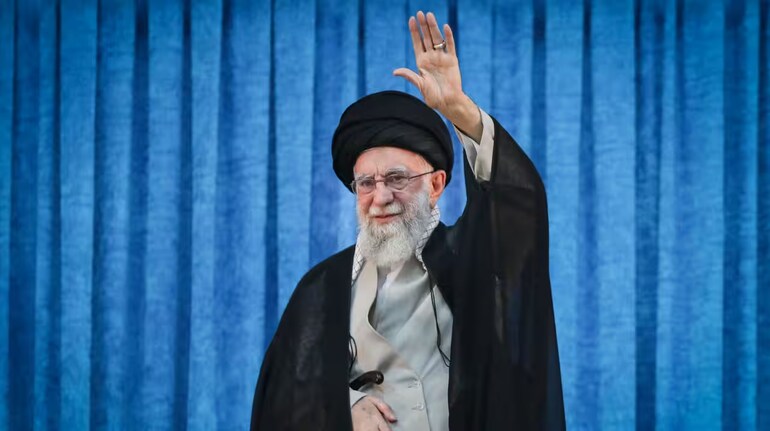
The death of Ayatollah Ali Khamenei brings to a close a defining era in Iran, one that began in the turbulent aftermath of the 1979 Islamic Revolution.
That uprising swept away the monarchy of Shah Mohammad Reza Pahlavi and replaced it with an Islamic Republic under Ayatollah Ruhollah Khomeini. In doing so, it redrew the political map of the Middle East and entrenched hostility between Tehran and the West that continues to shape global politics.
The road to revolt
By the late 1970s, resentment towards the Shah had hardened across Iranian society. Though strongly backed by the United States and other Western powers, his rule was widely criticised at home as authoritarian and detached from religious tradition.
His secret police, SAVAK, were accused of arresting and torturing opponents. Many Iranians felt the monarchy was drifting away from Islamic values. Despite vast oil revenues, unemployment remained high and inequality deepened.
Khomeini, a Shia cleric, became the most prominent critic of the regime. Protests that began in late 1977 quickly snowballed into a mass movement. Millions marched through Iranian cities demanding that the Shah step down.
A monarch in exile
As the revolution gathered unstoppable momentum, the Shah left Iran on 16 January 1979. He initially flew to Aswan in Egypt before moving between Morocco, the Bahamas, Mexico, the United States for cancer treatment, and Panama.
His admission to the US in October 1979 proved explosive. Revolutionaries in Tehran feared Washington was preparing to restore him to power, a suspicion that helped trigger the hostage crisis later that year.
The Shah eventually returned to Egypt, where he died of cancer on 27 July 1980.
The Islamic republic is born
Khomeini returned from exile on 1 February 1979 to scenes of jubilation. Ten days later, the Shah’s government collapsed entirely. In April, a national referendum delivered an overwhelming 98 per cent vote in favour of establishing an Islamic Republic.
Under the doctrine of Velayat-e Faqih, the Guardianship of the Islamic Jurist, Khomeini assumed the role of Supreme Leader, the ultimate authority in the new political order. Iran was reconstituted as a Shia Islamic state governed by Sharia law, adopting a firmly anti-Western, particularly anti-American, posture.
The 444-day standoff
On 4 November 1979, Iranian students stormed the US Embassy in Tehran and seized 52 American diplomats and citizens. The captives were held for 444 days, until 20 January 1981.
The students were incensed by Washington’s decision to admit the exiled Shah for medical treatment. They believed the United States might attempt to reverse the revolution and restore the monarchy.
Although women and African-American hostages were released earlier, 52 Americans remained until the end. They were freed minutes after President Ronald Reagan was sworn in, succeeding Jimmy Carter.
Carter had pursued negotiations and authorised a rescue attempt, Operation Eagle Claw, in April 1980. The mission ended in disaster when helicopters collided in the Iranian desert, killing eight American servicemen. The episode severely damaged Carter’s standing and contributed to his defeat later that year. Diplomatic relations between Tehran and Washington were severed in 1980 and have never fully recovered.
From Khomeini to Khamenei
Khomeini’s opposition to the Shah dated back to the 1960s. Arrested in 1963 for denouncing the Shah’s “White Revolution” reforms, he was exiled the following year to Turkey, then Iraq and later France. By late 1978, as protests engulfed Iran, the opposition coalesced around him as its spiritual leader.
Following Khomeini’s death in June 1989, Ali Khamenei was appointed Supreme Leader, consolidating clerical control over the republic and presiding over decades marked by sanctions, regional rivalry and disputes over Iran’s nuclear ambitions.
From covert ties to bitter rivalry
During the Shah’s reign, Iran regarded Israel as a strategic ally. Even in the early years after the revolution, limited contacts reportedly continued, particularly during the Iran–Iraq war against Saddam Hussein, when Israel is said to have supplied arms to Tehran.
After the 1991 Gulf War, however, Tehran’s stance hardened. Iran branded Israel the “Little Satan”, reserving “Great Satan” for the United States. The Islamic Republic severed diplomatic ties and began actively backing Palestinian groups and Lebanese Shia forces that would later consolidate as Hezbollah.
Iran’s nuclear programme, launched in the 1980s, became a growing source of friction in the 1990s and beyond, laying the groundwork for more recent confrontation.
The latest escalation
On 13 June 2025, Israel launched “Operation Rising Lion”, striking more than 100 targets across Iran, including nuclear facilities at Natanz, Isfahan and Fordow, as well as missile bases and Revolutionary Guard command centres. At least 224 Iranians were reported killed.
Khamenei vowed retaliation, declaring that Israel had “opened its wicked and blood-stained hand to a crime in our beloved country, revealing its malicious nature more than ever by striking residential centers”. Tehran responded with “Operation True Promise III”, firing ballistic missiles and drones at Israeli military and residential sites. At least 24 Israelis were killed and hundreds injured.
As the fighting intensified, US President Donald Trump voiced support for Israel and urged Iran to negotiate, while the United Nations and other international actors called for restraint.
The United States later joined the offensive, striking Iranian nuclear facilities. A ceasefire brokered by Washington and Doha briefly halted what became known as the Twelve-Day War, though violations and tensions persisted in the months that followed.
On 28 February 2026, Israel and the United States launched a renewed coordinated assault, described as “Operation Epic Fury” or “Roaring Lion”, targeting missile sites, air defences and nuclear infrastructure. The campaign escalated rapidly into widespread bombardment.
In the ensuing strikes, Ayatollah Ali Khamenei was killed. Iran retaliated with missile and drone attacks against Israeli cities and US bases across the region. Further air strikes followed, alongside emergency alerts across the Gulf, underscoring the fragility of the region’s security landscape.
(With agency inputs)
Discover the latest Business News, Sensex, and Nifty updates. Obtain Personal Finance insights, tax queries, and expert opinions on Moneycontrol or download the Moneycontrol App to stay updated!
Find the best of Al News in one place, specially curated for you every weekend.
Stay on top of the latest tech trends and biggest startup news.