







A new worry is beginning to circulate across the Gulf as the war involving Iran, Israel and the United States intensifies: water.
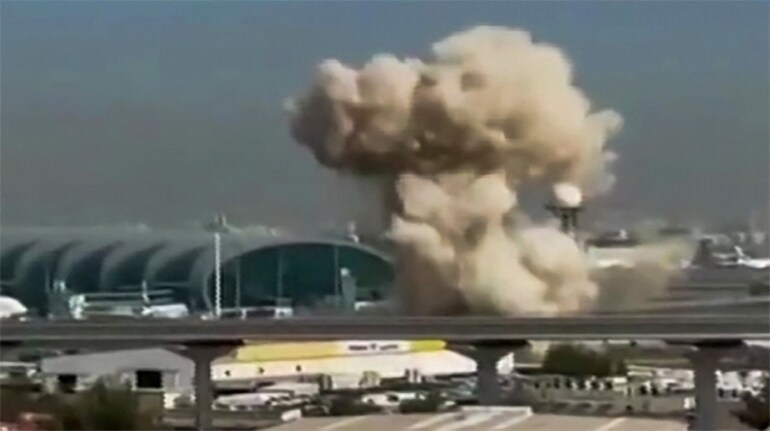
In the past few days, desalination facilities on both sides of the Gulf have reportedly been hit in what appear to be retaliatory strikes. Bahrain said an Iranian drone damaged a desalination plant on Sunday, though officials stressed that water supplies were not disrupted.
A day earlier, Iran’s foreign minister Abbas Araghchi said a desalination facility in southern Iran had been targeted. Even limited damage to such plants has caught the attention of governments in the region. In much of the Gulf, desalination plants are not just part of the infrastructure.
They are the main source of drinking water, the Financial Times reported.
Why these plants matter so much
Unlike many other parts of the world, the Gulf has almost no natural freshwater sources. There are no major rivers, rainfall is sparse and summer temperatures can climb above 50°C.
As cities expanded over the past few decades, governments invested billions of dollars in desalination plants that convert seawater into fresh water. Today, these facilities supply homes, businesses and industries across countries such as Saudi Arabia, the United Arab Emirates and Bahrain.
Saudi Arabia alone produces more than 7.4 million cubic metres of desalinated water every day, making it the largest producer globally.
If those plants were to stop working for long periods, the consequences could be severe.
Why they are vulnerable during conflict
Over the past few decades, as Gulf cities grew rapidly, governments poured billions of
dollars into desalination plants. These facilities pull in seawater from the Gulf and remove the salt to produce drinking water. Today, much of the region’s daily water supply comes from these plants, serving homes, businesses and industries in countries such as Saudi Arabia, the United Arab Emirates and Bahrain.
Saudi Arabia is by far the biggest producer. The country generates more than 7.4 million cubic metres of desalinated water every day to keep its cities running. That is why even the possibility of these plants being damaged worries officials. If several of them were knocked out for a prolonged period, it could quickly become a serious problem for cities that rely almost entirely on desalinated water.
Why they are vulnerable during conflict
Most desalination plants are built along the coast, where they can draw seawater directly from the Gulf. They are also often located close to power stations because turning seawater into fresh water requires enormous amounts of energy.
Countries across the Gulf operate multiple desalination plants and maintain large strategic water reserves. In the United Arab Emirates, for example, authorities are believed to hold roughly 45 days’ worth of water storage.
If a plant were damaged, other facilities would likely increase production while governments would temporarily restrict non-essential uses such as irrigation or landscaping.
“In any contingency scenario, non-essential uses would be reduced first,” said Rami Ghandour, chief executive of Dubai-based Metito Utilities.
A region already short of water
Even without war, water scarcity is one of the Gulf’s biggest long-term challenges. The Middle East and North Africa have the lowest water availability in the world.
According to the World Bank, the average amount of water available per person in the region is about 480 cubic metres per year. Globally, the average is more than ten times higher.
Rapid population growth, urban expansion and climate change have made the situation more fragile. Many Gulf economies have grown quickly in recent years, bringing millions of expatriate workers into cities that already rely heavily on desalinated water.
Why targeting water infrastructure is so sensitive
Because desalination plants support entire cities, some experts say attacking them could cross a dangerous line.
Kaveh Madani, an Iranian scientist who leads the United Nations University Institute for Water, said damage to desalination plants could affect millions of people.
“If you consider attacking a hospital or a school a war crime,” he said, “then attacking a desalination plant raises similar concerns.”
Under international humanitarian law, attacks on infrastructure that supplies civilians with drinking water can be considered illegal if they are intended to deprive populations of essential resources.
For now, Gulf governments are watching the situation closely. Even if the recent strikes caused limited damage, the fact that desalination plants are now being hit at all has introduced a new and unsettling risk in a region where fresh water is already scarce.
Discover the latest Business News, Sensex, and Nifty updates. Obtain Personal Finance insights, tax queries, and expert opinions on Moneycontrol or download the Moneycontrol App to stay updated!
Find the best of Al News in one place, specially curated for you every weekend.
Stay on top of the latest tech trends and biggest startup news.





