







New Zealand’s newly announced free trade agreement with India has been projected by both governments as a major economic breakthrough. But even as New Delhi has cleared the deal at the Cabinet level and framed it as a long-term strategic win, opposition from within New Zealand’s ruling coalition has raised questions about the road ahead.
From India’s perspective, the resistance is less about the substance of the agreement and more about New Zealand’s internal politics, particularly objections raised by Foreign Minister Winston Peters.
What New Zealand agreed to with India
The FTA, announced on Monday, aims to significantly expand bilateral trade and investment ties. New Zealand Prime Minister Christopher Luxon called the deal “wide-ranging and significant,” while Prime Minister Narendra Modi described it as a “historic milestone” reflecting strong political will on both sides.
Under the agreement, Indian exporters will receive 100 per cent duty-free access to New Zealand, while Wellington will enjoy tariff reductions on 95 per cent of its exports to India. India and New Zealand currently trade goods worth about $1.3 billion annually, a figure both sides aim to raise to $5 billion within five years of the FTA taking effect.
Why Winston Peters is opposing the deal
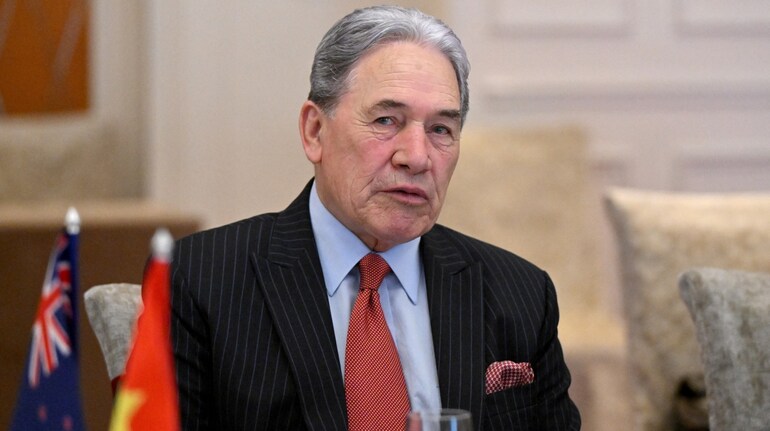
Despite being part of the governing coalition, New Zealand Foreign Minister Winston Peters has publicly attacked the agreement, calling it “neither free nor fair.”
“Regrettably, this is a bad deal for New Zealand,” Peters said, arguing that the agreement would be “impossible to defend” to rural voters and dairy farmers.
The core of Peters’ objection is India’s refusal to open up its dairy sector, a red line New Delhi has consistently maintained across all trade negotiations. The FTA excludes key dairy products such as milk, cheese and butter, a significant issue for New Zealand, whose dairy exports were worth nearly $14 billion in 2025 and account for close to 30 per cent of its total goods exports.
From India’s standpoint, this exclusion is non-negotiable. Union Commerce and Industry Minister Piyush Goyal reiterated this position days before Peters’ remarks.
“We have been very sensitive to protect all sectors, like farmers’ interests in rice, wheat, dairy, soya and various other agricultural products, which have not been opened up with any access,” Goyal said.
Labour mobility is another flashpoint
Peters has also criticised provisions related to labour mobility, particularly a new Temporary Employment Entry Visa that allows up to 5,000 Indian professionals at a time to work in New Zealand for up to three years.
“National has also made serious concessions to India in areas that have nothing to do with two-way trade,” Peters said, referring to immigration and labour market access. He warned that the move was “deeply unwise” given what he described as New Zealand’s tight labour market and domestic unemployment pressures.
From India’s perspective, however, limited mobility provisions are a standard and mutually beneficial component of modern trade agreements, especially in services and skilled sectors. New Delhi views such clauses as essential for enabling Indian professionals and companies to fully utilise market access gains under FTAs.
Politics, not India, at the heart of the dispute
Importantly for India, Peters has made it clear that his opposition is not directed at New Delhi or Indian negotiators. He said he had personally conveyed his concerns to External Affairs Minister S. Jaishankar, stressing that the disagreement reflects divisions within New Zealand’s coalition government.
“Our approach to trade deals has been consistent and principled,” Peters said, adding that his party had warned Luxon’s National Party against rushing into what he described as a “low-quality” agreement.
Peters leads the New Zealand First Party, a right wing populist outfit with eight MPs in the 123 member Parliament. While his party has vowed to oppose the FTA in Parliament, it lacks the numbers to block the deal unless it brings down the coalition government itself, a move widely seen as unlikely.
Is the FTA really at risk
From India’s standpoint, the agreement is not in immediate danger. While New Zealand’s parliamentary approval process could delay ratification until 2027, the deal has already cleared India’s Cabinet and enjoys strong backing from the Luxon government.
Trade experts also see the agreement as a foundation rather than a final destination. Ajay Srivastava, founder of the Global Trade Research Initiative, said the pact is “less a trade breakthrough than a framework for deeper cooperation”, noting that its success will depend on how both sides build practical economic links over time.
For New Delhi, Peters’ opposition highlights the political sensitivities in New Zealand rather than any weakness in the agreement itself. As long as India’s core interests, especially the protection of its dairy sector, remain intact and the coalition in Wellington holds, the FTA is likely to move forward, even if more slowly than initially envisioned.
Discover the latest Business News, Sensex, and Nifty updates. Obtain Personal Finance insights, tax queries, and expert opinions on Moneycontrol or download the Moneycontrol App to stay updated!
Find the best of Al News in one place, specially curated for you every weekend.
Stay on top of the latest tech trends and biggest startup news.





