






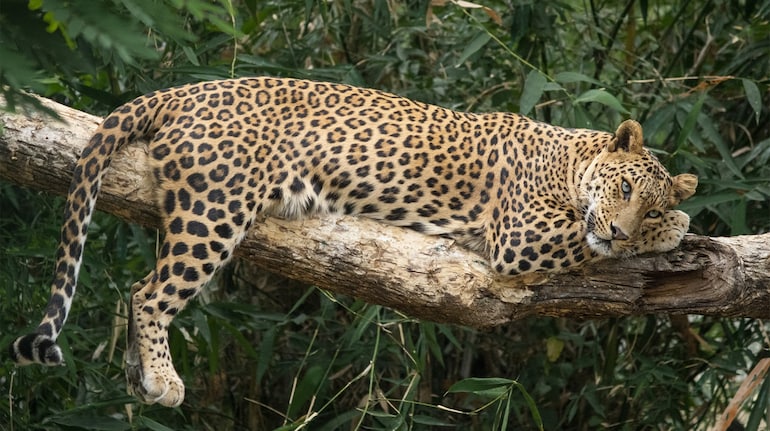

Finance Minister Nirmala Sitharaman on Sunday announced that India will host the first-ever Global Big Cat Summit under the International Big Cat Alliance this year, marking a major milestone in the country’s growing leadership in global wildlife conservation.
“We established the Big Cat Alliance in 2024. This year India is hosting the first-ever global Big Cat Summit where heads, heads of governments and ministers from 95 range countries will deliberate on collective strategies for conservation,” Sitharaman said while presenting the Union Budget 2026 in Parliament.
The summit is expected to bring together political leaders, environment ministers, wildlife experts and civil society representatives from countries that fall within the natural range of big cats. There are 95 such range countries worldwide, including Canada, China, Brazil, Iran, Russia and the United States. As of September 2024, 25 countries had formally consented to become members of the alliance, with more expected to join after signing the framework agreement through diplomatic channels.
The International Big Cat Alliance was formally established by the Indian government in March 2024 through the National Tiger Conservation Authority under the Ministry of Environment, Forest and Climate Change. Its mandate covers the conservation of seven big cats: tiger, lion, leopard, snow leopard, cheetah, jaguar and puma. The Union government has allocated Rs 150 crore to the initiative for the period from 2023-24 to 2027-28, underlining its long-term commitment.
The rationale behind the alliance is rooted in India’s own conservation journey. Prime Minister Narendra Modi announced the initiative in 2023 while marking 50 years of Project Tiger, a programme that reversed a dramatic decline in India’s tiger population. From an estimated 40,000 tigers at the time of Independence, numbers fell to about 1,800 by 1970 due to hunting and poaching. Today, India is home to more than 3,600 tigers, accounting for around 70 per cent of the global wild tiger population.
India’s success has given it practical experience in habitat protection, community involvement and scientific monitoring that it can now share globally. Beyond tigers, the country also conserves leopards and snow leopards and has reintroduced cheetahs after decades of absence.
The alliance stresses that protecting big cats has wider ecological benefits. As apex predators, they regulate prey populations and help maintain healthy landscapes. Their conservation safeguards forests and grasslands that store carbon, reduce disaster risks, support climate adaptation and protect biodiversity.
By hosting the Global Big Cat Summit, India is positioning itself as a hub for international cooperation on wildlife conservation. The move strengthens its environmental diplomacy, reinforces its conservation credentials and signals that protecting nature and addressing climate challenges can go hand in hand through collective global action.
Discover the latest Business News, Sensex, and Nifty updates. Obtain Personal Finance insights, tax queries, and expert opinions on Moneycontrol or download the Moneycontrol App to stay updated!
Find the best of Al News in one place, specially curated for you every weekend.
Stay on top of the latest tech trends and biggest startup news.





