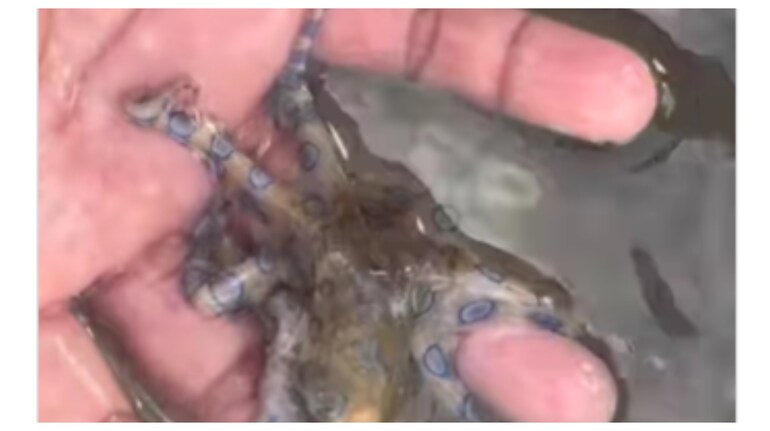
What started as a curious moment on a beach in the Philippines has turned into a sharp warning for travellers about touching unfamiliar wildlife. A British tourist, Andy McConnell, filmed himself picking up a small octopus in shallow water, apparently assuming it was harmless. The video spread quickly online, but the attention was not for the scenery. Viewers recognised the animal as a blue-ringed octopus and flooded the comments with urgent warnings about how lethal it can be.
McConnell appears relaxed in the footage, cradling the octopus in his hands as it tries to move away. He handles it repeatedly, seemingly unaware that this is exactly the kind of contact that can trigger a defensive bite. Only after the clip gained traction did he realise what he had been holding. In follow-up comments, he acknowledged that he did not know the species or the risk, and that the reaction online made him understand how close it could have come to a medical emergency.
Why the blue-ringed octopus is fearedMarine experts regard blue-ringed octopuses, from the genus Hapalochlaena, among the most venomous animals in the sea. They are small enough to fit in the palm of a hand, which is part of the danger. People tend to underestimate them. Their venom contains tetrodotoxin, a powerful neurotoxin that interferes with nerve signalling. In severe cases it can cause rapid paralysis, including the muscles needed for breathing. There is no specific antidote, which is why immediate medical attention and breathing support can become the difference between survival and tragedy.
The bite can be deceptively easy to missOne reason blue-ringed octopus incidents are so alarming is that the bite is often painless. A person may not feel anything at first, then deteriorate quickly as the toxin takes effect. The bright blue rings that give the animal its name are also misunderstood. They typically intensify when the octopus is stressed or threatened, meaning the most striking moment visually is also the clearest warning to back away.
A lucky outcome, and a broader lessonMcConnell was fortunate. He was not bitten, and he walked away unharmed. But the episode captures a wider reality of post-pandemic travel and social media: people are quick to film close-up wildlife encounters, even when they do not know what they are handling. The simplest rule for beachcombing and snorkelling remains the safest one. Look, do not touch, and give marine animals the space to escape rather than forcing a defensive response.
Discover the latest Business News, Sensex, and Nifty updates. Obtain Personal Finance insights, tax queries, and expert opinions on Moneycontrol or download the Moneycontrol App to stay updated!
Find the best of Al News in one place, specially curated for you every weekend.
Stay on top of the latest tech trends and biggest startup news.