






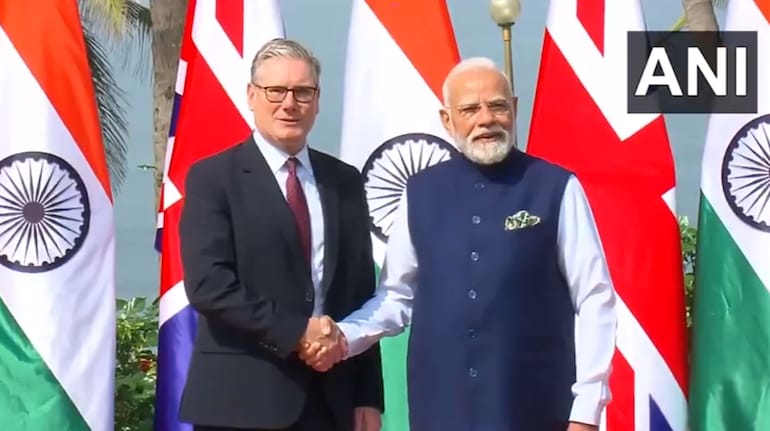
The UK–India Free Trade Agreement (FTA) faced sharp criticism across party lines during a debate in the House of Commons, with lawmakers questioning its economic balance, labour safeguards and long-term benefits for British workers and businesses, according to Toi report.
Leading the attack, Conservative MP and shadow trade secretary Andrew Griffith mocked the outcome of the negotiations, saying: “Instead of a vindaloo of a deal, the PM came back with a bag of soggy poppadums.” He argued that the agreement favoured India while offering limited immediate gains for the UK.
Trade minister Chris Bryant defended the pact, countering that British businesses viewed it as a “fine tandoori” opportunity. He stressed India’s growing consumer base, noting that by 2050 the country would have more than a quarter of a billion high-income consumers, presenting a vast export market for UK firms.
Despite the defence, MPs from multiple parties raised concerns over the deal’s structure. Critics said it failed to adequately open India’s services sector, particularly legal services, and warned that UK goods exporters could wait five to ten years for tariff reductions, while Indian exporters would benefit almost immediately.
The agreement also drew fire for not securing a bilateral investment treaty and for lacking enforceable commitments on human rights and labour standards. Several MPs warned of a potential influx of low-cost Indian imports that could put pressure on domestic industries.
A major flashpoint was the double contributions convention (DCC), which allows Indian workers and their employers to avoid paying UK National Insurance for up to three years. Griffith claimed this created an uneven playing field, saying: “It could be up to £10,000 a year cheaper to hire a software developer on an average British salary from India than to hire someone from Britain for the same role.” He added that the Indian government had “boasted about” the provision, while the UK government failed to highlight it publicly.
Conservative MP Katie Lam questioned why India was granted such treatment, noting that DCC agreements are typically signed with countries that have “compatible economies, similar educational outcomes and comparable social security systems, such as Japan and Canada.” She added: “India stands alone as by far the largest and least wealthy country on the list.”
Labour MP Iqbal Mohamed urged the government to “pursue an economic diplomacy that recognises the importance of religious tolerance,” while other MPs flagged regulatory hurdles at India’s state level. Griffith even raised animal welfare concerns, warning that “poor blinded prawns” could become “victims under this deal.”
Responding to criticism of the DCC, Bryant said Indian workers would still face other costs, including an NHS surcharge and immigration skills charge, insisting the agreement did not amount to unfair undercutting of British labour.
Discover the latest Business News, Sensex, and Nifty updates. Obtain Personal Finance insights, tax queries, and expert opinions on Moneycontrol or download the Moneycontrol App to stay updated!
Find the best of Al News in one place, specially curated for you every weekend.
Stay on top of the latest tech trends and biggest startup news.




