






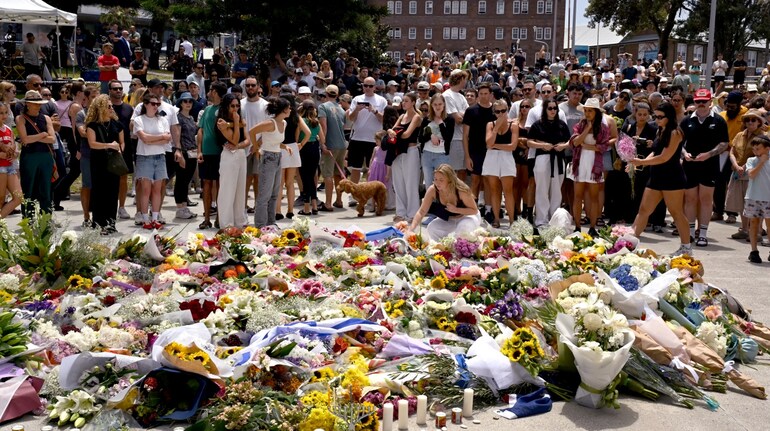
The mass shooting on December 14, 2025, at Sydney’s Bondi Beach was a shocking event in a country where such violence has been extremely rare. Two men, identified as a father and his 24-year-old son -- identified as Sajid Akram and Naveed Akram -- opened fire at a Hanukkah celebration, killing at least 16 people and injuring dozens more. Police confirmed the older suspect held a firearms licence and six legally owned weapons, four of which were found at the scene.
A history of rare mass shootings
Australia does not see mass shootings with the frequency observed in some other countries. The number of such attacks declined sharply after one of the deadliest shootings in modern history, the Port Arthur massacre in Tasmania in 1996, when 35 people were killed and 24 wounded.
That massacre prompted far-reaching changes in Australian gun policy. Before 1996, Australia had experienced multiple mass shooting incidents, but in the decades following the reforms, mass shootings became exceedingly rare, with no incidents comparable in scale until Bondi Beach.
Between the late 1990s and the mid-2010s, shootings involving multiple fatalities were uncommon, and only a handful of smaller shootings occurred. These included localized violent incidents, such as the 2015 Parramatta attack outside a police headquarters, but they did not approach the scale of Port Arthur or the Bondi massacre.
How Australia’s gun laws changed after Port Arthur
The most important reason mass shootings have been so rare in Australia is its strict legislative framework governing firearms.
In response to the Port Arthur massacre, the federal and state governments agreed to the National Firearms Agreement (NFA) in 1996, which tightened gun controls across the country. This framework:
Under current laws, ownership of a firearm is not automatic. Prospective owners must provide a genuine and specific reason before being granted a licence. Acceptable reasons include membership in a hunting club or employment that requires firearm use. Importantly, gun ownership for personal protection is not a valid reason under Australian law.
Prospective owners must also complete safety courses, pass written and practical assessments, and undergo background checks to confirm they have no disqualifying criminal history or ongoing mental health concerns.
This system, combined with a thorough registration process and national infrastructure for guns, has made it difficult for potential attackers to obtain weapons quickly or secretly, and has contributed to a significant decline in gun-related deaths and mass shootings over decades.
Why the Bondi Beach attack still happened
Despite these strong laws, the Bondi Beach attack occurred with legally held firearms. Australian police have said the 50 year-old-suspect “is a licensed firearms holder who had six firearms licensed to him”.
He had held a licence for many years and met the eligibility criteria at the time. Australian gun law allows individuals to hold multiple firearms as long as they justify each one and meet all requirements.
The rarity of such attacks means there has been limited precedent for dealing with complex cases where weapons are used for ideologically motivated mass violence rather than traditional hunting or sport. Police and security agencies are now reviewing licensing and counter-terrorism processes to understand how a legally licensed owner was able to carry out such a devastating attack.
Proposed changes and ongoing debates
In the wake of the Bondi Beach massacre, Australia’s leaders agreed to revisit and toughen gun laws. Proposed reforms include restricting licences to Australian citizens, placing limits on the number of firearms an individual can own, and using criminal intelligence more robustly in licensing decisions.
Prime Minister Anthony Albanese said the government is “prepared to take whatever action is necessary” including toughening gun laws.
These discussions reflect public concern that even strict systems can have gaps, especially if individuals exploit legal avenues or if changing social conditions introduce new risks.
The Australian context in global perspective
While mass shootings remain extraordinarily rare in Australia, the Bondi Beach attack underlines that no system can guarantee zero risk. The country’s stringent gun laws have kept mass shootings at bay for nearly three decades after Port Arthur, but evolving threats and extremist motivations require constant vigilance and adaptive policy responses.
Australia’s experience shows how strict regulation can reduce gun violence and mass massacres, but it also highlights that rare, catastrophic events can still occur and spur fresh debates on safety, rights and society’s responsibilities to protect its citizens.
Discover the latest Business News, Sensex, and Nifty updates. Obtain Personal Finance insights, tax queries, and expert opinions on Moneycontrol or download the Moneycontrol App to stay updated!
Find the best of Al News in one place, specially curated for you every weekend.
Stay on top of the latest tech trends and biggest startup news.




