






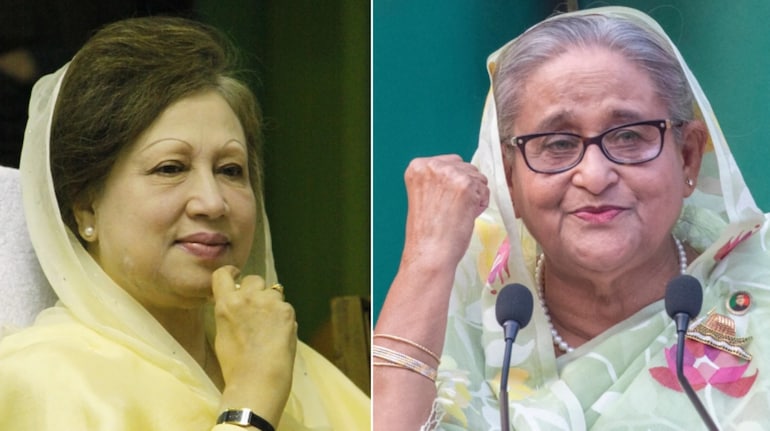

The Bangladesh Nationalist Party has accused ousted prime minister Sheikh Hasina of being responsible for the death of former prime minister and BNP chairperson Khaleda Zia, alleging that years of imprisonment and denial of medical care fatally damaged her health.
The charge was made on Wednesday by BNP Standing Committee member Nazrul Islam Khan while addressing a gathering at Manik Mia Avenue ahead of Khaleda Zia’s namaz-e-janaza.
“On February 8, 2018, Khaleda Zia walked into jail after being subjected to the personal vengeance of fascist Hasina. But she came out of prison seriously ill,” Khan said, according to The Daily Star.
Khan alleged that Khaleda Zia’s prolonged incarceration, restrictions on travel, and refusal by authorities to allow her to seek treatment abroad led to irreversible deterioration in her health. He said medical experts had repeatedly warned that timely treatment overseas could have changed the outcome.
“According to doctors at home and abroad, her illness worsened because she was denied the opportunity to receive treatment overseas during four years of house arrest,” he said. “As a result, the uncompromising leader eventually succumbed to death. Fascist Hasina will never be free of responsibility for this death.”
During his address, Khan traced Khaleda Zia’s political rise, recalling that she formally joined the BNP on January 3, 1982, following the assassination of her husband, former president Ziaur Rahman. He said she endured repeated imprisonment under successive regimes, including military ruler Hussein Muhammad Ershad, the caretaker administration during the 1/11 period, and later under Sheikh Hasina’s government.
Despite these setbacks, Khan said, Khaleda Zia led the BNP for 41 years and played a decisive role in Bangladesh’s democratic struggles. He credited her with spearheading a nine-year movement against military rule and restoring parliamentary democracy through the 1991 elections.
“She was the first woman prime minister of Bangladesh and the second in the Muslim world,” Khan said.
He also criticised Khaleda Zia’s eviction from her residence and the 17-year prison sentence imposed on her, which he described as politically motivated and based on fabricated charges.
“Yet she never compromised with authoritarian politics. This is why she became an enduring inspiration in the struggle against fascism,” he said.
Khaleda Zia died on December 30 at the age of 80 after a prolonged illness. A three-time prime minister, she remains one of the most influential figures in Bangladesh’s political history and a central symbol of the country’s pro-democracy movement.
Discover the latest Business News, Sensex, and Nifty updates. Obtain Personal Finance insights, tax queries, and expert opinions on Moneycontrol or download the Moneycontrol App to stay updated!
Find the best of Al News in one place, specially curated for you every weekend.
Stay on top of the latest tech trends and biggest startup news.





