






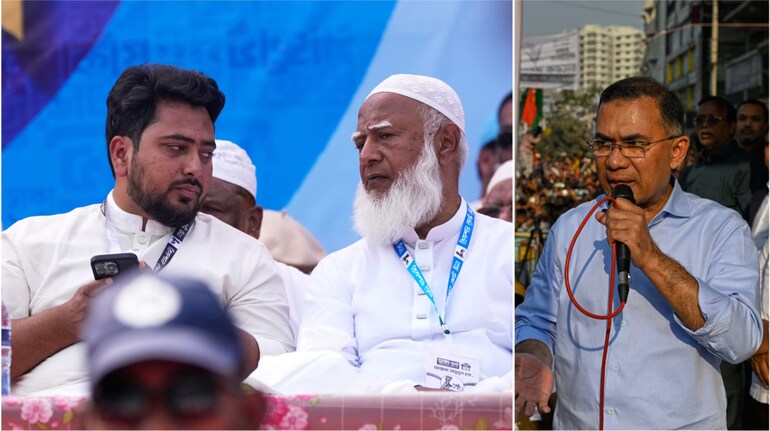
For the first time in decades, Bangladesh went to the polls without either Sheikh Hasina or Khaleda Zia on the ballot, signaling a dramatic shift in the country’s political landscape. Thursday’s voting, held across 299 constituencies, comes 18 months after Sheikh Hasina was ousted, a period marked by political uncertainty, civil unrest, and mounting economic challenges.
For nearly half a century, Bangladeshi politics has been dominated by two figure, Sheikh Hasina, daughter of the nation’s founding father, and Khaleda Zia, widow of former President Ziaur Rahman. With Hasina removed from office and Zia having passed away, the nation now enters uncharted political territory.
Leading contenders in Bangladesh’s 2026 election
The son of former President Ziaur Rahman and late PM Khaleda Zia, Tarique Rahman returned from a 17-year exile in London to rebuild the BNP’s extensive political network.
Widely seen as the frontrunner, he has pledged to protect minority communities, implement foreign policy reforms, and pursue an ambitious goal of growing Bangladesh into a USD 1-trillion economy. On bilateral relations with India, Rahman has promised cooperation “based on mutual trust and mutual interest if elected.”
Leading an 11-party alliance, Jamaat-e-Islami chief Shafiqur Rahman has turned the formerly banned party into a major electoral challenger. His campaign combines conservative Islamic values with youth-focused development programs, emphasizing ethical governance, social justice, women’s safety, and anti-corruption measures. He has also expressed readiness to cooperate with India for Bangladesh’s modernization projects.
A prominent figure in the 2024 student-led uprising, Nahid Islam represents the aspirations of Gen Z voters. Serving as an advisor to the interim government under Nobel laureate Muhammad Yunus, Nahid has positioned himself as a break from dynasty politics, appealing strongly to younger voters seeking political reform.
The veteran BNP secretary general is regarded as the party’s “Plan B.” Should legal or electoral hurdles prevent Tarique Rahman from taking office, Fakhrul’s extensive experience in governance and activism positions him as a stabilizing figure capable of bridging civil society and international partners.
Known as the “Charmonai Pir,” Karim leads IAB independently. His strong religious following could make him a kingmaker in a hung parliament, potentially influencing strategic concessions or even the premiership if neither BNP nor the 11-party alliance secures a majority.
As Bangladesh navigates this post-Hasina, post-Zia era, the 2026 election represents both a test of new political forces and a signal of generational change, with young voters increasingly shaping the country’s democratic future.
Discover the latest Business News, Sensex, and Nifty updates. Obtain Personal Finance insights, tax queries, and expert opinions on Moneycontrol or download the Moneycontrol App to stay updated!
Find the best of Al News in one place, specially curated for you every weekend.
Stay on top of the latest tech trends and biggest startup news.




