






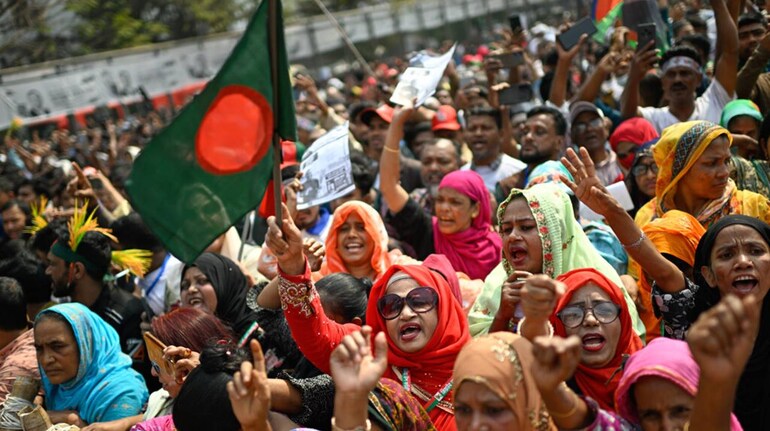

Bangladesh’s February 12 vote was not limited to choosing a new parliament. Alongside the general election that delivered 210 seats to the Bangladesh Nationalist Party (BNP)-led alliance, voters were asked to decide on a sweeping reform blueprint known as the July National Charter 2025.
According to the Election Commission (EC) of Bangladesh, the referendum recorded a turnout of 60.26 per cent, with the “yes” side securing a decisive mandate.
EC Senior Secretary Akhtar Ahmed told reporters that 4,80,74,429 voters supported the proposal, while 2,25,65,627 opted for “no”. The result means roughly 70 per cent of participating voters endorsed the reform package.
Election verdict and political shift
The parliamentary outcome clears the path for BNP chairman Tarique Rahman to head the next government, positioning him to become Bangladesh’s first male prime minister in almost 35 years. But beyond the electoral change in leadership, the referendum outcome may have longer-term consequences for the country’s constitutional and institutional structure.
The dual vote -- elections plus referendum -- underscored a broader political reset following the July 2024 student-led uprising that led to the removal of Prime Minister Sheikh Hasina. The reform document now approved by voters emerged from that upheaval.
What is the July national charter?
The July National Charter 2025 is described as an 84-point reform framework aimed at reorganising the state’s governing architecture. It seeks public consent to restructure key institutions and recalibrate the balance of power within the system.
A Constitutional Reform Council is expected to carry out the proposed changes within 270 working days. Of the total proposals, 47 would require amendments to the Constitution, while the remaining 37 are slated to be implemented through legislation or executive action, according to Bangladesh’s Business Standard.
This marks the third time Bangladesh has seen a charter of reforms placed before the public.
Core objectives behind the reforms
The central thrust of the charter is to prevent the excessive concentration of executive authority and avoid what it describes as a “recurrence of authoritarian and fascist rule”. To that end, it outlines changes affecting the executive, legislature and oversight institutions.
One of the major proposals is the imposition of firm term limits for prime ministers, intended to stop prolonged tenures that critics associate with autocratic governance.
Another significant recommendation is the establishment of a bicameral legislature. The plan envisions a 100-seat upper chamber, with representation determined by each party’s share of the national vote. The stated goal is to create a counterweight within Parliament and distribute legislative influence more evenly.
Redistribution of power and institutional safeguards
The charter also calls for strengthening the president’s role, thereby reducing the dominance of the prime minister’s office. In parallel, it proposes safeguards aimed at insulating the judiciary and other major state bodies from political interference.
Provisions for enhanced participation by opposition parties form part of the framework. These include allowing opposition leaders to chair key parliamentary committees and to serve as deputy speaker, steps intended to broaden checks and balances within the legislature.
The document further recommends increased representation of women in Parliament. It also includes protective measures for those who took part in the 2024 uprising, referred to in the charter as “July Fighters”.
What happens next?
With voters having backed the charter in the referendum, the next phase shifts to implementation. The Constitutional Reform Council is tasked with translating the approved proposals into constitutional amendments, new laws or executive directives within the stipulated timeframe.
While the election result determines who governs, the referendum outcome shapes how governance itself may function in the years ahead. By endorsing the July Charter, a clear majority of participating voters have signalled support for structural changes designed to disperse authority and recast Bangladesh’s political framework.
(With inputs from agencies)
Discover the latest Business News, Sensex, and Nifty updates. Obtain Personal Finance insights, tax queries, and expert opinions on Moneycontrol or download the Moneycontrol App to stay updated!
Find the best of Al News in one place, specially curated for you every weekend.
Stay on top of the latest tech trends and biggest startup news.





